Anacostia Community Museum: A History of Community and Culture
The Anacostia Community Museum stands as a unique testament to the intersection of institutional curation and grassroots community engagement. Originally conceived as an experimental project by the Smithsonian Institution, the museum has evolved through various missions and names, reflecting the changing landscape of African American history and the specific needs of the Anacostia neighborhood in Washington, D.C.
Origins and the Experimental Store-Front
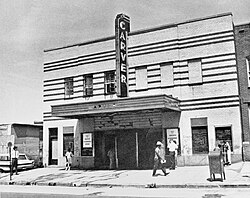
In 1966, Smithsonian Secretary S. Dillon Ripley envisioned an "experimental store-front museum" designed to serve as an outreach tool. The primary goal was to encourage more African Americans to visit the Smithsonian museums on the National Mall. This vision materialized in March 1967 when the Smithsonian acquired the Carver Theater in the Anacostia neighborhood.
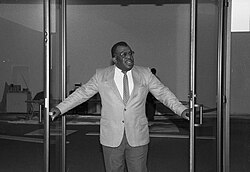
To ensure the project resonated with the local population, the Smithsonian established a council of Anacostia residents to provide guidance. In June 1967, John Kinard—a pastor and Civil Rights Movement activist deeply embedded in the community—was appointed as the museum's director. Kinard prioritized the involvement of local youth and established a Neighborhood Advisory Committee that met weekly to plan exhibitions and programming.
Staff and residents worked side-by-side to transform the defunct movie theater into a functional exhibition space, with the community playing a direct role in selecting the objects on display.
The Grand Opening
The Anacostia Neighborhood Museum officially opened its doors on September 15, 1967. At its inception, the museum operated with a lean team of eight staff members, only one of whom was permanent; the institution lacked dedicated curators, researchers, or librarians at the time.
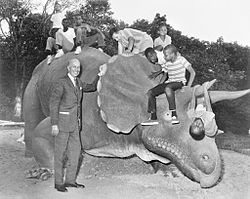
A notable highlight of the opening was the presence of "Uncle Beazley," a life-size fiberglass Triceratops model. This model later appeared in the 1968 children's television movie The Enormous Egg and currently resides near Lemur Island at the National Zoological Park.
Growth and Institutionalization
The late 1960s and early 1970s marked a period of rapid professionalization. In 1968, the museum opened an on-site photography lab and hired a staff photographer. By 1970, the museum was integrated into the Smithsonian Institution's federal budget. That same year, the Carnegie Corporation funded the creation of the Anacostia Research Center to establish an oral history program.
The museum's professional staff grew steadily, hiring its first historian, Louise Daniel Hutchinson, in 1971. By 1972, the organization had ten full-time permanent employees divided into three departments: the director's office, education, and research and exhibitions.
As the institution grew, maintaining its grassroots nature became more complex. The Neighborhood Advisory Committee, which had expanded to ninety people, was eventually streamlined and renamed the Board of Directors to better manage the planning process.
Expansion and the Move to Fort Stanton
In October 1974, the museum opened the Exhibits Design and Production Laboratory at Fort Stanton. This facility became the hub for preparing a new, permanent museum building. However, the site faced a setback in 1976 when a fire—caused by masonite sheets falling into lacquer thinner—resulted in approximately $75,000 in damages, though no injuries occurred.
The museum continued to innovate in accessibility and preservation, creating an archives dedicated to the Anacostia area in 1977 and becoming the first Smithsonian museum to implement labels for the hearing impaired in 1980.
On May 17, 1987, the new museum building opened at Fort Stanton. Along with the move, the institution changed its name to the Anacostia Museum to reflect a broader mission: celebrating African American history both within Anacostia and globally.
Evolution of Mission and Leadership
Following the death of John Kinard in 1989, Steven Newsome took over as director in 1991. Under his leadership, the museum established its own library and underwent an $8.5 million renovation. In 1995, the institution was renamed the Anacostia Museum and Center for African American History and Culture, intended to serve as a precursor to the National Museum of African American History and Culture.
After Newsome's retirement in 2004 and a period under acting director James Early, the museum shifted its focus back to the local community. In 2006, it adopted its current name, the Anacostia Community Museum, and appointed Camille Akeju as director.
Under Director Akeju, the exhibition process transitioned from a community-driven model—where residents submitted proposals—to a curator-focused model, where exhibition concepts are determined by professional staff.
Key Facts
- Founded: 1967 in the former Carver Theater.
- First Director: John Kinard, a Civil Rights activist and pastor.
- Key Milestone: First Smithsonian museum to use hearing-impaired labels (1980).
- Current Location: Fort Stanton, Washington, D.C.
- Funding: Integrated into the federal Smithsonian budget in 1970.
| Year | Museum Name | Primary Mission/Focus |
|---|---|---|
| 1967 | Anacostia Neighborhood Museum | Local outreach and community-driven exhibits. |
| 1987 | Anacostia Museum | African American history locally and globally. |
| 1995 | Anacostia Museum and Center for African American History and Culture | Serving as a site for the National Museum of African American History and Culture. |
| 2006 | Anacostia Community Museum | Specific focus on Anacostia communities. |
Frequently Asked Questions
Why was the Anacostia Community Museum originally created?
It was established by the Smithsonian Institution as an experimental outreach project to encourage more African Americans to visit the Smithsonian museums on the National Mall.
Who was John Kinard?
John Kinard was the museum's first director, appointed in 1967. He was a pastor and Civil Rights Movement activist who ensured that local residents and youth were central to the museum's creation and programming.
What is the significance of "Uncle Beazley"?
Uncle Beazley is a life-size fiberglass Triceratops model that attended the museum's opening in 1967 and later appeared in the television movie The Enormous Egg.
How has the exhibition process changed over time?
Originally, the museum used a community-driven process where residents could submit exhibition proposals. Under the leadership of Camille Akeju starting in 2006, the process became curator-focused, with staff selecting the exhibition concepts.
Where is the museum located now?
The museum is currently located at Fort Stanton in Washington, D.C., having moved there from the Carver Theater in 1987.