Amerigo Vespucci: The Navigator Who Named the New World
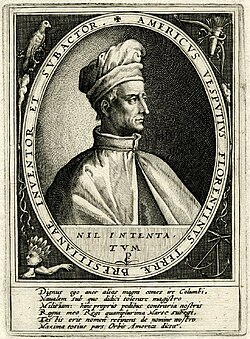
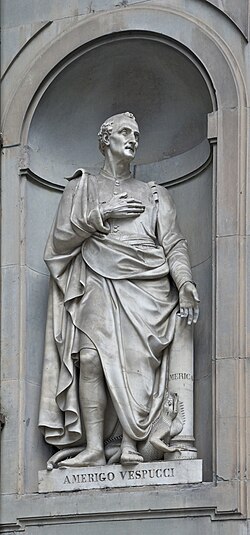
Amerigo Vespucci was an Italian explorer, merchant, and cartographer whose voyages and writings fundamentally changed how Europeans perceived the globe. While Christopher Columbus is credited with the initial European encounter with the Americas, it was Vespucci who recognized that the lands across the Atlantic were not the eastern edges of Asia, but a previously unknown continent.
Born in Florence on March 9, 1454, Vespucci's career spanned the height of the Age of Discovery. His legacy is immortalized in the very name of the continents he explored: the Americas.
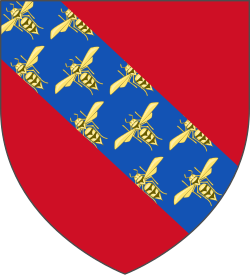
Key Facts
- Origin: Born in Florence, Republic of Florence; later became a subject of Castile.
- Primary Contribution: Identified the "New World" as a separate continent rather than part of Asia.
- Official Role: Appointed piloto mayor (master navigator) for Spain's Casa de Contratación in 1508.
- Famous Work: Author of Mundus Novus, a widely read account of his travels.
- Death: Died February 22, 1512, in Seville, Spain.
Early Life and Career in Seville
Vespucci began his professional life in Florence but settled permanently in Seville by 1492. In Spain, he became deeply involved in the maritime business of the Berardi family, who were significant financiers of early Atlantic exploration. Berardi notably invested heavily in Christopher Columbus's first voyage and secured contracts to provision subsequent fleets.
Following the unexpected death of Berardi in 1495, Vespucci's role in the burgeoning trade with the West Indies expanded, setting the stage for his own expeditions as a navigator and explorer.
![Portrait of a young member of the Vespucci family, identified as Amerigo by Giorgio Vasari[3]](/images/cd/21/cd210722bd3733483caf2ced41459c84432f40a7ed3c6b5c41e026438885c8ec.jpg)
The Voyages of Amerigo Vespucci
Historians continue to debate the exact number and veracity of Vespucci's voyages, largely due to conflicting accounts in letters published during and after his lifetime.
The Disputed Voyage of 1497–1498
A letter to Piero Soderini suggests Vespucci sailed from Spain in May 1497, returning in October 1498. This voyage is highly controversial; many historians believe it was a fabrication or a misattribution. Critics point to an impossible course that would have required sailing across land in Mexico to reach the Pacific.
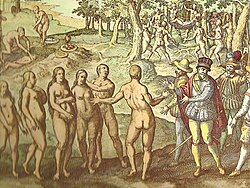
The Spanish Expedition (1499–1500)
In May 1499, Vespucci sailed for Spain, reaching the coast of South America near present-day Suriname or French Guiana. While part of the fleet headed northwest toward Venezuela, Vespucci sailed south. He encountered the massive freshwater discharges of the Amazon and Para rivers, though he initially believed he was rounding a cape to reach the Indian Ocean.
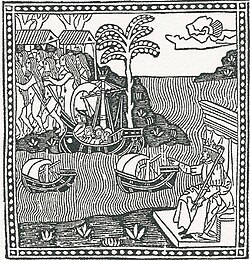
The Portuguese Expedition (1501–1502)
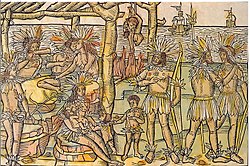
Sailing under the Portuguese flag, Vespucci reached Brazil in August 1501. This journey was marked by encounters with indigenous peoples and the exploration of the coast down to approximately 25° S. On January 1, 1502, the expedition named a bay Rio de Janeiro.
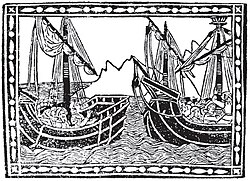
The Alleged Voyage of 1503–1504
Some records suggest a fourth voyage, though like the first, its authenticity is questioned by many modern scholars who favor a two-voyage narrative.
The Naming of America
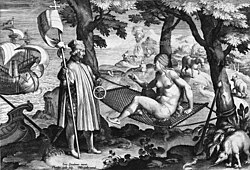
Vespucci's fame grew not from his sailing alone, but from his writing. His letter Mundus Novus (New World), written to Lorenzo di Pierfrancesco de' Medici, became a European bestseller. It described the nature and customs of the people he encountered and proposed that these lands were a distinct continent.
In 1506, humanist scholars in Saint-Dié, France—including Martin Waldseemüller—studied Vespucci's accounts. Convinced by the evidence, they produced a map in 1507 that labeled the new landmass "America," in honor of Amerigo.
Final Years and Official Legacy
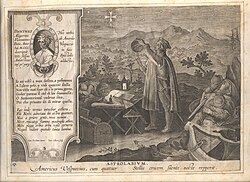
Vespucci spent his final years in the service of the Spanish crown. In 1508, he was appointed piloto mayor (chief pilot) of the Casa de Contratación (House of Trade) in Seville. In this capacity, he was responsible for training and licensing pilots and maintaining the Padrón Real, the official master map of the Spanish Empire.
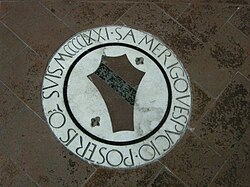
He died in 1512 and was buried in his wife's family tomb in Seville.
| Period | Role/Voyage | Sponsor | Key Outcome |
|---|---|---|---|
| 1492–1495 | Merchant/Agent | Berardi Family | Established base in Seville |
| 1499–1500 | Explorer | Spain | Explored South American coast/Amazon |
| 1501–1502 | Explorer | Portugal | Explored Brazil; named Rio de Janeiro |
| 1508–1512 | Piloto Mayor | Spain | Managed the Padrón Real master map |
Frequently Asked Questions
Why is America named after Vespucci and not Columbus?
While Columbus reached the Americas first, he died believing he had found a route to Asia. Vespucci was the first to explicitly argue and publish that the lands were a separate, "new" continent, which led cartographers like Martin Waldseemüller to name the land after him.
How many voyages did Amerigo Vespucci actually make?
This is a subject of historical debate. Some historians argue for four voyages based on the Soderini letter, while others, such as Alberto Magnaghi, believe only the 1499 and 1501 expeditions are authentic.
What was the Mundus Novus?
Mundus Novus was a letter written by Vespucci to his patron Lorenzo de' Medici. It became an international sensation, printed in numerous languages and editions, and helped spread the knowledge of the New World across Europe.
What was the role of the Piloto Mayor?
The piloto mayor was the chief navigator for Spain's House of Trade. The role involved training pilots, licensing them for voyages, and compiling the Padrón Real, a secret master map that incorporated the latest geographical data from every returning ship.
Did Vespucci encounter cannibalism in the New World?
Yes, in his accounts of the 1501–1502 voyage to Brazil, Vespucci recorded that a hostile group of natives killed and ate one of his crew members.