Algeria: A Journey Through North Africa's Vast Landscapes and Rich History
Exploring Algeria: A Journey Through History, Culture, and Geography Located in North Africa, the People's Democratic Republic of Algeria is a nation of immense scale and profound histori...
Exploring Algeria: A Journey Through History, Culture, and Geography
Located in North Africa, the People's Democratic Republic of Algeria is a nation of immense scale and profound historical depth. As the tenth largest country in the world by land area, it serves as a bridge between the Mediterranean Sea and the vast expanse of the Sahara Desert. From its ancient rock art to its modern role in the global economy, Algeria offers a complex tapestry of human civilization and diverse natural landscapes.
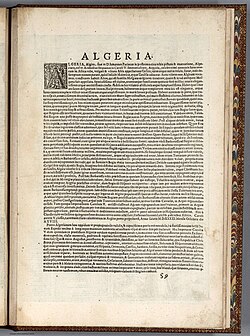
"Algeria" page in the Civitates Orbis Terrarium of 1575: "Algeria" page in the Civitates Orbis Terrarium of 1575
Key Facts
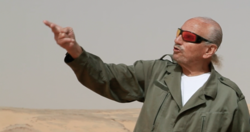
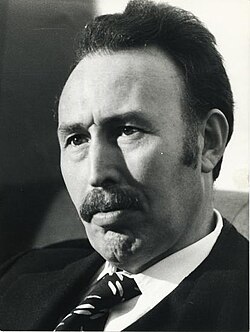
Houari Boumediene
Capital: Algiers
Official Languages: Arabic and Tamazight
Population: Approximately 47.4 million (2025 estimate)
Total Area: 2,381,741 km²
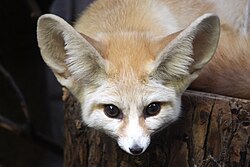
National Animal: Fennec fox
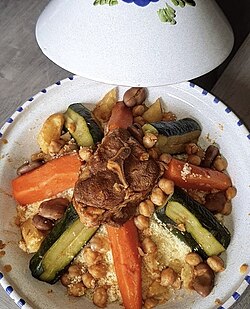
National Dish: Couscous
Government Type: Unitary semi-presidential republic
A Legacy Written in Stone and Sand
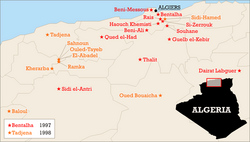
Massacres of over 50 people in 1997–1998. The Armed Islamic Group (GIA) claimed responsibility for many of them.
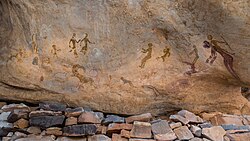
The history of Algeria stretches back to prehistory. The Tassili n’Ajjer plateau holds some of the world's most significant archaeological treasures, featuring rock art that has been dated back between 7,000 and 10,000 years.
Rock art in the Tassili n’Ajjer plateau of Algeria has been dated to seven to 10 thousand years ago: Rock art in the Tassili n’Ajjer plateau of Algeria has been dated to seven to 10 thousand years ago
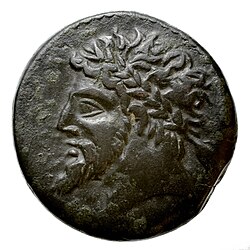
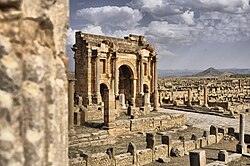
As civilizations evolved, the region saw the rise of powerful kingdoms and empires. The ancient Numidian civilization left a lasting mark, evidenced by the coinage of King Masinissa. Later, the Roman Empire integrated parts of the territory, leaving behind architectural marvels such as the Arch of Trajan in the ruins of Timgad.
Numidian coin of King Masinissa: Numidian coin of King Masinissa
The Arch of Trajan in the Roman ruins of Timgad: The Arch of Trajan in the Roman ruins of Timgad
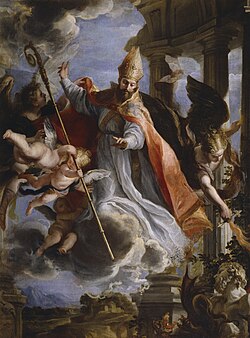
The Middle Ages brought significant religious and political shifts. The region was home to the Mauro-Roman Kingdom, the Rustamid dynasty, and the Zirid dynasty. This era also saw the influence of great thinkers, such as Saint Augustine of Hippo, a prominent Christian theologian of Numidian origin.
Saint Augustine of Hippo; emblematic Christian theologian and bishop of Numidian origin.: Saint Augustine of Hippo; emblematic Christian theologian and bishop of Numidian origin.
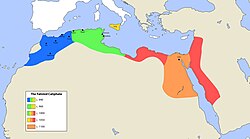
Islamic dynasties, including the Fatimid Caliphate and the Almohad dynasty, shaped the cultural and political landscape. The Zayyanid and Hammadid eras further contributed to the rich heritage of the Maghreb before the arrival of the Ottoman Regency of Algiers.
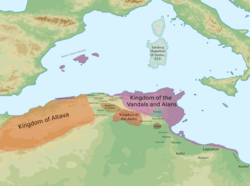
The Vandal and Moorish Kingdoms, early 6th century.: The Vandal and Moorish Kingdoms, early 6th century.
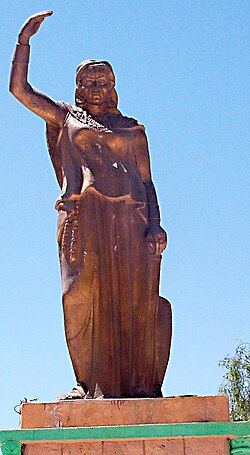
Dihya memorial in Khenchela, Algeria: Dihya memorial in Khenchela, Algeria
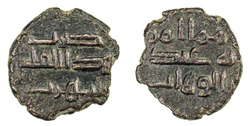
Rustumid Coin - Fals Abd al-Wahab ibn Rustam (c. 788-824): Rustumid Coin - Fals Abd al-Wahab ibn Rustam (c. 788-824)
Fatimid Caliphate, a Shia Ismaili dynasty that ruled much of North Africa, c. 960–1100: Fatimid Caliphate, a Shia Ismaili dynasty that ruled much of North Africa, c. 960–1100
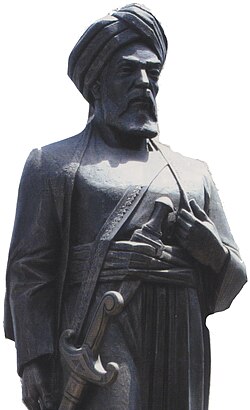
Statut of Bologhine ibn Ziri founder of the Zirid Dynasty: Statut of Bologhine ibn Ziri founder of the Zirid Dynasty
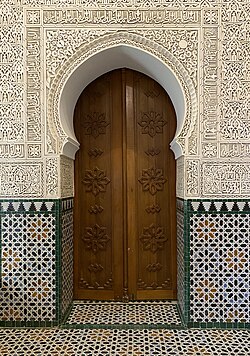
Door in El Mechouar Palace, Tlemcen, Algeria: Door in El Mechouar Palace, Tlemcen, Algeria
The Struggle for Independence
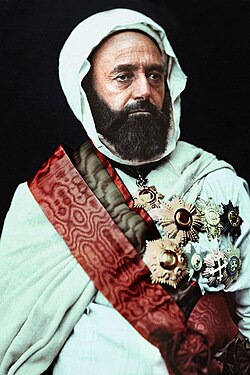
The 19th century marked a turning point with the French conquest in 1830. This period of colonization met with fierce resistance, most notably led by Emir Abdelkader, who established an emirate and fought to defend Algerian sovereignty.
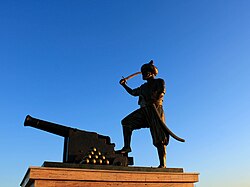
Aruj Reis' monument in Aïn Témouchent.: Aruj Reis' monument in Aïn Témouchent.
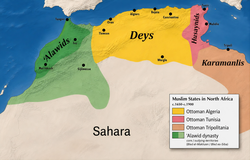
Ottoman Algeria and its neighbouring states in 17th-19th centuries.: Ottoman Algeria and its neighbouring states in 17th-19th centuries.
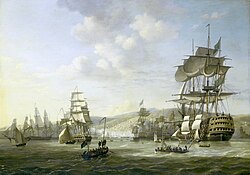
Bombardment of Algiers by the Anglo-Dutch fleet, August 1816: Bombardment of Algiers by the Anglo-Dutch fleet, August 1816
Emir Abdelkader, Algerian leader insurgent against French colonial rule, 1865: Emir Abdelkader, Algerian leader insurgent against French colonial rule, 1865
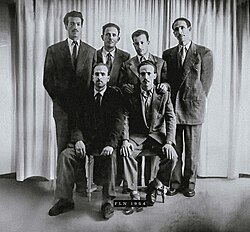
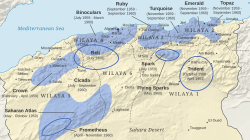
The fight for self-determination culminated in the Algerian War of Independence (1954–1962). Led by the National Liberation Front (FLN), the struggle was a defining moment in modern history, eventually resulting in full independence on July 5, 1962.
The six historical Leaders of the FLN: Rabah Bitat, Mostefa Ben Boulaïd, Mourad Didouche, Mohammed Boudiaf, Krim Belkacem and Larbi Ben M'Hidi.: The six historical Leaders of the FLN: Rabah Bitat, Mostefa Ben Boulaïd, Mourad Didouche, Mohammed Boudiaf, Krim Belkacem and Larbi Ben M'Hidi.
Map illustrating the division of Algerian territory into 6 wilayas drawn up during the Soummam Congress in 1956 and the various parts of the French Challe Plan (offensive operations) during the Algerian War: Map illustrating the division of Algerian territory into 6 wilayas drawn up during the Soummam Congress in 1956 and the various parts of the French Challe Plan (offensive operations) during the Algerian War
Geography and Natural Wonders
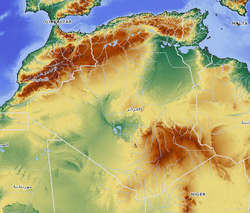
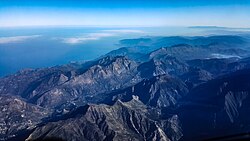
Algeria's landscape is defined by dramatic contrasts. The northern regions feature the Atlas Mountains and a Mediterranean coastline, while the vast majority of the country—over 90%—is comprised of the Sahara Desert.
The Sahara, the Hoggar Mountains and the Atlas Mountains compose the Algerian relief.: The Sahara, the Hoggar Mountains and the Atlas Mountains compose the Algerian relief.
The Algerian Desert makes up more than 90% of the country's total area.[175]: The Algerian Desert makes up more than 90% of the country's total area.[175]
The Babor mountains and the Jijel Coast. The Erraguene lake can be seen on the right.: The Babor mountains and the Jijel Coast. The Erraguene lake can be seen on the right.
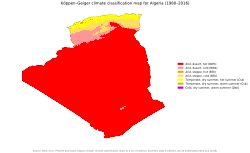
The climate varies significantly, from Mediterranean influences in the north to hyper-arid conditions in the south. This environmental diversity supports unique flora and fauna, including the national animal, the fennec fox.
Algeria map of Köppen climate classification: Algeria map of Köppen climate classification
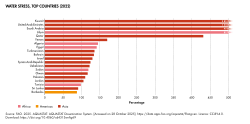
Algeria was the seventh most water-stressed country in the world in 2022.: Algeria was the seventh most water-stressed country in the world in 2022.
The fennec fox is the national animal of Algeria.: The fennec fox is the national animal of Algeria.
The Botanical Garden Hamma is home to an estimated 1,200 distinct plant species, including numerous rare and exotic varieties.[185]: The Botanical Garden Hamma is home to an estimated 1,200 distinct plant species, including numerous rare and exotic varieties.[185]
Modern Algeria: Economy and Society
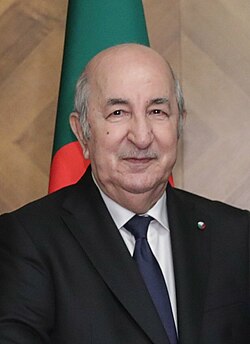
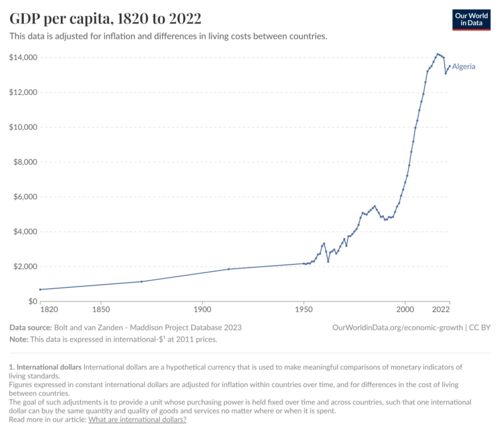
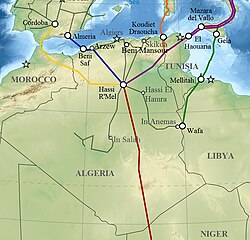
Today, Algeria is a unitary semi-presidential republic. Under the leadership of President Abdelmadjid Tebboune, the nation continues to navigate its role in the global community. The economy is heavily influenced by its natural resources, particularly oil and natural gas, which are transported via extensive pipeline networks.
Abdelmadjid Tebboune, President of Algeria since 2019: Abdelmadjid Tebboune, President of Algeria since 2019
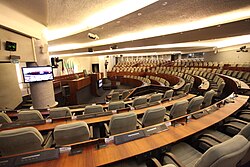
The People's National Assembly: The People's National Assembly
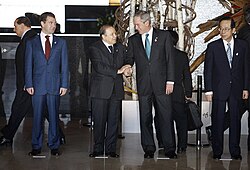
President Abdelaziz Bouteflika and George W. Bush exchange handshakes at the Windsor Hotel Toya Resort and Spa in Tōyako Town, Abuta District, Hokkaidō in 2008. With them are Dmitriy Medvedev, left, and Yasuo Fukuda, right.: President Abdelaziz Bouteflika and George W. Bush exchange handshakes at the Windsor Hotel Toya Resort and Spa in Tōyako Town, Abuta District, Hokkaidō in 2008. With them are Dmitriy Medvedev, left, and Yasuo Fukuda, right.
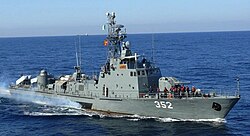
A Djebel Chenoua-class corvette, designed and built in Algeria: A Djebel Chenoua-class corvette, designed and built in Algeria
ภาพประกอบจากบทความต้นฉบับ: ภาพประกอบจากบทความต้นฉบับ
GDP per capita development in Algeria: GDP per capita development in Algeria
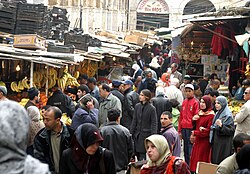
Street market in Algeria: Street market in Algeria
Pipelines across Algeria: Pipelines across Algeria
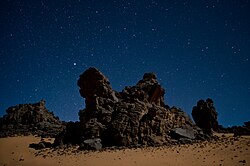
Djanet: Djanet
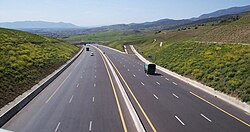
Infrastructure development, such as the Cairo–Dakar Highway project, connects Algeria to its neighbors, facilitating trade and movement across the continent.
The main highway connecting the Moroccan to the Tunisian border was a part of the Cairo–Dakar Highway project.: The main highway connecting the Moroccan to the Tunisian border was a part of the Cairo–Dakar Highway project.
Culture, Arts, and Traditions
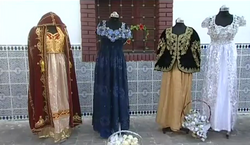
Algerian culture is a vibrant blend of Arab, Berber, and Mediterranean influences. This is reflected in the country's traditional clothing, diverse cuisine—with couscous being a staple—and its rich artistic expressions in painting, literature, and cinema.
Some of Algeria's traditional clothes: Some of Algeria's traditional clothes
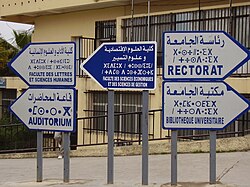
Signs in the University of Tizi Ouzou in three languages: Arabic, Berber, and French: Signs in the University of Tizi Ouzou in three languages: Arabic, Berber, and French
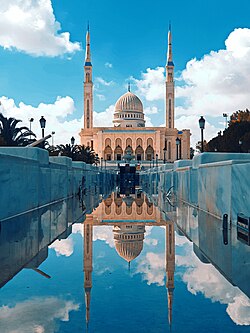
Emir Abdelkader Mosque in Constantine: Emir Abdelkader Mosque in Constantine
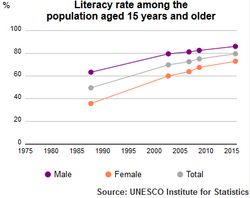
UIS literacy rate Algeria population plus 15 1985–2015: UIS literacy rate Algeria population plus 15 1985–2015
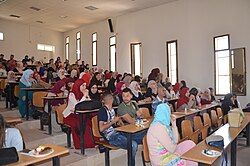
Students at the University of Chlef in Algeria: Students at the University of Chlef in Algeria
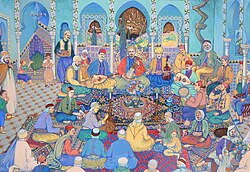
Algerian musicians in Tlemcen, Regency of Algiers; by Bachir Yellès: Algerian musicians in Tlemcen, Regency of Algiers; by Bachir Yellès
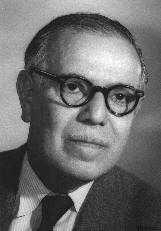
Mohammed Racim; founder of the Algerian school for painting: Mohammed Racim; founder of the Algerian school for painting
Ahlam Mosteghanemi, the most widely read female writer in the Arab world[309]: Ahlam Mosteghanemi, the most widely read female writer in the Arab world[309]
Mohammed Lakhdar-Hamina, one of the most prominent figures in contemporary Arabic cinema: Mohammed Lakhdar-Hamina, one of the most prominent figures in contemporary Arabic cinema
Couscous, the national dish of Algeria: Couscous, the national dish of Algeria
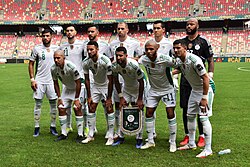
The Algeria national football team in 2022: The Algeria national football team in 2022
Summary of National Statistics
Algeria: Key Socio-Economic Indicators
Indicator
Value / Detail
Total Area
2,381,741 km²
Estimated Population (2025)
47,400,000
GDP (PPP) Estimate (2026)
$941.544 billion
GDP (Nominal) Estimate (2026)
$317.173 billion
HDI (2023)
0.763 (High)
Frequently Asked Questions
What are the official languages of Algeria?
The official languages of Algeria are Arabic and Tamazight. Additionally, French and English are commonly used in various sectors.
What makes up the majority of Algeria's territory?
The Sahara Desert makes up more than 90% of the country's total land area.
Who is the current President of Algeria?
As of the current records, Abdelmadjid Tebboune serves as the President of Algeria.
What is the national dish of Algeria?
Couscous is recognized as the national dish of Algeria.
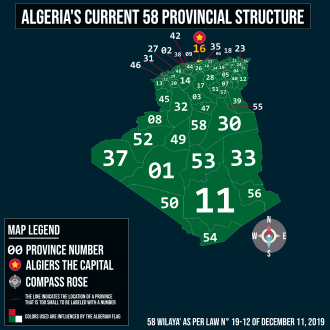
How many administrative divisions (wilayas) does Algeria have?
![The Algerian Desert makes up more than 90% of the country's total area.[175]](/images/74/d3/74d3323a45294589200e0b2b4181764d4ed2277530919eff18fc6299f574b85a.jpg)
![The Botanical Garden Hamma is home to an estimated 1,200 distinct plant species, including numerous rare and exotic varieties.[185]](/images/a9/77/a9771b9eb71610eb2114eb2e5c458248258fc600686498caa8427b64fbd69e92.jpg)
![Ahlam Mosteghanemi, the most widely read female writer in the Arab world[309]](/images/fe/17/fe178d6c2a1c5d625102a3a17b79ef4fd74bf06b2a9bfd194a655bc320d98c43.jpg)