Exploring North Africa: A Journey Through History, Culture, and Geography
North Africa is a region of profound historical depth and diverse cultural landscapes. Stretching from the Atlantic coast to the Red Sea, it serves as a vital bridge between Africa, the Mediterranean, and the Middle East. From the ancient civilizations of the Nile Valley to the vast, shifting sands of the Sahara, the region offers a complex tapestry of human achievement and biological history.
Whether examining the ancient legacies of Egypt and the Maghreb or understanding the modern demographic shifts, North Africa remains one of the most significant crossroads of human civilization.
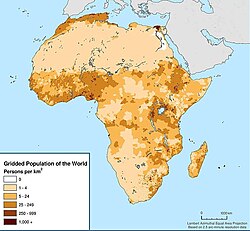
Key Facts
- Total Area: Approximately 7,862,221 km².
- Projected Population: 270,538,625 (by 2026).
- Primary Languages: Modern Standard Arabic (official), Berber (official in Algeria and Morocco), and French (administrative in Algeria, Morocco, and Tunisia).
- Major Ethnic Groups: Arabs (the largest group) and Berbers.
- Dominant Religion: Islam, with significant Christian (Copts) and Jewish minorities.
Regional Overview
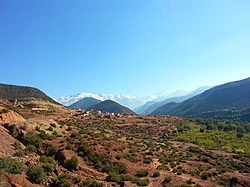
The geography of North Africa is often categorized into three distinct zones: the Maghreb (the western part of the Arab world), the Nile Valley (the eastern part), and the Sahel. This division reflects both the physical landscape and the historical settlement patterns of its people.
Sovereign States and Territories
The region is composed of several sovereign nations, though political boundaries and recognitions can vary. The primary sovereign states include:
- Algeria
- Egypt
- Libya
- Morocco
- Sudan (sometimes excluded from North African definitions)
- Tunisia
Additionally, the Sahrawi Arab Democratic Republic (Western Sahara) is a partially recognized state. The region also includes various dependencies and territories belonging to European states, such as the Canary Islands and Ceuta (Spain), and Madeira (Portugal).
| Country | Arab Population % | Berber Population % | Official/Administrative Languages |
|---|---|---|---|
| Algeria | 70% – 80% | 20% | Arabic, Berber, French |
| Libya | 92% – 97% | 10% | Arabic |
| Morocco | 67% – 70% | 35% | Arabic, Berber, French |
| Tunisia | 98% | 1% | Arabic, French |
Deep History: From Prehistory to Antiquity
The human story in North Africa begins millions of years ago. Archaeological evidence from sites like Ain-Hnech in Setif suggests hominid occupation dating back as far as 2.6 million years, with Oldowan technology—a primitive stone tool industry—found in layers dating to 1.8 million BCE.
The Green Sahara and Ancient Populations
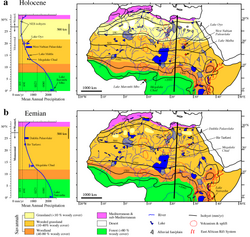
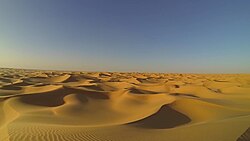
During the Holocene (the current geological epoch), the Sahara was not always a desert. Evidence from rock art and archaeological finds suggests the Sahara once hosted various populations before rapid desertification around 3500 BCE. These early inhabitants included Nilo-Saharan speaking groups and people with dark skin complexions, as suggested by the examination of ancient mummies.
![Limestone head of an early Egyptian king, The Petrie Museum. Modern scholars have considered the stone bust to depict an Early Dynastic or Old Kingdom pharaoh.[21][22][23][24]](/images/9b/cd/9bcdd7a238eaca938e62731b696af76b4a68e283d2abdfa354601d69a945940b.jpg)
Ancient Civilizations
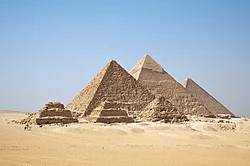
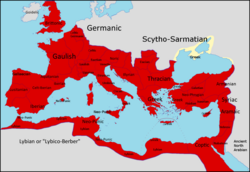
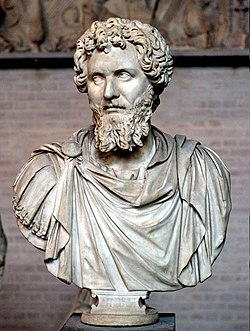
As the climate shifted, distinct civilizations emerged. The Nile Valley became the cradle of the Egyptian and Nubian civilizations, while the Maghreb was inhabited by Berbers and their ancestors since at least 10,000 BCE. The region later became a centerpiece of the Roman Empire, leaving behind a legacy of marble portraits and architectural wonders.
![Marble portrait of a Nubia denizen c. 120–100 BC.[39]](/images/08/73/08736328b95bd1c5bfdd2501ef9c8b011162e36432cd9c72cabcc4298668a1d2.jpg)
Genetic and Cultural Evolution
Modern North African genetics reveal a complex history of migration and admixture. DNA studies of the Iberomaurusian people from 15,000 years ago show a mixture of Near Eastern and African ancestry. Recent studies also suggest that certain ancestral lineages in the region were distinct from both contemporary sub-Saharan Africans and Eurasians.
The movement of people, such as the spread of the E1b1b genetic marker from the Horn of Africa into Egypt, has shaped the biological makeup of the region for millennia. This movement often paralleled the spread of language families, adding new components to the existing populations.
Religious and Ethnic Shifts
While the region is predominantly Muslim today, it has a rich history of religious diversity. Egypt has a significant Coptic Christian minority, and both Morocco and Tunisia have historically hosted Jewish populations. Following the independence of North African nations in the 1950s and 1960s, much of the Jewish population emigrated, leaving a small, predominantly French-speaking urban minority today.
![The Great Mosque of Kairouan in Tunisia, founded by Arab general Uqba ibn Nafi in 670, one of the oldest and most notable mosques in North Africa[55]](/images/77/46/774685bc46e506c302312adcefe8f6d7e91222de2c9aeebdf6facefe0596de46.jpg)
The Modern Era
The 20th century brought significant change to North Africa. The region was a theater for the North African Campaign during World War II (1940–1943). Following this, a wave of independence movements swept through the region in the 1950s and 1960s, leading to the establishment of the modern sovereign states we recognize today.
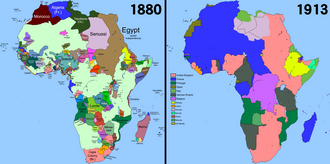
Despite modern stability in many areas, regional disputes remain, such as the ongoing tension over Western Sahara between Morocco and the Polisario Front. Today, the region continues to balance its ancient traditions with the demands of a modern, globalized economy.
Frequently Asked Questions
What are the main ethnic groups in North Africa?
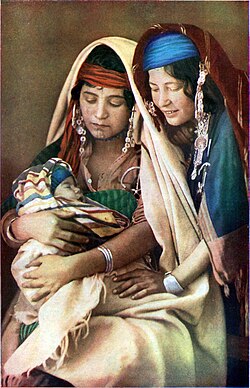
The largest ethnic group is the Arabs. Berbers also make up a significant portion of the population, particularly in Algeria and Morocco. Other groups, such as the Haratin, have historically occupied specific social and geographic niches in the Sahara.
Which languages are spoken in North Africa?
Modern Standard Arabic is the official language across the region. In Algeria and Morocco, Berber is also recognized as an official language. French is widely used as an administrative language in Algeria, Morocco, and Tunisia, while local dialects like Egyptian Arabic and Maghrebi Arabic are the most commonly spoken.
Was the Sahara always a desert?
No. Archaeological and geological evidence shows that the Sahara underwent periods of high humidity, often referred to as the "Green Sahara," which supported various populations and vegetation before its rapid desertification around 3500 BCE.
What is the Maghreb?
The Maghreb refers to the western part of North Africa. It is a cultural and geographic region that includes countries like Morocco, Algeria, and Tunisia.
How diverse is the religion in North Africa?
The region is predominantly Muslim. However, there are significant religious minorities, including Coptic Christians (especially in Egypt) and small Jewish communities in Morocco and Tunisia.