North Africa: History, Geography, and Cultural Evolution
North Africa is a vast and diverse region spanning approximately 7.8 million square kilometers. From the fertile banks of the Nile to the rugged peaks of the Atlas Mountains and the expansive sands of the Sahara, it has served as a crossroads of civilizations for millions of years. Today, it is a region defined by a rich blend of Arab and Berber heritage, shaped by ancient empires and modern struggles for independence.
The region is primarily composed of six sovereign states: Algeria, Egypt, Libya, Morocco, Sudan, and Tunisia. It also includes the partially recognized Sahrawi Arab Democratic Republic (Western Sahara) and several European dependencies, including the Canary Islands and Ceuta.
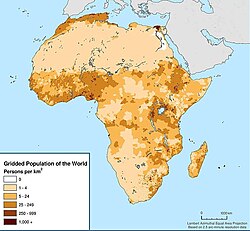
Key Facts
- Total Area: 7,862,221 km².
- Estimated Population: 270,538,625 (by 2026).
- Official Languages: Modern Standard Arabic is official across all countries; Berber is also official in Algeria and Morocco.
- Primary Ethnic Groups: Arabs and Berbers.
- Dominant Religion: Islam, with significant Christian (Coptic) and Jewish minorities.
Prehistoric Foundations and Early Human Life
North Africa holds some of the earliest evidence of human occupation on Earth. In Ain-Hnech, Setif, remnants of hominid activity date back 2.6 million years, while other sites near Saïda show signs of Oldowan technology (the earliest widespread stone tool industry) dating to 1.8 million BCE.
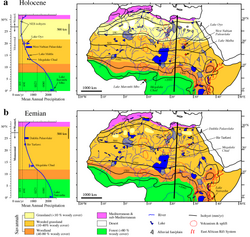
The landscape was not always an arid desert. During the early Holocene, the Sahara was a "Green Sahara," hosting various populations before rapid desertification occurred around 3500 B.C. Evidence from the Tassili n'Ajjer rock art and child mummies suggests that early Central Saharan peoples possessed dark skin complexions and were often Nilo-Saharan speakers before the later influx of Berber and Arabic speakers.
Genetic Heritage
Modern genetic studies provide a window into the region's ancestral makeup. DNA analysis of Iberomaurusian peoples in Morocco from 15,000 years ago reveals a mixture of Near Eastern and African ancestry. A 2025 study of the Takarkori people (7,000 years ago) suggests a distinct ancestral North African lineage that was separate from both contemporary sub-Saharan Africans and Eurasians, challenging the idea that the Green Sahara acted as a primary corridor between the two regions.
Antiquity and the Rise of Empires
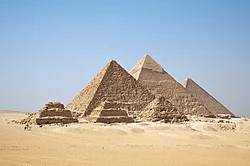
The region's history is marked by the rise of powerful indigenous and colonial civilizations. The Nile Valley became the cradle of the Ancient Egyptian and Nubian civilizations, while the Maghreb (western North Africa) was inhabited by Berbers and their ancestors since at least 10,000 B.C.
![Limestone head of an early Egyptian king, The Petrie Museum. Modern scholars have considered the stone bust to depict an Early Dynastic or Old Kingdom pharaoh.[21][22][23][24]](/images/9b/cd/9bcdd7a238eaca938e62731b696af76b4a68e283d2abdfa354601d69a945940b.jpg)
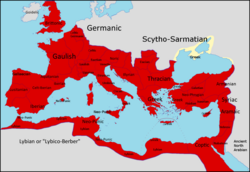
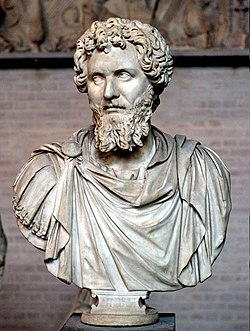
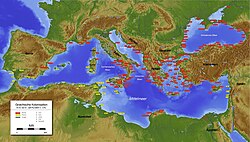
Following the era of the Pharaohs, the region saw significant influence from Phoenician and Greek colonies, and eventually became a vital part of the Roman Empire. This period produced notable figures such as Septimius Severus, the first Roman emperor native to North Africa, born in Leptis Magna.
![Marble portrait of a Nubia denizen c. 120–100 BC.[39]](/images/08/73/08736328b95bd1c5bfdd2501ef9c8b011162e36432cd9c72cabcc4298668a1d2.jpg)
Arab Conquest and the Modern Era
The arrival of Arab forces in the 7th century AD fundamentally transformed the region's linguistic and religious landscape. The founding of the Great Mosque of Kairouan in 670 AD by General Uqba ibn Nafi symbolizes the deep roots of Islam in the region.
![The Great Mosque of Kairouan in Tunisia, founded by Arab general Uqba ibn Nafi in 670, one of the oldest and most notable mosques in North Africa[55]](/images/77/46/774685bc46e506c302312adcefe8f6d7e91222de2c9aeebdf6facefe0596de46.jpg)
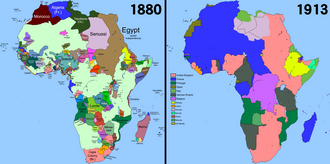
In the 20th century, North Africa became a strategic battleground during the North African Campaign of World War II (1940–1943). The subsequent decades of the 1950s and 1960s saw a wave of independence movements as North African states broke away from colonial rule. However, geopolitical tensions persist, most notably the dispute over Western Sahara between Morocco and the Polisario Front.
Geography and Demographics
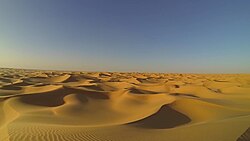
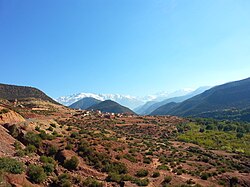
The region is geographically divided into the Maghreb, the Nile Valley, and the Sahel. The landscape is dominated by the Sahara Desert, characterized by massive sand dunes, and the Atlas Mountains in the northwest.
Ethnic and Linguistic Diversity
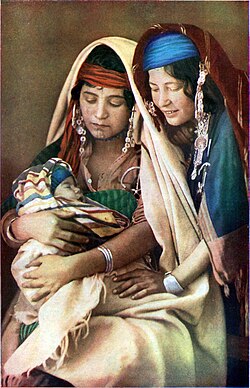
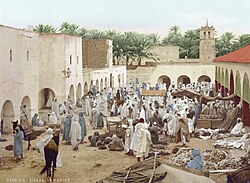
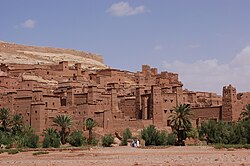
The population is predominantly Arab, though Berbers remain a significant presence, particularly in Morocco (35%) and Algeria (20%). While Modern Standard Arabic is the official language, daily communication often occurs in Maghrebi Arabic or Egyptian Arabic. French continues to serve as an administrative language in Tunisia, Algeria, and Morocco.
Religious and Cultural Shifts
While predominantly Muslim, North Africa has a history of religious pluralism. Egypt maintains a significant Coptic Christian minority. Historically, the Maghreb hosted a large Jewish population of both Sephardi and Mizrahi descent; however, most emigrated to France or Israel following independence, leaving a small minority today primarily in Morocco and Tunisia.
Regional Summary
| Country | Official Language(s) | Primary Ethnic Groups | Key Geographic Feature |
|---|---|---|---|
| Algeria | Arabic, Berber | Arab (70-80%), Berber (20%) | Sahara Desert |
| Egypt | Arabic | Arab (Predominant) | Nile Valley |
| Libya | Arabic | Arab (92-97%), Berber (10%) | Sahara Desert |
| Morocco | Arabic, Berber | Arab (67-70%), Berber (35%) | Atlas Mountains |
| Tunisia | Arabic | Arab (98%), Berber (1%) | Mediterranean Coast |
| Sudan | Arabic | Arab/Mixed | Nile Valley/Sahel |
Frequently Asked Questions
What is the Maghreb?
The Maghreb refers to the western part of North Africa, primarily comprising Morocco, Algeria, and Tunisia, and is historically associated with Berber and Arab cultures.
Who are the Berbers?
Berbers are the indigenous inhabitants of North Africa, having lived in the region since at least 10,000 B.C. They maintain a significant cultural and linguistic presence, especially in Morocco and Algeria.
How did the Sahara Desert change over time?
The Sahara was not always a desert; during the early Holocene (the "Green Sahara" period), it featured vegetation and water bodies that supported various human populations before rapid desertification around 3500 B.C.
What are the primary languages spoken in North Africa?
Modern Standard Arabic is the official language across the region. Common spoken dialects include Egyptian Arabic and Maghrebi Arabic. Berber is an official language in Morocco and Algeria, and French is used for administration in several countries.
What is the significance of the Coptic community in Egypt?
The Copts represent a significant Christian minority in Egypt and are part of the broader Christian presence in North Africa, which was estimated at 9 million people in 2001.