The Majesty of Abu Simbel: A Tale of Ancient Grandeur and Modern Rescue
Deep in the Nubian region of Egypt, carved directly into the living rock, stand two of the most breathtaking monuments of the ancient world: the Great Temple of Ramesses II and the Small Temple of Hathor and Nefertari. Known collectively as Abu Simbel, these structures are not merely feats of ancient engineering; they are symbols of survival, having been painstakingly moved to higher ground to escape the rising waters of Lake Nasser.
Key Facts
- Location: Aswan Governorate, Egypt (Nubia region).
- Built by: Pharaoh Ramesses II around 1264 BC.
- UNESCO Status: Designated as a World Heritage Site in 1979.
- Major Event: Relocated in the 1960s to prevent submersion by the Aswan High Dam.
- Architectural Highlight: Solar alignment that illuminates specific statues inside the Great Temple.
The Ancient Foundations
The construction of the Abu Simbel complex began approximately in 1264 BC and took roughly 20 years to complete. The Great Temple was dedicated to Ramesses II and was known in antiquity as the "Temple of Ramesses, Beloved by Amun."
The Great Temple of Ramesses II
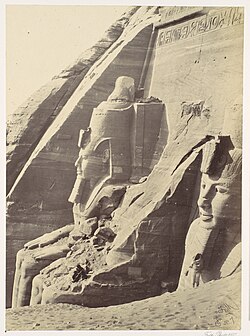
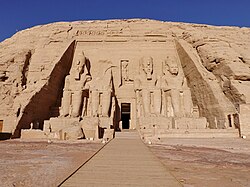
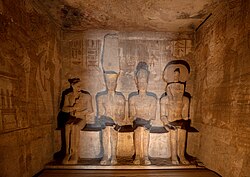
The Great Temple is defined by its massive facade, featuring four colossal statues of the Pharaoh. Inside, the temple is designed with incredible precision. One of its most famous features is the solar alignment: twice a year, the sun's rays penetrate 63.1 meters into the innermost sanctuary to illuminate the statues of Ramesses, Amun, and Ra-Horakhty, while leaving the statue of Ptah in shadow.
The Small Temple of Hathor and Nefertari
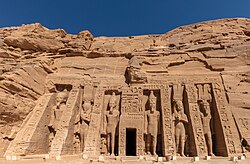
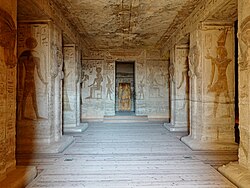
Located about 100 meters northeast of the Great Temple, the Small Temple is dedicated to the goddess Hathor and Ramesses II's chief consort, Nefertari. This was a rare honor, marking only the second time in ancient Egyptian history that a temple was dedicated to a queen (the first being Akhenaten's temple to Nefertiti). The facade features statues of the king and queen, some standing over 10 meters high.
Rediscovery and Early Exploration
For centuries, much of Abu Simbel lay buried under desert sands. The modern era of exploration began in earnest in 1817 when the Italian explorer Giovanni Belzoni, supported by Egyptian Consul-General Henry Salt, successfully cleared the sand to enter the Great Temple.
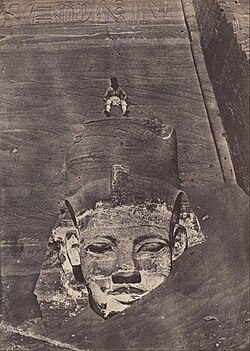
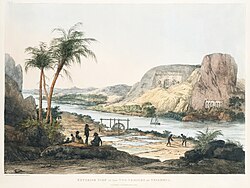
Following Belzoni, other notable figures documented the site. The French scholar Jean-François Champollion visited in 1828 to verify his hieroglyphic system, while the Scottish painter David Roberts created detailed watercolours in 1838. By the mid-19th century, early photography began to capture the site, most notably through the work of Francis Frith in 1857.
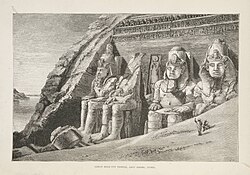
The Great Relocation Project
In the mid-20th century, the construction of the Aswan High Dam threatened to submerge the temples under the newly formed Lake Nasser. This sparked an unprecedented international rescue mission.
Dismantling and Reassembly
The relocation was a monumental engineering task. The temples were cut into massive blocks and moved to a higher location. The Great Temple was reconstructed using 807 blocks, while the Small Temple required 235 blocks. To protect the interiors from the weight of the new artificial hill, engineers constructed reinforced protective domes behind the temples.
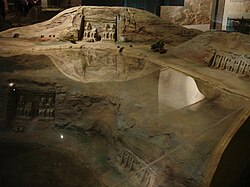
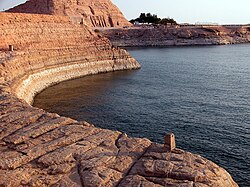
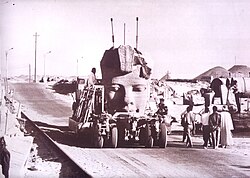
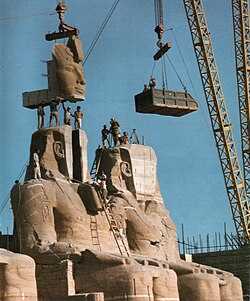
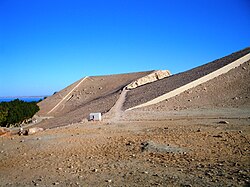
The project was a global effort, costing approximately $41.7 million (equivalent to roughly $436 million in 2025). Half of the funding was provided by Egypt, with the remainder contributed by 48 different countries.
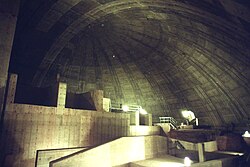
The Result of the Rescue
By 1966, the reassembly was complete. On February 22, 1966, the team confirmed that the solar alignment remained intact at the new site. While the temples look remarkably similar to their original state, the relocation was a necessary intervention to preserve these cultural treasures for eternity.
Summary of Abu Simbel
| Feature | Great Temple | Small Temple |
|---|---|---|
| Primary Deity | Ramesses II, Amun, Ra-Horakhty, Ptah | Hathor and Nefertari |
| Key Figures | Ramesses II | Ramesses II and Queen Nefertari |
| Construction Era | c. 1264–1244 BC | New Kingdom |
| Relocation Blocks | 807 blocks | 235 blocks |
Frequently Asked Questions
Why were the temples of Abu Simbel moved?
The temples were moved to prevent them from being destroyed by the rising waters of Lake Nasser, which was created by the construction of the Aswan High Dam.
What is the significance of the solar alignment in the Great Temple?
The temple was designed so that on two specific days of the year, the sun's rays shine deep into the inner sanctuary to illuminate the statues of the gods, demonstrating the advanced astronomical knowledge of the ancient Egyptians.
Who built the Abu Simbel temples?
The temples were commissioned and built by the Pharaoh Ramesses II during the New Kingdom period of ancient Egypt.
How can visitors reach Abu Simbel today?
Visitors can travel to the site via Abu Simbel Airport, a domestic airport located just 2 km from the temples, which was established to accommodate tourists during the relocation era.
Is the Small Temple different from the Great Temple?
Yes. While the Great Temple is dedicated to Ramesses II and several major gods, the Small Temple is dedicated to the goddess Hathor and Queen Nefertari, making it a rare example of a temple dedicated to a royal consort.