Alexios I Komnenos: The Architect of Byzantine Recovery
The ascent of Alexios I Komnenos to the Byzantine throne in 1081 marked a pivotal turning point for an empire on the brink of collapse. Inheriting a state besieged by internal instability and external invasions, Alexios spent his thirty-seven-year reign employing a sophisticated blend of military grit and diplomatic cunning to secure the borders of Byzantium and restore its prestige.
Born into the influential Komnenos family, Alexios was the son of John Komnenos and Anna Dalassene. He rose through the military ranks under several emperors, distinguishing himself in campaigns against the Seljuk Turks and suppressing internal rebellions in Asia Minor, Thrace, and Epirus. His early career was defined by his ability to subdue threats, such as the 1074 rebellion of western mercenaries led by Roussel de Bailleul.
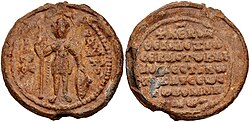
The Path to Power: Conspiracy and Coup
Alexios's rise to the throne was not a simple succession but the result of a calculated political conspiracy against Emperor Nikephoros III Botaneiates. The driving force behind this movement was Alexios's mother, Anna Dalassene, who forged a strategic alliance with Empress Maria of Alania. To legitimize the coup, Maria adopted Alexios as her son, a practice known as adoptive kingship—a social trend in the palace used to tie non-blood relatives to the imperial lineage through sacred oaths of loyalty.
In February 1081, while Alexios and his brother Isaac raised an army, Anna Dalassene executed a daring distraction in Constantinople. She sought sanctuary in the Hagia Sophia, using a display of grief and religious devotion to force Nikephoros III into a public vow of safety for her family. This maneuver provided the necessary cover for Alexios and Isaac to bribe the city's guards and enter the capital victoriously on April 1, 1081.
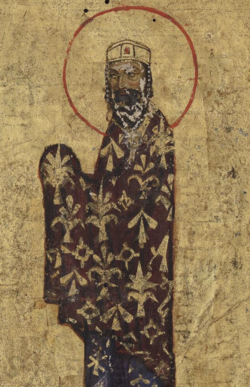
Key Facts
- Reign: 1081–1118 (37 years).
- Dynasty: Founder of the Komnenian restoration.
- Major Adversaries: Normans, Pechenegs, and Seljuk Turks.
- Key Diplomatic Move: Requested aid from Pope Urban II, inadvertently triggering the First Crusade.
- Military Triumph: Decisive victory over the Pechenegs at the Battle of Levounion (1091).
Defending the Empire: Normans and Pechenegs
Alexios immediately faced a formidable threat from the Normans of Southern Italy, led by Robert Guiscard and his son Bohemond. After several early defeats, Alexios utilized financial diplomacy, paying German King Henry IV 360,000 gold pieces to attack the Normans in Italy, forcing them to retreat. The Norman threat finally subsided following Guiscard's death in 1085.
Simultaneously, the empire struggled with internal heresy from the Bogomils and Paulicians, who allied with the Pechenegs (nomadic Turkic people from beyond the Danube). After a period of setbacks and paying protection money, Alexios secured a critical alliance with 40,000 Cumans. This partnership led to the total destruction of the Pecheneg threat at the Battle of Levounion on April 29, 1091.
The First Crusade and the Seljuk Conflict
By 1090, the Seljuk Turks had overrun much of Asia Minor. Seeking professional mercenaries to reclaim these lands, Alexios sent ambassadors to Pope Urban II at the Council of Piacenza in 1095. However, the response was far larger than anticipated: the First Crusade.
The first wave, the "People's Crusade" led by Peter the Hermit, consisted of unarmed peasants who caused chaos in the Balkans before being massacred by the Turks at the Battle of Civetot in 1096. The subsequent "Prince's Crusade," led by nobles like Godfrey of Bouillon and Bohemond of Taranto, was more effective. Alexios required these leaders to swear oaths of homage, promising to return conquered Byzantine territories to the empire.
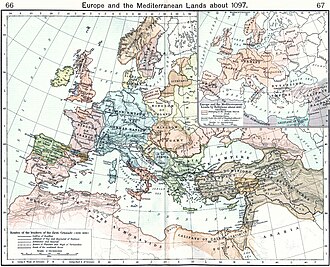
Through this alliance, Alexios recovered Nicaea in 1097 and regained control over western Asia Minor, including Chios, Rhodes, and Ephesus. While the relationship with the Crusaders soured—particularly after Bohemond refused to return Antioch—Alexios successfully used the Crusade to stabilize the empire's eastern frontier.
Summary of Major Conflicts and Outcomes
| Opponent | Key Event/Battle | Outcome |
|---|---|---|
| Normans | Invasion of Dyrrhachium | Initial losses; eventually repelled via German alliance. |
| Pechenegs | Battle of Levounion (1091) | Decisive Byzantine-Cuman victory; ended Pecheneg threat. |
| Seljuk Turks | First Crusade / Nicaea (1097) | Recovery of western Asia Minor and coastal cities. |
| Seljuk Turks | Battle of Philomelion (1117) | Victory over the Sultan of Iconium late in his reign. |
Final Years and Legacy
Despite terminal illness in his final years, Alexios remained active in the defense of his territories. In 1117, he led a successful offensive into the Anatolian Plateau, defeating the Seljuk sultan at the Battle of Philomelion. His reign transformed the Byzantine Empire from a state on the verge of collapse into a resilient power, setting the stage for the Komnenian era of stability.
Frequently Asked Questions
How did Alexios I come to power?
Alexios seized the throne in 1081 through a coup against Nikephoros III Botaneiates, orchestrated by his mother, Anna Dalassene, and Empress Maria of Alania.
What was the role of the First Crusade in his reign?
While Alexios only requested mercenary aid, the resulting First Crusade helped him recover significant territories in Asia Minor, including Nicaea and several coastal cities, though it created long-term tension with Western Latin powers.
Who were the Pechenegs and how were they defeated?
The Pechenegs were nomadic tribes who raided Thrace and the Balkans. Alexios defeated them decisively in 1091 at the Battle of Levounion by forming a strategic alliance with the Cumans.
What was "adoptive kingship" in the context of Alexios's rise?
Adoptive kingship was a palace custom where a prospective leader was adopted by a member of the imperial family to create a legal and sacred bond of loyalty, legitimizing their claim to the throne.
How did Alexios handle the Norman threat?
He combined military resistance with diplomacy, notably paying King Henry IV of Germany to attack the Normans in Italy, which diverted their attention away from Byzantine lands.