Albert Baldwin Wood: The Engineer Who Drained New Orleans
New Orleans is a city defined by its relationship with water. For much of its history, the city struggled with chronic flooding and the challenges of building on unstable, low-lying terrain. The transformation of this flood-prone landscape into a modern urban center was made possible largely through the genius of Albert Baldwin Wood, an inventor and engineer whose hydraulic innovations redefined urban drainage.
Born on December 1, 1879, in New Orleans, Louisiana, Wood pursued a rigorous academic path, graduating from Tulane University in 1899 with a Bachelor of Science in Engineering. His career began immediately upon graduation when he was hired by the Sewerage & Water Board of New Orleans, where he would spend the majority of his professional life solving the city's most pressing environmental challenges.
Engineering a Dry City
Upon joining the Sewerage & Water Board, Wood focused on improving the city's drainage infrastructure. He developed several hydraulic devices, including flapgates—valves that allow water to flow in one direction but prevent backflow—to manage the movement of water more effectively.
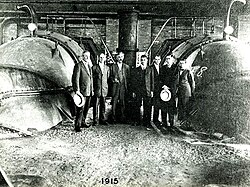
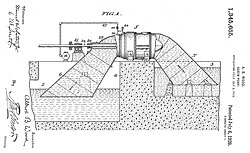
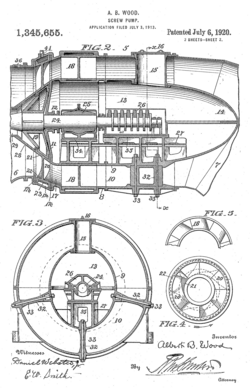
His most significant contributions were his high-volume, low-maintenance pumps. In 1913, he introduced the Wood Screw Pump, a design capable of moving massive quantities of water with exceptional efficiency. He followed this in 1915 with the Wood Trash Pump, designed to handle debris-laden water without clogging. These inventions were instrumental in swampland reclamation, allowing the city to develop vast areas of land that were previously uninhabitable.
Global Impact and Lasting Legacy
While his heart and primary work remained in Louisiana, Wood's expertise was sought worldwide. He served as a consultant and designer for drainage, sewage, and pumping systems in major American cities, including San Francisco, Baltimore, Milwaukee, and Chicago. His influence extended internationally, with projects in India, China, Egypt, and Canada.
Notably, Wood's engineering principles contributed to the Zuiderzee Works in the Netherlands, one of the most ambitious land reclamation projects in history, which reclaimed significant portions of land from the Zuider Zee.
The durability of Wood's designs is legendary. Some of his pumps in New Orleans remained in almost continuous operation for over 80 years without requiring repairs, and his original designs are still used to build new pumps today.
Key Facts
- Full Name: Albert Baldwin Wood (1879–1956).
- Education: B.S. in Engineering from Tulane University (1899).
- Primary Innovations: The Wood Screw Pump (1913) and the Wood Trash Pump (1915).
- Major Achievement: Spearheaded the reclamation of swampland for the expansion of New Orleans.
- Global Reach: Consulted on infrastructure in the US, Canada, Egypt, China, India, and the Netherlands.
| Category | Details |
|---|---|
| Key Inventions | Wood Screw Pump, Wood Trash Pump, Flapgates |
| Primary Employer | Sewerage & Water Board of New Orleans |
| International Projects | Zuiderzee Works (Netherlands), projects in Egypt, China, and India |
| Academic Affiliation | Tulane University |
The Saga of the Nydia
Beyond his engineering feats, Wood had a passion for sailing. Upon his death on May 10, 1956, he left a bequest to Tulane University with a specific condition: the university must preserve and display his sailboat, the Nydia, for 99 years. For several decades, the boat was housed in a glass-fronted display between the Fogelman Arena and the University Center.
However, during the renovation and expansion of the University Center in 2003, the boat was moved. Because the university failed to strictly adhere to the terms of the will, Wood's heirs reclaimed the vessel. The Nydia is now displayed at the Maritime and Seafood Industry Museum in Biloxi, Mississippi, returning it to the region where it was originally built at the Johnson Shipyard.
Frequently Asked Questions
What is a Wood Screw Pump?
The Wood Screw Pump, invented in 1913, is a high-volume, low-maintenance hydraulic pump designed to move large quantities of water efficiently, which was critical for draining the low-lying areas of New Orleans.
How did Albert Baldwin Wood help New Orleans grow?
By inventing efficient pumping systems and flapgates, Wood enabled the reclamation of swampland, turning flood-prone areas into developable land for the city's expansion.
Did Wood work outside of the United States?
Yes, he consulted on drainage and sewage projects in Canada, Egypt, China, and India, and provided assistance for the Zuiderzee Works in the Netherlands.
What happened to the sailboat Nydia?
Originally left to Tulane University for 99 years, the Nydia was reclaimed by Wood's heirs after the university failed to meet the terms of the will. It is now located at the Maritime and Seafood Industry Museum in Biloxi, Mississippi.
Are Wood's pumps still in use today?
Yes, some of his pumps operated for over 80 years without repair, and his original designs continue to be used in the construction of new pumps.