Tulane University: A Legacy of Research and Excellence in New Orleans
Located in the heart of New Orleans, Louisiana, Tulane University is a premier private research institution known for its academic rigor and deep integration with the vibrant culture of its host city. With a history spanning nearly two centuries, Tulane has evolved from a specialized medical college into a comprehensive university recognized globally for its contributions to science, law, and the humanities.
The university operates under the motto Non Sibi Sed Suis, which translates from Latin as "Not for oneself, but for one's own," reflecting a commitment to community and service that permeates its campus culture.

Key Facts
- Established: 1834 (originally as the Medical College of Louisiana).
- Classification: R1 Doctoral University with very high research activity.
- Endowment: $2.47 billion (as of 2025).
- Student Population: 14,027 students (Fall 2022), comprising 8,610 undergraduates and 5,452 postgraduates.
- Affiliations: Member of the Association of American Universities (AAU).
- Athletics: Known as the Green Wave, competing in NCAA Division I FBS.
Historical Evolution
Tulane's origins date back to 1834 with the founding of the Medical College of Louisiana. By 1847, it expanded its scope to become the University of Louisiana, a comprehensive public institution. A pivotal shift occurred in the late 19th century when the university transitioned to a private entity through the generous endowments of philanthropists Paul Tulane in 1884 and Josephine Louise Newcomb in 1887.
This foundation allowed the university to establish some of the oldest professional schools in the United States. The Tulane University School of Law is the 12th oldest law school in the country, while the Tulane University School of Medicine ranks as the 15th oldest.
Campus and Facilities
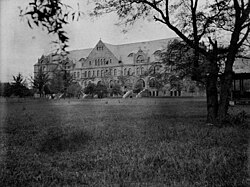
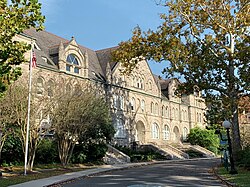
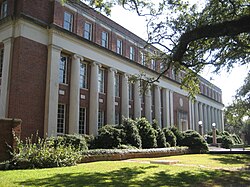
The primary campus is located Uptown in New Orleans, spanning 110 acres. The Uptown campus is a blend of architectural styles, including Renaissance, Romanesque, and Modern. A central landmark is the Gibson Quadrangle, which is listed on the U.S. National Register of Historic Places.
Beyond the main campus, Tulane maintains several specialized locations:
- Tulane University Square: A 6-acre site providing 80,000 square feet of space adjacent to the Mississippi River.
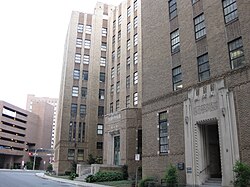
- Medical District: The School of Medicine and Tulane University Hospital are situated in downtown New Orleans.
- Satellite Campuses: The university also maintains a presence in Covington and Harahan.


Academic Excellence and Research
Tulane is classified as an R1: Doctoral University, indicating the highest level of research activity. In fiscal year 2023, the university reported research expenditures of $258.439 million. Its commitment to scholarship is evidenced by its membership in the Association of American Universities (AAU), an invitation-only group of leading research universities.
The university's academic prestige is reflected in its high number of prestigious scholars, including 155 Fulbright Scholars, 23 Marshall Scholars, and 17 Rhodes Scholars.


Academic Rankings Summary
Tulane consistently ranks among the top universities nationally and globally. According to the 2025 U.S. News & World Report, it is tied for 63rd among U.S. national universities. It is particularly noted for its strengths in Public Health (ranked 13th) and Health Care Management (ranked 17th).
| Program | National Ranking |
|---|---|
| Public Health | 13 |
| Health Care Management | 17 |
| Social Work | 36 |
| Law | 54 |
| History | 63 |
| Economics | 72 |
| Business | 74 |
Student Life and Athletics
Student life at Tulane is characterized by a diverse population and a strong emphasis on community engagement. The student body is approximately 65% White, 11% Hispanic, 7% Black, and 6% Asian, with 10% of students coming from low-income backgrounds.
The university's athletic teams, known as the Green Wave, compete in NCAA Division I. The football team plays its home games at Yulman Stadium, located on the Uptown campus. The university's mascot is Riptide the Pelican.


Frequently Asked Questions
When was Tulane University founded?
Tulane was founded in 1834 as the Medical College of Louisiana before evolving into a comprehensive university.
What is the university's research classification?
Tulane is classified as an "R1: Doctoral University – Very high research activity," the highest tier for research institutions in the United States.
Which professional schools at Tulane are among the oldest in the U.S.?
The Tulane University School of Law is the 12th oldest law school, and the Tulane University School of Medicine is the 15th oldest medical school in the United States.
What are the university's official colors and mascot?
The official colors are green and blue, and the mascot is Riptide the Pelican.
Where is the main campus located?
The main campus is located Uptown in New Orleans, Louisiana, and is bounded by St. Charles Avenue, S. Claiborne, Broadway, and Calhoun Streets.