University of Chicago: A Legacy of Research, Excellence, and Global Impact
Founded in 1890 by John D. Rockefeller, the University of Chicago has established itself as one of the world's premier private research institutions. Guided by its Latin motto, "Crescat scientia; vita excolatur"—which translates to "Let knowledge grow from more to more; and so be human life enriched"—the university has spent over 136 years pushing the boundaries of human understanding.
From its origins in the heart of Illinois to its expanding global footprint, the university serves as a hub for intense intellectual inquiry and groundbreaking scientific discovery.

Key Facts

- Established: 1890
- Founder: John D. Rockefeller
- Endowment: $10.9 billion (as of 2026)
- Motto: Crescat scientia; vita excolatur
- Student Population: Approximately 18,732 (2025)
- Global Presence: Campuses and centers in Beijing, Delhi, Hong Kong, London, Luxor, and Paris
Academic Excellence and Global Rankings
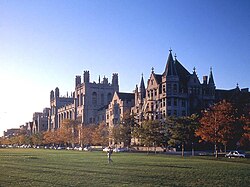
The University of Chicago is consistently recognized among the top academic institutions globally. Its reputation for rigorous scholarship is reflected in various prestigious rankings. Nationally, it holds high positions in U.S. News & World Report (ranked 6th) and Forbes (ranked 13th). Globally, the university performs exceptionally well in the ARWU (ranked 10th), THE (ranked 15th), and QS (ranked 24th) world university rankings.
The institution's academic structure is diverse, comprising an undergraduate college, various graduate research divisions, and specialized professional schools. This ecosystem supports a faculty of over 3,400 members and a robust student body of undergraduates and postgraduates.
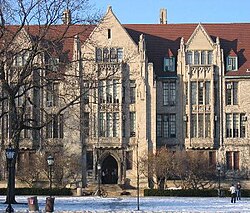
Research and Scientific Milestones
A cornerstone of the university's identity is its commitment to research. One of its most significant historical achievements was the production of the world's first human-caused self-sustaining nuclear reaction, a feat achieved by a dedicated team that included luminaries such as Enrico Fermi and Leó Szilárd.
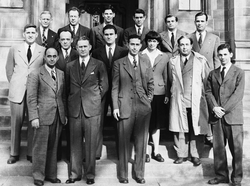
Beyond physics, the university co-manages Fermilab, a major science research laboratory, further cementing its role as a leader in the scientific community.

Campus Life and Architecture
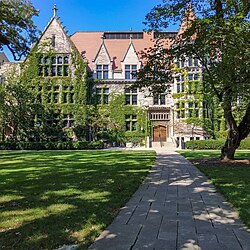
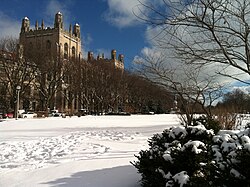
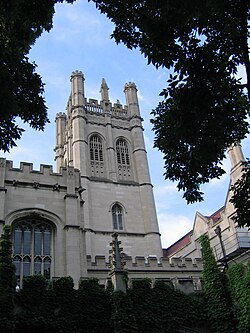
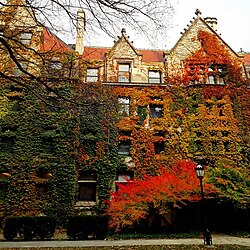
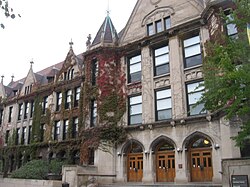
The main campus spans 217 acres in Chicago, Illinois, characterized by its stunning Collegiate Gothic architecture. Many of the older buildings were designed to evoke the academic atmosphere of the University of Oxford, featuring intricate stone details and grand quadrangles.
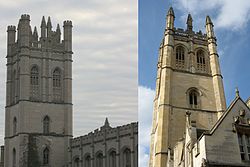
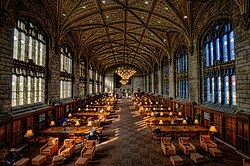
Notable architectural landmarks include the Harper Memorial Library, dedicated in 1912, and the Mitchell Tower. The campus is organized around central spaces like the Main Quadrangles, providing a serene environment for study and reflection.
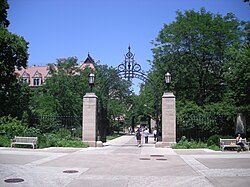
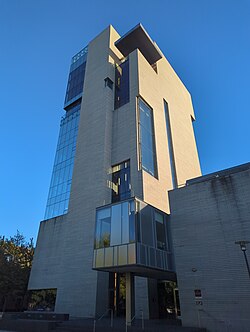
Student life is vibrant and multifaceted. From the traditions of the massive Scavenger Hunt to the community spirit found in residential commons, there is a deep sense of engagement. The university also provides modern amenities, such as the Reva and David Logan Center for the Arts and the Reynolds Club, the central student hub.

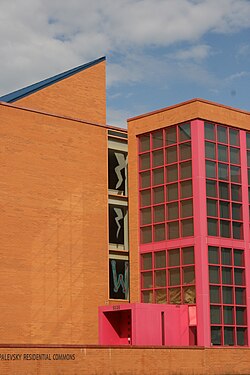
Transportation and housing are integral to the student experience. The university utilizes shuttle buses to facilitate movement around the area, and residential options range from traditional dormitories to modern designs like the Max Palevsky Residential Commons, designed by architect Ricardo Legorreta.

Summary of University Statistics

| Category | Details |
|---|---|
| Total Students | 18,732 |
| Undergraduates | 7,496 |
| Postgraduates | 11,195 |
| Faculty Count | 3,418 |
| Administrative Staff | 23,217 |
| Admit Rate | 4.8% |
Frequently Asked Questions


What is the University of Chicago's motto?
The motto is "Crescat scientia; vita excolatur," which means "Let knowledge grow from more to more; and so be human life enriched."
Where is the University of Chicago located?
The main campus is located in Chicago, Illinois, United States, covering 217 acres. The university also maintains international academic facilities in locations including Hong Kong, London, Paris, and Delhi.
How competitive is admission to the university?
The university is highly selective; for the 2023 entering class, the admit rate was 4.8%, with a yield rate of 87.9%.
What are the university's official colors and mascot?
The official colors are Maroon, and the mascot is Phil the Phoenix.
Does the university have an athletic program?
Yes, the university's athletic teams are known as the Maroons and participate in various sporting affiliations, including NCAA Division III and the UAA.