Air Force: Evolution, Organization, and Strategic Role in Aerial Warfare
An air force is a national military branch dedicated primarily to aerial warfare. While many nations maintain aviation units within their armies or navies, a formal air force is a distinct entity responsible for gaining control of the air, executing strategic and tactical bombing, and providing essential support to land and sea forces through close air support and aerial reconnaissance.
Beyond combat, air forces manage a diverse array of assets, including fighters, bombers, helicopters, and transport aircraft. In many nations, they also oversee air defense systems—such as surface-to-air missiles and anti-aircraft artillery—and may be responsible for military space operations and intercontinental ballistic missiles (ICBMs). During peacetime, these forces pivot to air policing and air-sea rescue operations.
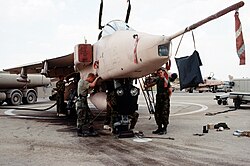
While pilots are the most visible members, an air force relies on a massive support infrastructure. This includes specialists in logistics, security, intelligence, cyber space support, maintenance, and weapons loading.
Key Facts
- Primary Mission: Achieving air superiority and conducting strategic/tactical bombing.
- First Aviation Force: The Aviation Military of the French Army, formed in 1910.
- First Independent Air Force: The British Royal Air Force (RAF), established April 1, 1918.
- Core Assets: A mix of fixed-wing aircraft (fighters, bombers), rotary-wing aircraft (helicopters), and air defense systems.
- Support Roles: Includes critical non-pilot functions like CBRN defense, cyber support, and logistics.
The History of Military Aviation
The Rise of Heavier-than-Air Aircraft
The dawn of military aviation began with the French Army's Aviation Military in 1910. Shortly after, in 1911, Italy became the first nation to use aircraft for bombing and reconnaissance during the Italo-Turkish War. By World War I, the British Empire, France, Germany, Italy, and the Ottoman Empire had deployed significant forces of fighters and bombers, giving rise to the first generation of flying aces and senior aerial commanders.
The Emergence of Independent Air Forces
An independent air force is a separate military branch equal in status to the army or navy. The British Royal Air Force (RAF) led this trend in 1918 by merging the Royal Flying Corps and the Royal Naval Air Service, starting with over 20,000 aircraft.
Other nations followed suit throughout the early 20th century. The South African Air Force (1920) and Royal Australian Air Force (1921) were established shortly after the RAF. The Royal Canadian Air Force became permanent in 1924, though it didn't achieve full independence from the army until 1938. Other notable early independent forces include the Afghan Air Force (1924), the Italian Royal Air Force (1923), and the Brazilian Air Force (1941). The United States Air Force (USAF) and Philippine Air Force both became separate branches in 1947.
Air Power in the World Wars
World War I: The Experimental Era
Early aerial warfare was primitive. Germany's Luftstreitkräfte pioneered regular attacks on infrastructure, using zeppelins (large dirigible airships) to bomb British cities. British aircraft primarily focused on artillery spotting and hunting German U-boats (submarines). Due to unreliable machinery and limited training, early aviators faced extremely low life expectancies.
World War II: Strategic Dominance
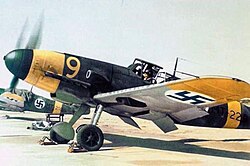
By 1939, aircraft were faster and more reliable, replacing airships as the primary tool for bombing. The Soviet Red Air Force was the world's largest at the start of the war, engaging in massive operations against the German Luftwaffe.
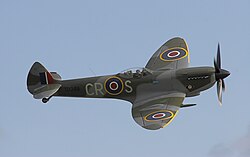
One of the most pivotal moments in history was the Battle of Britain in 1940, where the RAF successfully defended the UK, forcing Adolf Hitler to abandon his invasion plans.
The Evolution of Strategic Bombing
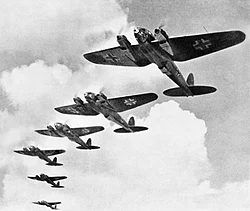
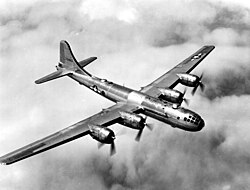
Strategic bombing—targeting an enemy's industrial and civilian infrastructure—was developed in the 1930s by Japan and Germany. This reached its peak during the Allied "Thousand Bomber Raids" of WWII. The conflict concluded in August 1945 when the USAF's Boeing B-29 Superfortress bombers dropped atomic bombs on Hiroshima and Nagasaki.
Post-War Developments and Modern Organization
The Cold War era saw the introduction of the jet engine, missiles, helicopters, and inflight refueling. Both the USAF and the Soviet Air Force focused heavily on nuclear-capable strategic bombers. In 1954, Japan established the Japan Air Self-Defense Force as a separate service.
Organizational Structure
Air force structures vary by nation. The USAF and RAF typically use a hierarchy of commands, groups, and squadrons. In contrast, the Soviet model followed an army-style structure. China's air force is organized into four departments (Command, Political, Logistic, and Equipment) under a central headquarters.
| Unit Name | Personnel | Aircraft | Commanding Officer |
|---|---|---|---|
| Wing / Group | 1,000–5,000 | 48–100 | Brig-Gen / AVM |
| Group / Wing (Station) | 300–1,000 | 17–48 | Col / Gp Capt |
| Squadron | 100–300 | 7–16 | Lt Col / Sqn Ldr |
| Flight | 20–100 | 4–6 | Capt / Flt Lt |
Ground and Special Operations
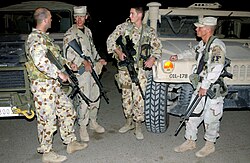
Air forces are not exclusively airborne. They employ Airborne infantry and air assault units for the ground-based defense of air bases and specialized roles like Chemical, Biological, Radiological and Nuclear (CBRN) defense.
Additionally, many air forces maintain special forces for high-stakes missions, including combat search and rescue, special reconnaissance, counterinsurgency, and serving as joint terminal attack controllers (JTAC) to coordinate air strikes for ground forces.
Frequently Asked Questions
What is the difference between an air force and army aviation?
An air force is a separate, independent military branch responsible for national aerial warfare strategy, whereas army aviation consists of aviation units that operate under the command of the army to support ground troops.
Which was the first independent air force in the world?
The British Royal Air Force (RAF), founded on April 1, 1918, is widely recognized as the first independent air force, though some argue the Finnish Air Force (formed March 6, 1918) holds this distinction.
What is strategic bombing?
Strategic bombing is the military practice of attacking an enemy's infrastructure, industry, and logistics to destroy their capacity to wage war, rather than targeting specific tactical military units on a battlefield.
Do air forces have soldiers on the ground?
Yes. Air forces employ infantry for base security, CBRN defense, and special operations, including combat search and rescue and intelligence gathering.
What roles do non-pilots play in an air force?
Non-pilots provide essential support in areas such as aircraft maintenance, weapons loading, logistics, cybersecurity, intelligence, and airfield security.