Air Chief Marshal Sir Richard Johns: A Legacy of RAF Leadership
Air Chief Marshal Sir Richard Johns is a distinguished retired senior commander of the Royal Air Force (RAF) whose career spanned over four decades of service to the United Kingdom. From his early days as a fighter pilot in the 1960s to reaching the highest rank in the RAF, Sir Richard's trajectory is marked by operational excellence, strategic planning, and high-level diplomatic service.
His career is characterized by a steady ascent through the ranks, combining frontline combat experience with senior administrative and advisory roles. Beyond his military achievements, he has served the Crown in prestigious capacities, including as the Constable and Governor of Windsor Castle.
Key Facts
- Highest Rank: Air Chief Marshal.
- Top Command: Chief of the Air Staff (1997–2000).
- Major Conflicts: Gulf War (Operation Granby) and the Kosovo War.
- Notable Achievement: Trained King Charles III (then Prince of Wales) to wings standard on the Jet Provost.
- Post-Military Role: Constable and Governor of Windsor Castle (2000–2007).
Early Career and Flight Training
Born on 28 July 1939 in Horsham, West Sussex, Richard Johns was the son of Lieutenant Colonel Herbert Edward Johns and Marjory Harley Johns. He received his education at Portsmouth Grammar School and the RAF College Cranwell, the primary officer training school for the Royal Air Force. He was officially commissioned into the RAF on 15 December 1959.
Johns began his flying career training on Piston Provost and Gloster Meteor aircraft. He spent his early years as a fighter pilot operating Gloster Javelins, serving in various locations including the UK, Cyprus, and Aden. His rapid progression in rank saw him become a flying officer in 1960, a flight lieutenant in 1962, and a squadron leader by 1969.
Instruction and Royal Service
As a Qualified Flying Instructor (QFI)—a pilot certified to teach others how to fly—Sir Richard played a significant role in the training of royalty. In 1971, he trained the then Prince of Wales (now King Charles III) to wings standard using the Jet Provost aircraft. This service led to his appointment as a Lieutenant of the Royal Victorian Order in 1972.
Command and Operational Leadership
Throughout the 1970s and 1980s, Sir Richard transitioned from instructional roles to command positions. After attending Staff College in 1972 and serving as a Personal Staff Officer in Cyprus, he was promoted to wing commander in 1974. By 1975, he took command of No. 3(F) Squadron, where he flew Harriers—vertical take-off and landing (VTOL) jets—operating out of RAF Wildenrath and RAF Gütersloh.
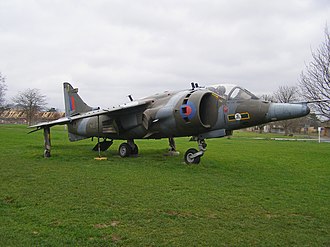
In 1982, he became the Station Commander and Harrier Force Commander at RAF Gütersloh. His leadership continued to expand as he moved into senior staff roles, including Senior Air Staff Officer at RAF Germany and later at RAF Strike Command in 1989.
Strategic Roles in Global Conflicts
Sir Richard's expertise in operational planning became critical during the 1990s. In 1991, he served as one of three British directors of operations on the senior planning staff for Operation Granby, the British contribution to the Gulf War. Following this, he acted as a supporting commander for joint operations in the Balkans in 1994 while serving as Commander-in-Chief of Allied Forces North West Europe for NATO.
Chief of the Air Staff and Retirement
The pinnacle of his military career came in 1997 when he was appointed Chief of the Air Staff (CAS), the professional head of the Royal Air Force. In this capacity, he provided vital counsel to the British Government regarding the Strategic Defence Review and NATO's air campaign during the Kosovo War. Sir Richard notably defended the precision and accuracy of the 11-week air campaign against Serbian forces.
He retired from the Royal Air Force in 2000, succeeded by Sir Peter Squire.
Later Life and Public Service
Following his military retirement, Sir Richard continued to serve the Crown as the Constable and Governor of Windsor Castle from 2000 until 2007. He also held the role of honorary air commodore of the Royal Air Force Regiment and served as the Chairman of the Trustees of the RAF Museum between 2000 and 2006. Since 2005, he has been the President of Hearing Dogs for Deaf People.
In his personal life, Sir Richard married Elizabeth Naomi Anne Manning in 1965, and they have three children. He maintains a keen interest in rugby, cricket, equitation, and military history.
| Category | Details |
|---|---|
| Service Years | 1959–2000 |
| Key Commands | Chief of the Air Staff, C-in-C Strike Command, Allied Forces North West Europe |
| Aircraft Flown | Piston Provost, Gloster Meteor, Gloster Javelin, Jet Provost, Harrier |
| Major Awards | GCB, KCVO, CBE |
| Civilian Role | Constable and Governor of Windsor Castle |
Frequently Asked Questions
What was Sir Richard Johns' highest rank in the RAF?
Sir Richard Johns reached the rank of Air Chief Marshal, the highest rank in the Royal Air Force.
Which royal figure did Sir Richard Johns train as a pilot?
He trained King Charles III (then the Prince of Wales) to wings standard on the Jet Provost in 1971.
What was Sir Richard's role during the Gulf War?
He served as one of three British directors of operations on the senior planning staff for Operation Granby, the UK's contribution to the conflict.
What position did he hold at Windsor Castle?
He served as the Constable and Governor of Windsor Castle from 2000 until December 2007.
How did he contribute to the Kosovo War?
As Chief of the Air Staff, he advised the British Government on the air force aspects of the campaign and advocated for the accuracy of the air power used during the 11-week operation.