Air Chief Marshal Sir Glenn Torpy: A Legacy of RAF Leadership
Air Chief Marshal Sir Glenn Torpy is a distinguished retired senior commander of the Royal Air Force (RAF), whose career spanned over three decades of service to the United Kingdom. From his early days as a fast jet pilot to his tenure as the professional head of the RAF, Torpy's trajectory is marked by operational excellence in global conflicts and strategic leadership at the highest levels of military command.
Key Facts
- Highest Rank: Air Chief Marshal.
- Top Position: Chief of the Air Staff (2006–2009).
- Major Conflicts: Served in the Gulf War and the Iraq War.
- Education: BSc in aeronautical engineering from Imperial College London.
- Key Command: Air component commander for Operation Telic (Iraq).
Early Life and Academic Foundation
Born on 27 July 1953 in Ely, Cambridgeshire, Glenn Torpy established a strong technical foundation before entering military service. He earned a BSc degree in aeronautical engineering from Imperial College London, a qualification that provided the scientific basis for his future as a high-performance aircraft pilot.
Military Career and Operational Service
Torpy joined the Royal Air Force as a pilot officer on 8 September 1974. His early career was defined by his skill in the cockpit, initially flying Jaguar aircraft before qualifying as a weapons instructor on Hawk aircraft. His steady ascent through the ranks saw him promoted to flight lieutenant in 1975 and squadron leader in 1983.
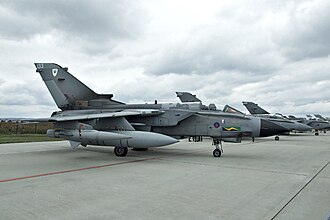
In 1989, Torpy was appointed Officer Commanding No. 13 Squadron. During this period, he saw active service in the Gulf War, a contribution for which he was appointed a Companion of the Distinguished Service Order. Following this, he served as the personal staff officer to the Air Officer Commanding RAF Strike Command in 1992.
Command and Strategic Growth
Promoted to group captain in 1993, Torpy took command of RAF Bruggen in Germany in 1995. His transition from tactical command to strategic leadership accelerated in the late 1990s. After attending the Royal College of Defence Studies in 1997, he held several critical roles, including Assistant Chief of Staff (Operations) at Permanent Joint Headquarters in Northwood and director of air operations at the Ministry of Defence.
Operation Telic and High Command
Between 2001 and 2003, Torpy served as Air Officer Commanding No. 1 Group. During this time, he acted as the air component commander for Operation Telic, the British military operations in Iraq. His leadership during these coalition operations earned him the Legion of Merit (Degree of Officer) from the United States in 2003.
Torpy continued to rise through the ranks, serving as deputy commander-in-chief at RAF Strike Command and later as the chief of joint operations at the Permanent Joint Headquarters in Northwood starting in 2004.
Chief of the Air Staff (2006–2009)
On 13 April 2006, Torpy reached the pinnacle of his career upon his promotion to Air Chief Marshal and appointment as Chief of the Air Staff. In this role, he served as the professional head of the RAF and as an air aide-de-camp to Her Majesty the Queen.
One of the highlights of his tenure occurred in July 2008, when he hosted the RAF's largest air display in twenty years. This massive event featured a 35-mile-long (56 km) procession of aircraft to commemorate the 90th anniversary of the service. Toward the end of his tenure in 2009, Torpy sparked debate by arguing for the consolidation of all British air power under the RAF, which questioned the continued necessity of the Royal Navy's jet aircraft.
Post-Military Life and Personal Interests
Sir Glenn Torpy retired from the RAF in July 2009. Following his military service, he transitioned into the private and civic sectors, becoming a senior military advisor to BAE Systems. He also contributed to the preservation of aviation history as Chairman of the Trustees of the RAF Museum and served as a governor of Haberdashers' Aske's Boys' School.
Outside of his professional achievements, Torpy married Christine Jackson in 1977. He is an enthusiast of military history, cabinet making, sailing, golf, and hill walking.
| Period | Role/Rank | Key Achievement/Command |
|---|---|---|
| 1974 | Pilot Officer | Joined the RAF |
| 1989–1992 | Wing Commander | OC No. 13 Squadron; Gulf War service |
| 1995–1997 | Group Captain | Station Commander, RAF Bruggen |
| 2001–2003 | Air Vice Marshal | Air Component Commander, Operation Telic |
| 2004–2006 | Air Marshal | Chief of Joint Operations |
| 2006–2009 | Air Chief Marshal | Chief of the Air Staff |
Frequently Asked Questions
What was Sir Glenn Torpy's highest rank in the RAF?
Sir Glenn Torpy achieved the rank of Air Chief Marshal, the highest rank in the Royal Air Force.
Which major military operations did Sir Glenn Torpy lead?
He served during the Gulf War with No. 13 Squadron and later served as the air component commander for Operation Telic, the British operations in Iraq.
What was the controversy regarding British air power during his tenure?
In June 2009, Torpy argued that all British air power should be consolidated under the RAF, which effectively questioned the future of the Royal Navy's jet aircraft.
What academic qualifications does Sir Glenn Torpy hold?
He holds a BSc degree in aeronautical engineering from Imperial College London.
What did Sir Glenn Torpy do after retiring from the RAF?
After retiring in 2009, he became a senior military advisor to BAE Systems, Chairman of the Trustees of the RAF Museum, and a governor of Haberdashers' Aske's Boys' School.