Africana and Black Studies: A Global History of Academic Development
The academic study of the Black experience is a diverse, interdisciplinary field dedicated to correcting historical distortions and broadening the global understanding of human history. By centering the perspectives of people of African descent, these disciplines—ranging from Black Studies to Africana Studies and Africology—seek to provide a realistic education that reflects the cultural, political, and social realities of the African diaspora.
Key Facts
- Black Studies focuses primarily on the uplift and development of the Black community, particularly in relation to education.
- Africana Studies adopts a global approach, focusing on "Africanity" and the historical issues of Africa and its descendants.
- Africology, as proposed by Molefi Kete Asante, seeks to move the field from an interdisciplinary topic to a distinct discipline using a centered perspective.
- Student activism in the 1960s, particularly at UC Berkeley and UCSB, was a primary catalyst for the institutionalization of these studies in the United States.
- Afro-Latin American studies have seen significant growth in Brazil, Colombia, and Ecuador through both government legislation and grassroots academic efforts.
The Evolution of Black and Africana Studies in North America
Canada and Mexico
In Canada, the advancement of the field was marked by the 1991 creation of the national chair for Black Canadian Studies at Dalhousie University, named after James Robinson Johnston. Early academic work included the study of Aleksandr Sergeevich Pushkin by chairman John Barnstead. In Mexico, Gonzalo Aguirre Beltrán laid the groundwork for Afro-Mexican studies with his 1946 publication, The black population in Mexico.
The United States: From Activism to Academia
In the United States, the field evolved through four distinct stages: early organizational analysis of African culture (1890s to WWII), a shift toward African American focus, the establishment of formal Black studies programs, and the eventual transition toward Africana studies. This progression was heavily influenced by the Civil Rights Movement.
At the University of California, Berkeley, a 1964 protest sparked by the arrest of graduate student Jack Weinberg led to widespread student activism. By 1968, the Afro-American Student Union (AASU) demanded a program "of and for black people," arguing that traditional teaching methods were insufficient. Utilizing a framework by sociology professor Nathan Hare, UC Berkeley implemented a Black studies program on January 13, 1969. Similar movements occurred at UC Santa Barbara and Syracuse University, the latter inspired by Ernie Davis, the first African American to win the Heisman Trophy.
Defining the Disciplines: Africana Studies and Africology
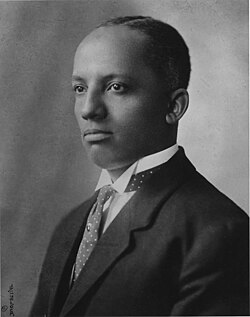
The term Africana Studies was first used by James Turner at Cornell University to describe a global approach, drawing inspiration from the work of W. E. B. Du Bois and Carter G. Woodson. While Black studies focused on community relevance, Africana studies expanded the scope to the entire diaspora.
Further evolving the field, Molefi Kete Asante introduced Africology in his 1980 book Afrocentricity. Asante proposed that the field should move beyond being a "topical" study shared with other disciplines to a "perspectival" discipline. This method, known as Systematic Africology, uses the theory of Afrocentricity—the study of African phenomena through a centered perspective rooted in African cultures—to analyze the diaspora.
Afro-Latin American Studies
The Caribbean and Central America
In Cuba, Fernando Ortiz pioneered Afro-Cuban studies in the early 1900s, leading to the 1937 establishment of the Society for Afro-Cuban Studies. In the Dominican Republic, Carlos Larrazábal Blanco's 1967 work Los Negros Y La Esclavitud En Santo Domingo served as a foundation for Afro-Dominican studies. In Puerto Rico, Isar Godreau emerged as a leading scholar, though as of 2019, the University of Puerto Rico did not offer a specific degree program in the field. In Central America, Christopher H. Lutz provided foundational literature for Afro-Guatemalan studies, and Panama hosted the Second Congress on Black Culture in the Americas in 1980.
South American Developments
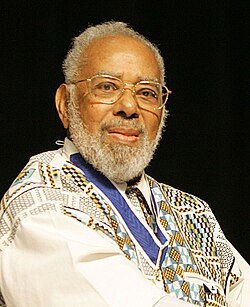
Brazil has a robust history of institutionalization. Abdias Nascimento developed the Afro-Brazilian Studies and Research Institute (IPEAFRO) at the Pontifical Catholic University of São Paulo in 1981, focusing on Kilombismo—the study of how Africans socially organized themselves based on economic and political affairs.
Colombia has seen significant growth through legal frameworks, including the 1991 Constitution and Law 70 of 1993. This led to the creation of training programs at the National University of Colombia and a master's degree at the Pontifical Xavierian University. In Ecuador, the development of the Center of Afro-Ecuadorian Studies in the 1970s eventually led to the Afro-Ecuadorian Etnoeducación program and a master's in Afro-Andean Studies at the Simón Bolívar Andean University.
Other nations have seen varying levels of growth: Argentina has experienced renewed growth since the 1980s; Chile has seen increased systematization since the 2000s; and Peru has seen efforts by organizations like LUNDU and the National Afro-Peruvian Museum to organize scholarship.
Black Studies in Europe
In the United Kingdom, the field experienced a period of rise and decline in Black British Cultural Studies between the 1980s and 1990s. Recently, the field has been reinvigorated by Black Critical Thought from the U.S. Kehinde Andrews has been a central figure in this revival, initiating the Black Studies Association in the UK and developing courses at Birmingham City University.

Summary of Regional Academic Foundations
| Region | Key Figure/Organization | Major Milestone/Contribution |
|---|---|---|
| United States | Molefi Kete Asante | Developed Africology and the theory of Afrocentricity |
| Brazil | Abdias Nascimento | Founded IPEAFRO and researched Kilombismo |
| Cuba | Fernando Ortiz | Pioneered Afro-Cuban studies in the early 1900s |
| Colombia | National University of Colombia | Established teacher training in Afro-Colombian studies |
| United Kingdom | Kehinde Andrews | Founded the Black Studies Association in the UK |
| Canada | James Robinson Johnston | Namesake of the national chair for Black Canadian Studies |
Frequently Asked Questions
What is the difference between Black Studies and Africana Studies?
Black studies was primarily designed to focus on the uplift and development of the Black (specifically African-American) community and its relationship to education. Africana studies takes a more global, encyclopedic approach, focusing on "Africanity" and the historical and cultural issues of Africa and all its descendants worldwide.
What is Africology?
Africology is a term proposed by Molefi Kete Asante to transition Black studies from an interdisciplinary topic to a formal discipline. It utilizes a "perspectival definition," meaning it studies African peoples through a centered perspective rooted in their own cultures and experiences rather than through the lens of other disciplines.
How did student activism influence the field in the U.S.?
Student protests in the 1960s, such as those at UC Berkeley and UC Santa Barbara, forced university administrations to address the lack of Black student representation and the exclusion of Black history from the curriculum. This activism led directly to the creation of the first degree-granting departments and programs in Black studies.
What is Kilombismo?
Kilombismo is a scholarship developed by Abdias Nascimento that examines how the economic and political affairs of Africans across the Americas influenced the way they organized themselves socially.
What is the role of Afrocentricity in these studies?
Afrocentricity serves as a meta-paradigm or research method. It allows scholars to analyze African phenomena by centering the African experience, thereby avoiding the "Aryan hegemonic worldview" often found in traditional academic disciplines.