Aframax Tankers: Versatile Workhorses of Global Oil Shipping
In the complex world of maritime logistics, the ability to move crude oil efficiently across varying geographies is critical. While massive supertankers dominate the open oceans, the Aframax tanker provides the essential flexibility needed to reach a wider array of global destinations. These vessels bridge the gap between small coastal tankers and the giants of the sea.
What is an Aframax Tanker?
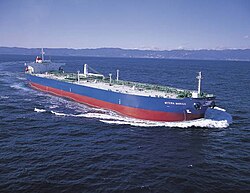
An Aframax vessel is a specialized oil tanker defined by its deadweight—the total weight a ship can carry, including cargo, fuel, and stores—ranging between 80,000 and 120,000 metric tonnes. The name itself is derived from the Average Freight Rate Assessment (AFRA), a standardized tanker rate system established by Shell Oil in 1954 to bring consistency to shipping contract terms.
Operational Advantages and Global Reach
The primary advantage of the Aframax class is its size. Because they are smaller than Very Large Crude Carriers (VLCCs) and Ultra-Large Crude Carriers (ULCCs), Aframax tankers can access the majority of ports worldwide. This makes them the optimal choice for short- to medium-haul crude oil transportation.
These vessels are particularly vital for non-OPEC exporting countries. Many of these nations rely on harbors and canals that are too narrow or shallow to accommodate Suezmax or larger vessel categories, making the Aframax the only viable option for large-scale exports.
Key Regional Deployments
Aframax tankers are heavily utilized in several strategic maritime basins, including:
- The North Sea and Black Sea
- The Mediterranean Sea
- The Caribbean Sea
- The South and East China Seas
Capacity Comparison
When comparing cargo volume, the Aframax is designed for efficiency rather than sheer scale. A typical Aframax tanker carries approximately 600,000 barrels of oil. In contrast, the largest tankers in the industry can transport up to 2 million barrels per voyage.
| Feature | Aframax Specification | Larger Tanker Comparison |
|---|---|---|
| Deadweight Tonnage | 80,000 – 120,000 metric tonnes | Significantly Higher |
| Cargo Capacity | ~600,000 barrels | Up to 2,000,000 barrels |
| Primary Use Case | Short to medium-haul / Restricted ports | Long-haul / Deep-water terminals |
Key Facts
- Deadweight: Between 80,000 and 120,000 metric tonnes.
- Origin: Named after the Average Freight Rate Assessment (AFRA) system created by Shell Oil in 1954.
- Capacity: Carries roughly 600,000 barrels of oil.
- Versatility: Able to serve most global ports, including those too small for Suezmax or VLCCs.
- Primary Regions: Common in the Mediterranean, Caribbean, North Sea, Black Sea, and East/South China Seas.
Frequently Asked Questions
What does the term "Aframax" actually mean?
The term comes from the Average Freight Rate Assessment (AFRA), a system introduced by Shell Oil in 1954 to standardize the terms used in shipping contracts.
How much oil can an Aframax tanker carry?
An Aframax tanker typically carries about 600,000 barrels of oil.
Why are Aframax tankers preferred over larger vessels in some regions?
They are preferred because they can enter ports and navigate canals that are too small for Suezmax, VLCC, or ULCC vessels, making them essential for many non-OPEC exporting countries.
What is the deadweight range of an Aframax vessel?
The deadweight of an Aframax tanker ranges from 80,000 to 120,000 metric tonnes.
Which sea basins most frequently use Aframax tankers?
They are largely used in the Black Sea, North Sea, Caribbean Sea, Mediterranean, and the South and East China Seas.