Port of Santos: Latin America's Premier Maritime Gateway
Located in the city of Santos, São Paulo, the Port of Santos (Porto de Santos) stands as the most significant maritime hub in Latin America. Serving as the primary gateway for goods entering and leaving Brazil, this massive facility integrates advanced industrial infrastructure with a rich historical legacy. From its origins as a perilous 19th-century dock to its current status as a global logistics powerhouse, the port is central to Brazil's economic vitality.
The port's strategic location was chosen to facilitate the crossing of the Serra do Mar mountain range, the primary geographical barrier to the interior. This positioning allowed for the seamless movement of goods and people between the coast and the state capital, São Paulo City, located 79 km away.
Key Facts
- Status: Largest port in Latin America and Brazil's leading container traffic hub.
- Annual Cargo: Handled 147 million tonnes in 2021.
- Global Ranking: Ranked 40th globally for container handling and 35th per ton (AAPA 2022).
- Ownership: Owned by the Federal Government of Brazil and operated by the Santos Port Authority.
- Key Exports: Soybeans, orange juice, cars, machinery, sugar, and coffee.
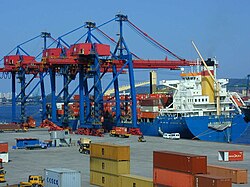
- Infrastructure: Spans 7.8 km² and includes specialized terminals for liquid and solid bulk, containers, and general loads.
Historical Evolution
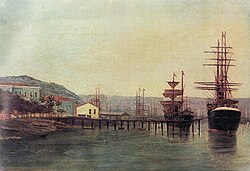
Founded on February 2, 1892, the Port of Santos has undergone a dramatic transformation. In the 19th century, it was infamously known as the "port of death" due to frequent yellow fever outbreaks and flooding, which led many ships to avoid its wooden planks.
The early 20th century brought essential urbanization and overhauling, replacing the hazardous old structures with modern industrial infrastructure. This era also saw the port become a vital entry point for millions of immigrants arriving in Brazil, who then traveled inland via the railway system completed in 1864.
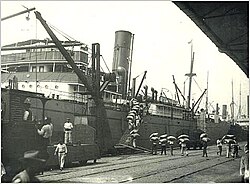
Historically, the port was the primary exit point for São Paulo's massive coffee production until World War II. While coffee remains an export, it has been surpassed by a more diversified range of commodities.
Political and Operational Shifts
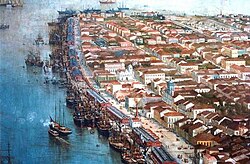
Between World War II and 1960, the facility was dubbed the "Red Port" due to the strong influence of communism within city politics and workers' unions. By 1970, a lack of investment and high tariffs led to a period of decay. This was followed by the era of CODESP (Companhia Docas de Santos), which held a 90-year concession. While CODESP fostered strong worker bonds, its monopolistic control eventually hindered efficiency. In 1993, the Brazilian government passed legislation to de-monopolize operational services to increase global competitiveness.
Economic Impact and Worker Culture
The Port of Santos is the economic engine of the city of Santos. Because the local economy is so heavily dependent on maritime industry, the port's operations directly dictate the city's financial health. This interdependence creates a unique social dynamic where the city's population often supports port workers during labor disputes, as a strike effectively halts all local trade and money flow.
The worker culture is deeply integrated into the urban fabric. Unlike many industrial hubs, the residential areas of port workers were not segregated by occupation, and the proximity of the docks to the city's commercial center fostered a heterogeneous society with strong working-class political expression.
Operational Statistics and Infrastructure
The port utilizes a complex terrestrial access system comprising the Anchieta and Imigrantes highways, as well as railroads operated by MRS and Ferroban. It handles approximately 28% of Brazil's total cargo.
| Metric | Value/Detail |
|---|---|
| Annual Cargo Tonnage (2021) | 147.0 million tonnes |
| Annual Container Volume | 2.697 million TEUs |
| Passenger Traffic (2010-2011) | 1.1 million |
| Total Area | 7.8 km² |
| Net Income (2012) | R$ 199.3 million |
Future Outlook and Challenges
As the port looks toward the future, its primary challenges are congestion and distribution. Operating 24 hours a day, the port faces significant bottlenecks on its limited road access—specifically a three-lane road where only one lane is dedicated to exiting traffic.
To address these issues, plans for 2024 include:
- Deepening maritime channels to accommodate larger vessels.
- Implementing Intelligent Transportation Systems (ITS) to manage traffic flow.
- Expanding truck storage facilities.
- Optimizing the utilization of maritime terminals and rail models.
These expansions aim to increase cargo capacity from 97.2 million tons to 230 million tons, with a projected distribution of 53% general cargo, 30% solid bulk, and 17% liquid bulk.
Frequently Asked Questions
Why was the Port of Santos once called the "port of death"?
In the 19th century, the port suffered from frequent floods and outbreaks of yellow fever, making it a hazardous location that many ships avoided.
What are the primary goods exported through the port today?
While coffee was the dominant export until World War II, the port now primarily exports soybeans, orange juice, cars, machinery, and sugar.
How does the port affect the city of Santos?
The city is economically dependent on the port; therefore, port activities—including strikes—directly impact the local flow of money, business, and internal trade.
What is the significance of the 1993 legislation?
The Brazilian government passed a law to de-monopolize the port's operational services, ending the singular control of CODESP to make the port more efficient and competitive.
What are the main logistical challenges facing the port?
The port struggles with road and rail congestion, poor utilization of terminal capacity, and limited access roads for the high volume of trucks entering and exiting the facility.