Aether: The History of the Fifth Element and the Luminiferous Medium
For millennia, thinkers have sought to identify the substance that fills the vast reaches of the universe. From the poetic visions of ancient Greece to the rigorous equations of early modern physics, the concept of aether (also spelled æther or ether) has served as a fundamental explanation for the nature of space, the movement of stars, and the propagation of light.
Originally conceived as the "fifth element" or quintessence, aether was believed to be the material that permeated the region of the universe beyond the terrestrial sphere. While modern science has largely superseded these theories, the evolution of the aether concept mirrors the evolution of human understanding of the cosmos.
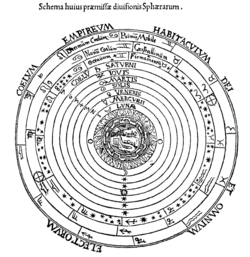
Key Facts
- Definition: Aether was historically viewed as the material filling the universe beyond Earth's atmosphere.
- The Fifth Element: In Aristotelian philosophy, it was the celestial element that moved in perfect circles, unlike the four terrestrial elements.
- Alchemy: Known as quintessence, it was sought by medieval alchemists as a pure substance for medicinal elixirs.
- Luminiferous Aether: 19th-century physicists proposed it as a medium necessary for light waves to travel through a vacuum.
- Scientific Obsolescence: The Michelson–Morley experiment failed to find evidence of aether, leading to Einstein's theory of special relativity.
Mythological and Philosophical Origins
The term originates from the Homeric Greek word aithḗr, meaning "pure, fresh air" or "clear sky." In Greek mythology, aether was the pure essence breathed by the gods, distinct from the air breathed by mortals. It was also personified as the deity Aether, the son of Erebus and Nyx.
Plato and Aristotle
While Plato mentioned a translucent kind of air called aether in his Timaeus, he largely adhered to the classical system of four elements. His student, Aristotle, expanded this system in On the Heavens. Aristotle argued that the four terrestrial elements (earth, water, air, and fire) were subject to change and moved linearly.
He introduced a "first" element—later called the fifth element—to explain the celestial regions. This aether was neither hot nor cold, wet nor dry. Unlike terrestrial matter, it was incapable of changes in quality or quantity and moved naturally in perfect circles. Aristotle proposed that celestial spheres made of aether held the stars and planets in their orbits.
Quintessence and Medieval Alchemy
In the medieval period, the Latinate term quintessence (represented by the symbol 𝓠) became central to alchemy. Alchemists believed that while quintessence was rare within the terrestrial sphere, its presence allowed Earth to be influenced by heavenly bodies.
![A stylized 𝓠 is sometimes used as a symbol for quintessence. [citation needed]](/images/9d/72/9d72c7f23f82e231ae9fb95bad2665cf91cb471b888e1ea0182bd3e0d5d0da0d.webp)
This system was further expanded to include chemical principles like sulphur (combustibility) and mercury (metallic properties). In medicinal alchemy, practitioners sought to isolate quintessence to create elixirs capable of curing illnesses and removing impurities. One 15th-century method for creating this substance involved the seven-fold distillation of alcohol.

Aether in Early Modern Physics
By the 17th and 18th centuries, the concept shifted from a philosophical element to a physical model used to explain electromagnetic and gravitational forces. These "aether theories" were mechanical in nature and differed significantly from the classical elements.
Aether and Gravitation
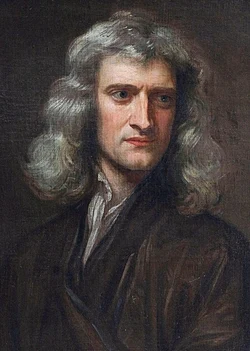
Sir Isaac Newton utilized the idea of aether in his early work, including the 1687 Principia. Newton found the idea of "action at a distance" to be an absurdity; instead, he proposed a medium that flowed toward the Earth's surface. This circulation of aether, characterized by varying densities, provided a mechanical explanation for the pull of gravity.
The Luminiferous Aether and Light
For centuries, physicists believed that light, like sound, required a medium to travel. This led to the theory of luminiferous aether—an omnipresent, elastic medium filling the vacuum of space. Johann II Bernoulli proposed that this aether contained "excessively small whirlpools" that transmitted vibrations. Christiaan Huygens further developed this into a wave theory of light.
However, the 1887 Michelson–Morley experiment provided no evidence of the aether's existence. This result was pivotal, contributing to the development of Albert Einstein's theory of special relativity, which demonstrated that Maxwell's equations did not require a medium for the transmission of electromagnetic forces.
Modern Legacy and Dark Energy
Although the classical and luminiferous aether models are scientifically obsolete, the terminology persists. Einstein noted that his own model of space, which possesses its own physical properties, could be viewed as a form of aether.
In contemporary cosmology, some physicists have proposed a model of dark energy called "quintessence." This hypothetical form of dark energy is used to explain the accelerating expansion of the universe, serving as a modern homage to the ancient fifth element.
| Era | Term | Primary Function/Belief | Key Figure(s) |
|---|---|---|---|
| Ancient Greece | Aither | Pure air of the gods; celestial element moving in circles | Aristotle |
| Medieval | Quintessence | Purest essence used in medicinal alchemy and elixirs | Ramon Llull (attributed) |
| Early Modern | Mechanical Aether | Medium for gravity and light propagation | Isaac Newton, J. Bernoulli |
| Modern | Quintessence | Hypothetical form of dark energy | Modern Cosmologists |
Frequently Asked Questions
What is the difference between aether and quintessence?
Aether is the general term for the celestial substance, while quintessence is the Latinate name specifically used by medieval alchemists to describe the fifth element as a pure, isolatable essence for medicine.
Why did scientists believe light needed aether?
Based on the behavior of sound (which travels through air) and ripples (which travel through water), physicists assumed light waves required a physical medium, the luminiferous aether, to propagate through the vacuum of space.
How did the Michelson–Morley experiment change science?
The experiment failed to detect the "aether wind" (the motion of Earth through aether), proving that such a medium did not exist. This paved the way for the theory of special relativity.
Did Isaac Newton believe in aether?
Yes, in his early theories of gravitation, Newton proposed aether as a medium that flowed toward Earth to explain gravity as a direct contact interaction rather than action at a distance.
Is aether used in modern physics today?
Not as a physical medium for light, but the term "quintessence" is used by some physicists to describe a theoretical form of dark energy explaining the accelerating universe.