Zoophytes: The History of the Plant-Animal Hybrid Concept
For centuries, naturalists struggled to categorize organisms that seemed to defy the strict boundaries between the plant and animal kingdoms. These mysterious creatures were labeled zoophytes—a term derived from the Greek words for "animal" and "plant." While the term is now obsolete in modern science, the history of the zoophyte reflects the evolution of biological classification and our growing understanding of life on Earth.
Originally, a zoophyte was thought to be an intermediate organism or an animal possessing plant-like attributes. Today, these organisms have been reclassified into specific animal phyla, such as Cnidaria (which includes corals, sea anemones, and true jellies), sponges, and Ctenophora (comb jellies). This transition from a hybrid category to distinct animal groups marks a pivotal shift in the history of taxonomy.
Key Facts
- Definition: An obsolete term for organisms believed to be intermediate between plants and animals.
- Modern Classification: Most former zoophytes are now classified as Coelenterata (specifically Cnidaria, sponges, and Ctenophora).
- Historical Context: The concept was widely debated in the 18th century and appeared in early medical and herbal texts.
- Key Figures: Carl Linnaeus and Georges Cuvier were influential in attempting to define and eventually refine the category.
- Mythological Examples: The "Tartar Lamb" was a legendary zoophyte believed to grow sheep as fruit.
Ancient and Medieval Perspectives
The idea of plant-animal hybrids exists in various early cultures. In Ancient China, fungi were classified as plants within Traditional Chinese Medicine texts; specifically, Ophiocordyceps sinensis (a parasitic fungus) was considered a zoophyte.
During the Medieval and Renaissance eras, zoophytes appeared frequently in herbals—books describing the medicinal properties of plants. One of the most famous examples was the Tartar Lamb, a mythical plant said to produce sheep as its fruit. Later researchers, such as Henry Lee of the Linnean Society, theorized that these legends were actually early, misunderstood attempts to describe the cotton plant.
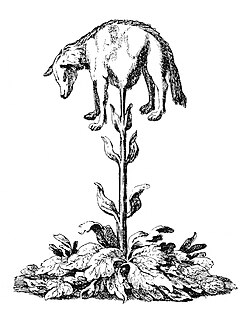
These concepts were embedded in influential medical texts, including Dioscorides's De Materia Medica and Mattioli's Discorsi. Even thinkers like Francis Bacon commented on reports of zoophytes in the 17th century. However, by 1646, concrete refutations began to emerge, and skepticism grew throughout the following two centuries.
The 18th and 19th Century Taxonomic Debate
As natural philosophy evolved in the 1700s, the debate over the boundary between plants and animals intensified. A significant catalyst for this research was Abraham Trembley's study of polyps in the 1730s.
In 1758, Carl Linnaeus published the 10th edition of Systema Naturae, establishing the foundation for zoological nomenclature. Linnaeus divided nature into rocks, plants, and animals, but noted that corals (lithophytes) seemed to bridge these gaps. He defined zoophytes as composite organisms with characteristics of both kingdoms, suggesting that some grew like trees with annual rings, while possessing "flowers" that acted as mouths for nourishment.
Despite Linnaeus's views, other experts like Ellis pushed for a stricter classification. Ellis argued that corals were animals that constructed their own stony structures, a theory later detailed in a book completed by Daniel Solander.
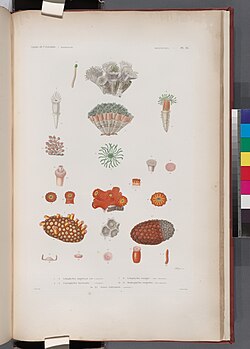
By 1817, Georges Cuvier categorized a division of the animal kingdom as Les Zoophytes ou Animaux Rayonnés. In English translations, this became Radiata. However, by 1840, critics noted that the term "zoophyte" was a contradiction in terms and inapplicable to most species in the group. Even as the term became scientifically obsolete, it remained in the vocabulary of prominent scientists, including Charles Darwin, during their studies.
Summary of Taxonomic Evolution
| Era/Period | Classification Term | Perceived Nature | Modern Equivalent |
|---|---|---|---|
| Ancient/Medieval | Zoophyte | Hybrid or Mythical (e.g., Tartar Lamb) | Fungi / Cotton / Myths |
| Mid-18th Century | Zoophyte / Lithophyte | Composite organism (Plant-like growth) | Corals / Sponges |
| Early 19th Century | Radiata | Animals with radial symmetry | Cnidaria / Ctenophora |
| Modern Era | Coelenterata / Phyla | Distinct Animal Phyla | Cnidaria, Porifera, Ctenophora |
Frequently Asked Questions
What exactly is a zoophyte?
A zoophyte is an obsolete scientific term used to describe organisms that appeared to be a blend of plant and animal characteristics, or animals that looked like plants, such as corals and sea anemones.
Is the Tartar Lamb a real animal?
No, the Tartar Lamb was a legendary plant described in medieval herbals that supposedly grew sheep as fruit. It is now believed to have been a mythological interpretation of the cotton plant.
How did Carl Linnaeus view zoophytes?
Linnaeus initially viewed them as composite organisms. He believed some zoophytes had a "vegetable life," growing annually like trees, but used animal-like "flowers" (polyps) to feed.
What happened to the term Radiata?
Radiata was used in the 19th century to describe the "animalia radiata" or zoophytes. It was eventually superseded by more precise terms like Coelenterata and the specific phyla we use today, such as Cnidaria.
Which modern animals were once called zoophytes?
Most organisms previously called zoophytes are now recognized as animals, specifically those in the phyla Cnidaria (corals, jellies, anemones), Porifera (sponges), and Ctenophora (comb jellies).