Zionism: History, Ideology, and the Foundation of the State of Israel
Zionism is an ethnocultural nationalist movement that emerged in late 19th-century Europe. Its primary objective was the establishment and support of a Jewish homeland through colonization in the region of Palestine, an area central to Jewish history and identified in Judaism as the Land of Israel. This movement served as the driving force behind the creation of the State of Israel in 1948 and continues to be the country's dominant ideology.
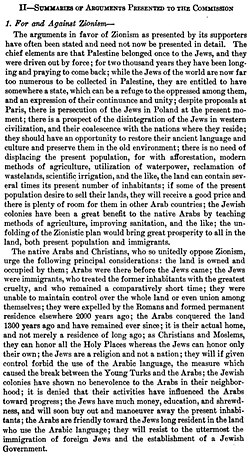
The movement began as a secular response to rising antisemitism in Central and Eastern Europe and was influenced by the Haskalah (the Jewish Enlightenment). By the turn of the 20th century, leaders sought to link national revival with the physical return to Palestine, which was then under Ottoman rule. This migration and the subsequent claim that historical Jewish rights to the land outweighed those of the local Arab population are widely regarded as the origins of the Israeli-Palestinian conflict.
Key Facts
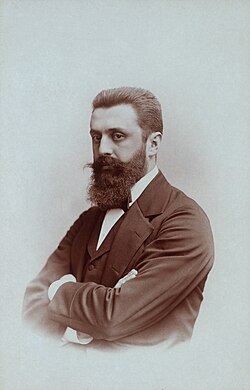
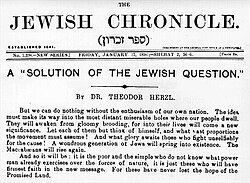
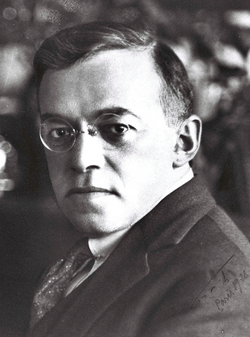
- Founder: Theodor Herzl is credited as the founder of modern Zionism, notably through his 1896 pamphlet Der Judenstaat.
- Core Goal: The creation of a Jewish state in Palestine with a Jewish demographic majority.
- Key Milestone: The 1917 Balfour Declaration, where Britain expressed support for a Jewish national home.
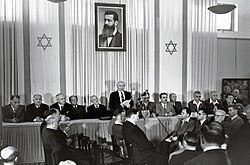
- Statehood: The State of Israel declared independence in 1948 following the end of the British Mandate.
- Demographic Shift: Between 1922 and 1946, the Jewish population in Palestine grew from approximately 83,000 to over 600,000.
The Evolution of Zionist Ideology
National Self-Determination and Identity
Zionism was built on the belief that assimilation into European societies was insufficient to protect Jewish people from persecution. Proponents argued for the negation of diasporic life, suggesting that Jews could only achieve true security and identity through national self-determination in their ancestral homeland.
Cultural and Linguistic Revival
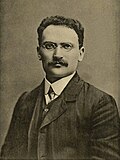
A critical component of the movement was the revival of the Hebrew language, transforming it from a liturgical tongue into a spoken, modern language. This effort was led by figures such as Eliezer Ben-Yehuda, known as the father of Modern Hebrew.
![Eliezer Ben-Yehuda (1858–1922), founder and leader of the movement to revive the Hebrew language, is considered the father of Modern Hebrew.[118]](/images/a6/d0/a6d04c4f783086bb885541bafa9b75163771d25a98dc1808b20ba16791a4f964.jpg)
The Concept of Labor and Land
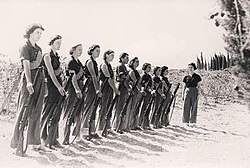
Many Zionists emphasized the "conquest of labor," the idea that Jews should return to manual labor and agriculture to rebuild their connection to the land. This philosophy became the bedrock of Labor Zionism and the establishment of the Kibbutz (collective community farms).
Historical Timeline and Political Development
Early Movements and the First Congress
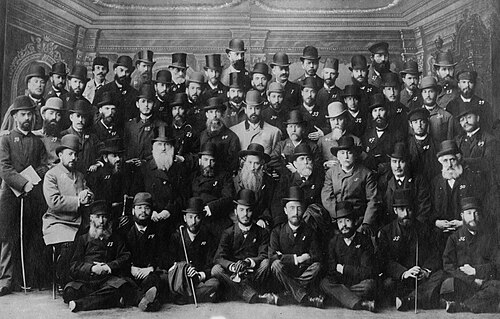
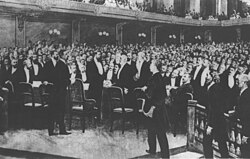
While early efforts like the Odessa Committee (1890) supported Jewish farmers and artisans, the movement gained formal structure with the First Zionist Congress in 1897, held in Basel, Switzerland. This gathering solidified the goal of establishing a legally recognized home for the Jewish people.
The British Mandate and International Support
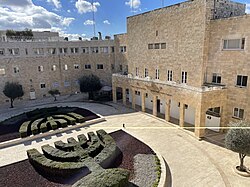
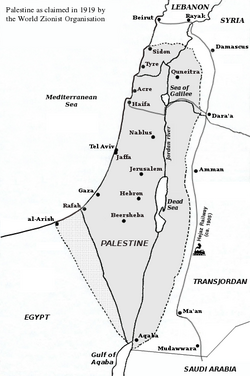
During World War I, the geopolitical landscape shifted. The 1917 Balfour Declaration signaled British support for a Jewish home, and the 1922 Mandate for Palestine placed the region under British administration. During this period, the Zionist movement developed a "quasi-state" infrastructure, including the Jewish Agency.
Conflict and Partition
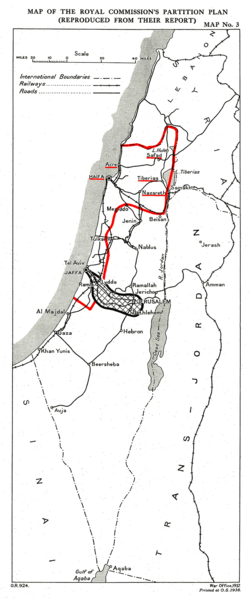
As Jewish immigration increased, tensions with the Palestinian Arab population grew, leading to events such as the 1936–1939 Arab Revolt. The British attempted to resolve these tensions through various means, including the Peel Commission's proposal to partition the land.
The 1948 War and Independence
Following the horrors of the Holocaust and the end of the British Mandate, the State of Israel was proclaimed in 1948. The ensuing war resulted in Israel controlling over 78% of former Mandatory Palestine. This period saw the flight and expulsion of the majority of the Palestinian population, leaving a small Palestinian minority within the new state.
Diverse Streams of Zionism
Zionism is not a monolithic ideology but consists of several distinct branches:
- Labor Zionism: Focused on socialist ideals and the creation of agricultural collectives.
- Revisionist Zionism: Founded by Ze'ev Jabotinsky, this branch emphasized a more assertive approach to state-building and territorial claims.
- Religious Zionism: Views the return to the land as a fulfillment of biblical prophecy.
- Liberal Zionism: Supports the necessity of a Jewish state but often criticizes the occupation of Palestinian territories since 1967.
- Cultural Zionism: Emphasized the spiritual and cultural revival of the Jewish people over purely political goals.
Demographic Changes in Palestine (1922–1946)
The following table illustrates the shifting population dynamics during the British Mandate period.
| Year | Muslims | Jews | Christians | Others | Total Settled |
|---|---|---|---|---|---|
| 1922 | 486,177 (74.9%) | 83,790 (12.9%) | 71,464 (11.0%) | 7,617 (1.2%) | 649,048 |
| 1931 | 693,147 (71.7%) | 174,606 (18.1%) | 88,907 (9.2%) | 10,101 (1.0%) | 966,761 |
| 1941 | 906,551 (59.7%) | 474,102 (31.2%) | 125,413 (8.3%) | 12,881 (0.8%) | 1,518,947 |
| 1946 | 1,076,783 (58.3%) | 608,225 (33.0%) | 145,063 (7.9%) | 15,488 (0.8%) | 1,845,559 |
Frequently Asked Questions
![Israeli Druze Scouts march to Jethro's tomb. Today, thousands of Israeli Druze belong to 'Druze Zionist' movements.[387]](/images/31/7c/317ccd478052ca1e1057790a45d11bbf5262272c6980e4e7a12f1dfb9a0ccc67.jpg)
![The Palestinian Arab Christian-owned Falastin newspaper featuring a caricature on its June 18, 1936, edition showing Zionism as a crocodile under the protection of a British officer with industrial military technology telling Palestinian fallāḥīn: "Don't be afraid!!! I will swallow you peacefully...".[402][page needed]](/images/82/24/82243cd529316f0787c07e218952af7867ff919ac5f6aa45600ea0458dc89e57.png)
Who was the primary founder of modern Zionism?
Theodor Herzl is considered the founder of the modern Zionist movement. He outlined his vision for an independent Jewish state in his 1896 pamphlet, Der Judenstaat.
What was the purpose of the Balfour Declaration?
The 1917 Balfour Declaration was a public statement by the British government expressing its support for the establishment of a "national home for the Jewish people" in Palestine.
What is the difference between Labor and Revisionist Zionism?
Labor Zionism focused on socialist principles, collective farming (Kibbutzim), and the "conquest of labor." Revisionist Zionism, led by Ze'ev Jabotinsky, advocated for a more assertive political and military approach to establishing the state.
How did the population of Palestine change before 1948?
Between 1922 and 1946, the total population grew from roughly 649,000 to over 1.8 million. While the Muslim population remained the largest group, the Jewish population grew significantly, from 12.9% to 33% of the total population.
What is Liberal Zionism?
Liberal Zionism is a perspective that maintains the necessity of a Jewish state but is critical of the Israeli occupation of Palestinian territories since 1967.