Zengid Dynasty: The Rise and Fall of the Atabegs of Mosul and Aleppo
The Zengid dynasty was a Turkoman Sunni Muslim power that played a pivotal role in the Middle East between 1127 and 1250. Emerging as an Atabegate—a governorship under the Seljuk Empire—the Zengids expanded their influence across the Levant and Upper Mesopotamia. Their legacy is defined by their fierce military opposition to the Crusaders and their role as the precursors to the Ayyubid Empire founded by Saladin.
Key Facts
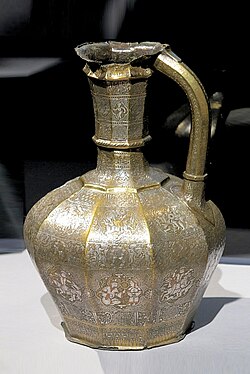
![Hunting scene on the Blacas ewer, 1232, Mosul, Zengid dynasty.[24]](/images/4d/c1/4dc1c0a3fd81435dfcbdfe0198f705f4124f9b32320c5de7dd45c97c35af29a3.jpg)
- Founded: 1127 by Imad ad-Din Zengi.
- Core Territories: Mosul, Aleppo, and Damascus.
- Major Achievement: The capture of the County of Edessa in 1144.
- Religious Affiliation: Primarily Sunni Islam.
- Succession: Eventually superseded by the Ayyubids and later the Ilkhanate.
- Cultural Legacy: Renowned for high-quality metalwork and architectural contributions in Mosul and Damascus.
The Rise of Imad ad-Din Zengi
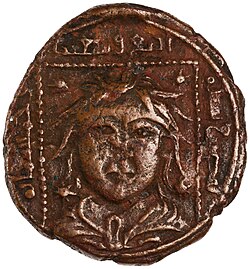
![Coinage of Saif ad-Din (r.1170–1180), Zengid ruler of Mosul. Dated 569 H (1173–1174 CE).[44] Legend in Arabic: "The Wise and Just King/ the King of the Amirs/ of East and West/ Tughriltakin Atabeg/ Ghazi b./ Mawdud/ b. Zangi".[45]](/images/c6/77/c677ae1bc36ab633f59a925afcea6b9a921b4fb6ff185802d1c3bc28dd3329a9.jpg)
The dynasty began with Imad ad-Din Zengi, who established himself as the dominant Turkic leader in Northern Syria and Iraq. In 1128, he seized Aleppo from the Artuqids, and in 1144, he achieved a landmark victory by capturing the County of Edessa from the Crusaders. This victory elevated Zengi to a hero's status throughout the Muslim world. However, his reign ended abruptly in 1146 when he was assassinated by a slave.
Following Zengi's death, his territories were split between his sons: the eldest, Saif ad-Din Ghazi I, took control of Mosul and Iraq, while the second son, Nur ad-Din, became the atabeg of Aleppo.
Nur ad-Din and the Struggle Against the Crusaders
![Coinage of Izz ad-Din Mas'ud, Zengid ruler of Mosul, with crowned Turkic figure holding a moon symbol. Mosul mint, dated 1189–90. The reverse mentions in Arabic the name and titles of the Abbasid caliph and Abbasid heir presumptive in five lines, and the name and titles of the Ayyubid overlord Saladin, and 'Izz al-Din Mas'ud.[50][45]](/images/83/38/83388b0f2bd5a29a03ad5c0fe3d1865501239c78dc2df2f5f3646f33913272f5.jpg)
Nur ad-Din proved to be a highly capable leader, continuing his father's mission to unify Muslim territories and push back the Crusader states. In 1149, he secured a major victory against Raymond of Poitiers, the Prince of Antioch, at the Battle of Inab. By 1150, he had conquered the remaining parts of the County of Edessa west of the Euphrates.
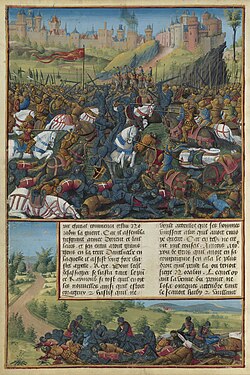
In 1154, Nur ad-Din expanded his reach by capturing Damascus from the Burid dynasty. His strategic vision extended beyond Syria; in 1163, he intervened in Egypt to support the vizier Shawar against his rival Dirgham. To execute this mission, Nur ad-Din dispatched his general Shirkuh and Shirkuh's nephew, the 26-year-old Saladin.
![Saladin began his military career in the army of Nur ad-Din, during the Zengid conquest of Egypt in 1163–1169.[27]](/images/56/d4/56d4147597a658ef6f0cdea8f2167959c4dc562b4a829cc80a7abd00bf908448.jpg)
The Transition to Ayyubid Rule
![Detail of inlaid brass writing box, showing soldier wearing a mail hauberk. Mosul, 1230–1250 CE, British Museum.[67][68]](/images/c7/c7/c7c78a5ec5e3e829ce626843823c203d0aa3262b6536379c4b6b5718fb7e2a81.jpg)
While Saladin initially served the Zengids, he eventually established his own power base in Egypt. After the death of Nur ad-Din in 1174, tensions rose between Saladin and the remaining Zengid heirs. Saladin systematically moved to consolidate control over Syria, leading to the fall of Zengid Aleppo in 1183.
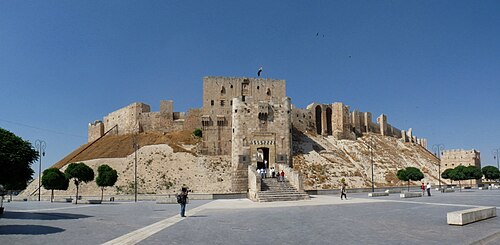
Despite Saladin's successes, the city of Mosul proved more resilient. After a failed offensive in 1185, Saladin negotiated a treaty in 1186 with the Zengid Emir Mas'ud. This agreement allowed the Zengids to retain control of Mosul, provided they offered military support to the Ayyubids upon request.
Final Decline and the Legacy of Mosul
![Coinage of "Zangi", emir of Aleppo (Imad ad-Din Zengi II). Dated AH 583 (1187-88 CE). Double headed eagle with the name and titles of the Abbasid caliph al Nasir on breast; mint and date around / Four line legend citing Zengi; tamghas at sides.[72]](/images/95/fe/95fe16784bc95f1d24a2c5fe6d776babb1513399a611914e7885cec9c280a9fa.jpg)
The Zengids continued to rule in Northern Iraq (the al-Jazira region) with varying degrees of autonomy. In 1211, Badr al-Din Lu'lu' was appointed as the protector of the young heirs of Nur al-Din Arslan Shah I. By 1234, Lu'lu' formally took power, ruling in his own name until 1259 and eventually accepting Mongol suzerainty.
![Portrait of Badr al-Din Lu'lu' in 1218–1219, as Zengid Governor of Mosul, under Emir Nasir ad-Din Mahmud. Kitāb al-aghānī.[33]](/images/99/2f/992fb064158bd80f7e9d9902c81fe0fce7844adb833cfd2ed15199cbc5279f48.jpg)
The final remnants of Zengid rule ended in 1250 when al-Jazira fell to An-Nasir Yusuf, the Ayyubid emir of Aleppo. The subsequent Mongol capture of Mosul in 1262 contributed to the decline of the city's famous metalworking industry.
Military and Cultural Contributions
![Royal court detail, ruler in Turkic dress, wearing the sharbush hat. 1198–1199, probably Mosul. Kitâb al-Diryâq.[77][78]](/images/da/c6/dac60f05eabe706cdd4206031a779e577ba6ece88ee176a999d1a64c6e3758bb.jpg)
The Zengid military was a sophisticated force comprising Turcoman horse archers, Kurdish spear-armed horsemen, professional ghulams (elite slave soldiers), and Bedouin auxiliary cavalry. They were particularly noted for their expertise in siege warfare.
![Zengid soldiers armed with long swords and wearing the aqbiya turkiyya coat, tiraz armbands, boots and sharbush hat, at the time of the atabegate of Badr al-Din Lu'lu' in 1218–1219. Kitab al-Aghani, Mosul.[33]](/images/9e/b5/9eb508a2fd49d4aca78213e1ba307751e67246f1fc2a9322a936bc3d96c5949c.jpg)
Culturally, the dynasty fostered a golden age of art and architecture. Mosul became a center for intricate brass work, as seen in the famous Blacas ewer. They also commissioned significant religious and educational buildings, including the Nur al-Din Madrasa in Damascus and the Great Mosque of al-Nuri in Mosul.
![Regnal scene on the Blacas ewer, 1232, Mosul, Zengid dynasty.[24]](/images/7d/d5/7dd5d0760ac2e44c608a2feb509e823f759da9336ea9e8f16d18ce1cde3d99e9.jpg)
| Category | Details |
|---|---|
| Period | 1127–1174 (Nominal power until 1250) |
| Capitals | Mosul, Damascus |
| Key Rulers | Imad ad-Din Zengi, Nur ad-Din Zengi |
| Official Language | Arabic |
| Currency | Dinar |
| Preceded by | Great Seljuq Empire, Fatimid Caliphate |
| Succeeded by | Ayyubids, Luluids, Ilkhanate |
Frequently Asked Questions
![Turk seated facing with legs crossed, holding sword and crowned severed head, with legend to left "Nur al-Din Atabeg" (نور الدين اتا / بك), probably Nur al-Din Arslan Shah I. Coinage of Husam al-Din Yuluq Arslan, dated AH 596 (1199–1200 CE).[79][80]](/images/e7/25/e72562ecb86dadba1d31a6123feded3e4b5a73ce8c513b6794184feba87aa6ae.jpg)
![Battle scene, in Varka and Golshah, mid-13th century Seljuk Anatolia.[87]](/images/1d/e7/1de79d79fa02d99f23cab260cf12d9d53b8582d0e7d4e41d258a10dd543064a2.jpg)
![Coin of Qutb al-Din Mawdud (r. 1149–1170), son of the founder of the dynasty Zengi. Dated AH 556 (1160–1161 CE).[113]](/images/47/c6/47c67142af281702bdbdeda7e686c7a1c6e8669957a6eb06c3b3ede74a037b94.jpg)
![Supposed flag of Saladin, inherited from the Zengids.[116]](/images/85/e2/85e2d5673ef0c74d976e9a6aa110863f311ec20e780bf4f9c390303bf9a36c6c.webp)
Who was the founder of the Zengid dynasty?
The dynasty was founded in 1127 by Imad ad-Din Zengi, who first established control over Aleppo and later captured the County of Edessa.
What was the relationship between the Zengids and Saladin?
Saladin began his military career as a general under Nur ad-Din Zengi. After Nur ad-Din's death, Saladin used his power in Egypt to seize Zengid territories in Syria, eventually replacing them as the dominant power.
What was an Atabegate?
An Atabegate was a form of governorship or tutelage within the Seljuk Empire, where an Atabeg (a tutor or guardian) ruled a province on behalf of a prince or the Sultan.
What are the most notable cultural achievements of the Zengids?
The Zengids are highly regarded for their architecture, such as the al-Nuri Mosque, and their exquisite metalwork, particularly the inlaid brass pieces produced in Mosul.
When did the Zengid dynasty officially end?
While their primary power waned after 1174, nominal Zengid rule continued in Northern Iraq until 1250, when the region fell under Ayyubid domination.