Youth Olympic Games: Empowering the Next Generation of Athletes
The Youth Olympic Games (YOG) serve as a premier international multi-sport event designed specifically for athletes between the ages of 15 and 18. Organized by the International Olympic Committee (IOC), these Games provide a global stage for young talent to showcase their skills while immersing themselves in the spirit of Olympism.
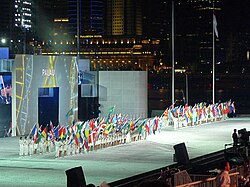
Held every four years, the YOG follow a staggered format of summer and winter editions. Interestingly, they operate in reverse order to the senior Olympic Games, with the Winter Youth Olympics taking place during leap years. The movement began with the inaugural Summer Games in Singapore in August 2010, followed by the first Winter edition in Austria in January 2012.
Key Facts
- Age Group: Athletes must be between 15 and 18 years old.
- Frequency: Held every four years in alternating summer and winter cycles.
- Core Mission: Combines elite sporting competition with cultural education and exchange.
- Inclusivity: Uses "Universality Places" to ensure every nation can send at least four athletes.
- Governance: Managed by the International Olympic Committee (IOC) in partnership with International Sport Federations (ISF).
The Origins and Philosophy of the YOG
The concept for the Youth Olympic Games was first proposed in 1998 by Johann Rosenzopf, an Austrian industrial manager. His vision was a response to rising global concerns regarding childhood obesity and a decline in sports participation among youth in developed nations. He believed a youth-centric Olympic event would inspire more young people to engage in athletics and eventually transition to the senior Games.
While the IOC initially hesitated to create a purely sporting event, they recognized the value of adding a developmental layer. Consequently, the Culture and Education Program (CEP) was integrated into the Games. This ensures that the YOG are as much about cultural exchange and education as they are about athletic victory. Former IOC President Jacques Rogge formally announced the plan on July 6, 2007, during the 119th IOC session in Guatemala City.
Participation and Qualification
To maintain a fair and global competition, the IOC and International Sport Federations (ISF) establish strict qualification criteria. Athletes are categorized into three age brackets: 15–16, 16–17, and 17–18 years, with their age determined as of December 31 of the competition year.
To prevent the Games from being dominated by a few sporting powerhouses, the IOC utilizes Universality Places. These are reserved spots that allow athletes from under-represented nations to compete regardless of whether they have met the standard qualifying marks. This system guarantees that every participating nation can send at least four athletes. Additionally, individual sports are capped at 70 athletes per nation to maintain diversity.
Summer and Winter Editions
The Summer Youth Olympics
The Summer Games offer a flexible program where the Organizing Committee can select specific disciplines for collective sports. For example, the 2018 Games introduced innovative sports such as breakdancing, sport climbing, and karate. While the 2010 and 2014 Games hosted approximately 3,600 athletes over 13 days, the event remains smaller and shorter than the senior Olympics.
The Winter Youth Olympics
The Winter Games include all core sports from the senior Winter Olympics. A significant milestone was reached during the 2024 Winter Youth Olympics in Gangwon, South Korea, which featured an equal number of events for male and female athletes for the first time in Olympic history. The program has evolved to include optional sports, such as ski mountaineering.
Financial Structure
Financing the YOG is a shared responsibility. The host city is responsible for the costs of infrastructure and venue construction. The IOC covers the travel expenses for athletes and coaches, as well as room and board for athletes and judges. While initial estimates for the Summer Games were around US$30 million, actual costs have often been higher; for instance, the Singapore 2010 Games cost an estimated S$387 million.
YOG Event Summary
| Edition | Year | Host City | Nation | Competitors (Approx.) |
|---|---|---|---|---|
| Summer I | 2010 | Singapore | Singapore | 3,524 |
| Winter I | 2012 | Innsbruck | Austria | 1,059 |
| Summer II | 2014 | Nanjing | China | 3,579 |
| Winter II | 2016 | Lillehammer | Norway | 1,100 |
| Summer III | 2018 | Buenos Aires | Argentina | 3,997 |
| Winter III | 2020 | Lausanne | Switzerland | 1,872 |
| Winter IV | 2024 | Gangwon | South Korea | 1,802 |
Frequently Asked Questions
Who is eligible to compete in the Youth Olympic Games?
Athletes must be between 15 and 18 years old. Their eligibility is determined by their age as of December 31 of the year the Games are held.
How does the IOC ensure all countries can participate?
The IOC uses "Universality Places," which allow athletes from under-represented nations to compete even if they haven't met the standard qualifying marks, ensuring every nation can send at least four athletes.
What is the Culture and Education Program (CEP)?
The CEP is a mandatory component of the YOG that focuses on cultural exchange and education, ensuring the event is not just a sporting competition but a learning experience for young athletes.
Where will the next Youth Olympic Games be held?
The next Summer Youth Olympics are scheduled for 2026 in Dakar, Senegal. The next Winter Youth Olympics will take place in 2028, joint-hosted by the Dolomites and Valtellina regions in Italy.
How is the funding for the YOG divided?
The host city pays for infrastructure and venue construction, while the IOC covers travel costs and room and board for athletes and judges.