1936 Olympic Football Tournament: Italy's Triumph and Berlin Controversies
The 1936 Summer Olympics in Germany marked a pivotal moment for international football. It was the first time the sport returned to the Olympic program since the inception of the FIFA World Cup in 1930. The tournament's return was delayed in 1932 due to a fundamental disagreement between FIFA and the International Olympic Committee (IOC) over player status. While the IOC insisted on amateur players (athletes who do not receive payment for their sport), FIFA advocated for the inclusion of professionals.
Ultimately, the tournament proceeded without FIFA's direct involvement, meaning only amateur players were eligible to compete. FIFA also harbored concerns that a high-profile Olympic tournament might overshadow the prestige of the newly established World Cup.
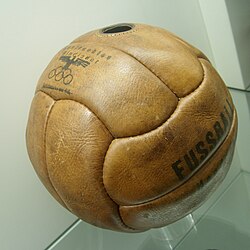
Key Facts
- Champions: Italy (their first Olympic gold medal).
- Host City: Berlin, Germany.
- Top Scorer: Annibale Frossi (Italy) with 7 goals.
- Total Attendance: 507,469 spectators.
- Format: Single-elimination bracket featuring 16 teams.
- Historic Milestone: Japan became the first Asian team to win a match in a World Cup or Olympic football competition.
Political Tensions and Boycotts
The 1936 Games were hosted under the sponsorship of the Hitler Regime, leading to significant moral debates worldwide. While many nations participated under the premise that the event was purely sporting and non-political, others abstained. The Dutch Football Federation (KNVB) declined to attend, citing the IOC's amateur rules as too restrictive. France also opted out due to the ongoing dispute regarding professional players.
In the United States, Avery Brundage, president of the U.S. Olympic Committee, urged participation despite calls for a boycott. Brundage argued that the hosts' promises of non-discrimination justified the American presence in Berlin.
Tournament Venues
All matches were held within Berlin across four primary venues, with the Olympiastadion serving as the centerpiece for the largest crowds.
| Stadium | City | Capacity |
|---|---|---|
| Olympiastadion | Berlin | 100,000 |
| Poststadion | Berlin | 45,000 |
| Gesundbrunnen Stadium | Berlin | 35,239 |
| Mommsenstadion | Berlin | 15,005 |
The Road to Gold
Early Rounds and Historic Upsets
Italy, known as The Azzurri, entered the tournament with a strong squad including future World Cup winners Alfredo Foni, Pietro Rava, and Ugo Locatelli. Their opening match against the United States was marked by tension; Italian players reportedly restrained referee Carl Weingartner to prevent the ejection of Achille Piccini. Italy eventually won 1–0 thanks to a goal by Annibale Frossi.
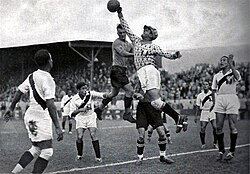
One of the tournament's biggest surprises occurred when Japan defeated Sweden 3–2. This victory was a landmark event, marking the first time an Asian nation had won a match in a major global football tournament.
The Peru-Austria Controversy
The quarter-finals were overshadowed by a volatile clash between Peru and Austria. After a dramatic match where Peru overcame a two-goal deficit to win 4–2 in extra time, Austria demanded a rematch. They alleged that Peruvian fans had stormed the pitch and that the environment was unsafe, claiming some spectators were armed.
Due to a series of communication failures—including the Peruvian delegation being delayed by a German parade—the Olympic Committee and FIFA sided with Austria. Peru, viewing the decision as discriminatory and insulting, withdrew their entire Olympic delegation from Germany. This sparked outrage in Peru, leading to protests and attacks on the German consulate.
The Final Showdown
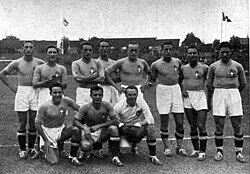
The semi-finals saw Italy defeat Norway 2–1 in extra time, while Austria beat Poland 3–1. The gold medal match between Italy and Austria remained a deadlock until the second half, when Frossi broke the tie. Although Austria equalized through K. Kainberger (though some sources credit Fuchsberger), Frossi scored again in extra time to secure a 2–1 victory for Italy.
Frequently Asked Questions
Why was football missing from the 1932 Olympics?
Football was excluded due to a dispute between FIFA and the IOC over whether professional players should be allowed to compete, as the IOC mandated that only amateurs participate.
Who was the top scorer of the 1936 tournament?
Annibale Frossi of Italy was the top scorer, netting a total of 7 goals throughout the competition.
What was the significance of Japan's victory over Sweden?
Japan's 3–2 win was the first time an Asian football team had ever won a match in either the Olympic Games or the FIFA World Cup.
Why did Peru leave the 1936 Olympics?
Peru withdrew in protest after the Olympic Committee ordered a rematch of their quarter-final win against Austria, a decision the Peruvians considered discriminatory.
Which team won the bronze medal?
Norway won the bronze medal by defeating Poland 3–2 in the third-place match.