The Football Association: The Architects of the Modern Game
Football is more than just a sport; it is a global phenomenon. At the heart of this legacy lies The Football Association (The FA), the first official governing body for the sport. Founded in England, the FA established the framework that transformed a variety of disorganized folk games into the structured, professional sport known today as association football.
The Birth of the FA and the Great Split
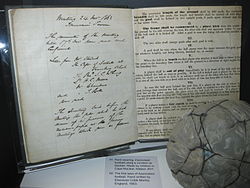
For centuries, football was played with varying local rules, leading to confusion and disputes. This changed on October 26, 1863, when representatives met at the Freemasons' Tavern in London. The catalyst for this meeting was Ebenezer Cobb Morley, the captain of Barnes, who proposed a governing body to establish a "definite code of rules" for the game.
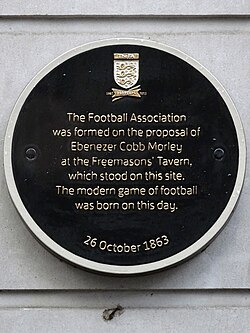
Morley, a founding member and the FA's first secretary, drafted the original "London Rules" at his home in Barnes. However, the path to a unified game was not without conflict. During the initial meetings, a significant divide emerged between those who favored a kicking game and those who preferred the traditions of rugby.
The tension peaked over two specific draft rules: one that allowed players to carry the ball in their hands and another that permitted "hacking"—the practice of kicking an opponent in the shins to obstruct them. When these rules were removed, several clubs, including Blackheath, withdrew from the FA. This split led to the formation of the Rugby Football Union in 1871 and gave rise to the term "soccer" to distinguish association football from rugby.
Standardizing the Laws and the Rise of the FA Cup
In the early years, the FA faced competition from the Sheffield Football Association, which operated under its own set of "Sheffield Rules." For years, the two bodies played inter-association matches using a mix of regulations. It wasn't until April 1877 that a single, undisputed set of laws was finally adopted, incorporating several of the Sheffield rules.
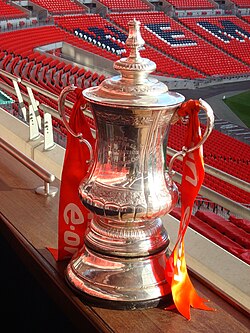
While the rules were being settled, the FA began creating competitions to grow the sport. In 1871, Charles Alcock masterminded the creation of the Football Association Challenge Cup (the FA Cup), the oldest national football competition in the world. The first final took place on March 16, 1872, at The Oval, where the Wanderers defeated the Royal Engineers in front of 2,000 spectators.
The Shift Toward Professionalism
Initially, the FA Cup was dominated by amateur teams from the south of England. However, by the 1880s, working-class clubs from the north began to dominate. These teams adopted a more organized training approach and a passing style of play developed in Scotland. In 1883, Blackburn Olympic broke the amateur stronghold by defeating the Old Etonians in the final.
As northern clubs like Blackburn Rovers began paying their players, the FA initially attempted to outlaw professionalism. However, facing the threat of a breakaway organization called the British Football Association, the FA officially permitted payments to players in 1885. This paved the way for the establishment of the first Football League in 1888.
Governance, Finance, and the Modern Era
The FA has evolved from a small committee into a massive sporting organization. In 1992, the FA took control of the newly formed Premier League, which began with 22 clubs breaking away from the Football League's First Division. Today, the Premier League is one of the wealthiest sports leagues globally.
Financially, the FA generates significant revenue through television rights. Between 2008 and 2012, the FA secured £425 million from ITV and Setanta for domestic rights. By 2016, the organization reported a turnover of £370 million, investing £125 million back into various levels of football.
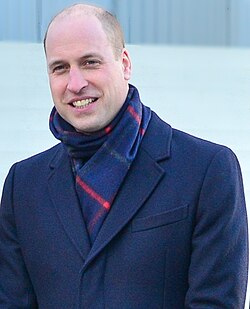
The organization is led by a Chairman (currently Debbie Hewitt) and a Chief Executive (Mark Bullingham). Since 1939, the FA has maintained a tradition of having a member of the British royal family serve as President. The current Patron is the Prince of Wales.
Challenges and Social Evolution
The Struggle for Women's Football
The history of women's football in England is marked by a period of systemic exclusion. Following a surge in popularity during and after World War I, the FA banned women's teams from using affiliated grounds in 1921, claiming the sport was unsuitable for women's bodies. This ban lasted for nearly five decades.
The restriction was only lifted in 1969 following the foundation of the Women's Football Association and a directive from UEFA (the Union of European Football Associations). It took until 1983 for the WFA to affiliate with the FA, and the FA did not establish a dedicated Women's Football Committee until 1993.
Reform and Accountability
In 2017, the FA implemented significant governance reforms to increase diversity and transparency. These changes included reducing the board to 10 members, introducing term limits, and ensuring female representation on the board by 2018.
The organization also faced a major crisis between 2016 and 2021 regarding historical sexual abuse within football. Following a helpline established with the NSPCC, a 700-page report published in March 2021 identified failures to act on abuse complaints at eight professional clubs, including Chelsea, Manchester City, and Aston Villa. The FA issued a heartfelt apology and committed to implementing all recommendations from the report.
International Relations and Achievements
The FA's relationship with FIFA (the Fédération Internationale de Football Association) has been complex. England joined in 1905 but left after World War I in protest of FIFA's refusal to exclude Central Powers. They rejoined in 1924, only to resign again in 1928 over "broken time payments"—monetary compensation given to amateur athletes to cover wages lost while competing. England did not return to FIFA until 1946, missing three World Cups in the process.
Despite these diplomatic hurdles, the national teams have achieved immense success:
- Men's National Team: FIFA World Cup winners in 1966.
- Women's National Team: UEFA European Women's Championship winners in 2022 and 2025.
- Youth Teams: Multiple titles across FIFA U-20 and U-17 World Cups, as well as UEFA championships.
| Category | Details |
|---|---|
| Founded | October 26, 1863 |
| Headquarters | Wembley Stadium, London |
| Current Patron | William, Prince of Wales |
| Key Affiliations | FIFA, UEFA, IFAB |
| Major Competition | FA Cup (est. 1871) |
| First Secretary | Ebenezer Cobb Morley |