Blackheath Football Club: The Legacy of the World's Oldest Open Rugby Club
In the heart of south-east London lies a sporting institution with a heritage that stretches back to the very dawn of organized rugby. Blackheath Football Club (BFC) is not merely a local sports team; it is the oldest open rugby club in continuous existence in the world. An "open club" is one that is independent and not attached to a specific institution, such as a school, college, or military establishment.
Founded in 1858, Blackheath has spent over 160 years shaping the laws, tactics, and international reach of the game. From its early days on the heath to its current home at Well Hall in Eltham, the club remains a cornerstone of English rugby union.
A Foundation in Rugby History
The club was established by former students of Blackheath Proprietary School who were drawn to the "carrying" game of football popularized by Rugby School. This early period established a unique tradition: when the "old boys" played against current pupils, supporters would cheer for either the "Club" or the "School." To this day, fans continue to shout "Club!" rather than "Blackheath" to show their support.
Beyond tradition, Blackheath was a pioneer of gameplay. In 1863, the club developed the tactic of passing the ball between players, providing a strategic alternative to the solo break or the "kick and follow-up" method common at the time.
The Great Divide: FA vs. RFU
Blackheath played a pivotal role in the historical split between association football (soccer) and rugby union. In October 1863, the club became a founder member of The Football Association (FA), which sought to create a unified code of laws for all football variants. Francis Maule Campbell, a Blackheath member, served as the FA's treasurer.
However, a conflict arose over the practice of hacking—the act of intentionally kicking an opponent's shins to hinder their progress. Campbell argued that hacking was essential for courage and pluck in the game. When the FA moved to eliminate the practice, Campbell withdrew Blackheath from the association in December 1863. This move prompted other rugby-playing clubs to follow suit, effectively creating the divide between the two sports.
By January 1871, the need for a dedicated rugby code led to the formation of the Rugby Football Union (RFU). Blackheath was one of the 22 clubs that met at the Pall Mall Restaurant to establish these rules, and it remains one of only seven original member clubs still in existence today.
Shaping the International Game
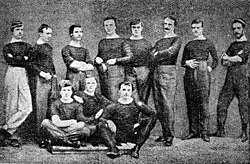
Blackheath's influence extended to the global stage. The club helped organize the first-ever rugby international match between England and Scotland, held in Edinburgh on March 27, 1871. The England side was captained by Blackheath's own captain and included three other "Club" players.
Ten years later, on February 19, 1881, Blackheath hosted the first international fixture between England and Wales. In a nod to the club's grassroots origins, the players met and changed at the Princess of Wales public house before taking the field.
From the Heath to Well Hall
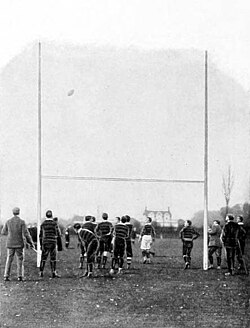
For years, the club played its matches on the Heath, but frequent interruptions from spectators eventually forced a move. The club transitioned to Richardson's Field and later to the Rectory Field in 1883.
After 158 years of history at the Rectory Field, the club made the strategic decision to relocate to its training ground, Well Hall, for the 2016–17 season. This move was designed to maximize matchday revenue and ensure the club's future development. The final match at the Rectory Field took place on April 30, 2016, where Blackheath defeated Blaydon 45–17.
The Modern Era and Community
Today, Blackheath FC is a multifaceted organization. While the first team competes at a high professional level, the club is deeply invested in grassroots and inclusive rugby:
- Youth Development: The club provides sections for players from under-6s to under-18s, with a dedicated home ground at Kidbrooke Road.
- Women's Rugby: The club fields two women's teams, with the first XV achieving back-to-back Championship South East 2 League titles in 2015–16 and 2016–17.
- Rugby Academy: Established in 2013, the academy allows boys to balance their academic studies with high-level rugby training.
On the pitch, the club continues to climb the English rugby union system. Following a strong 2025–26 season in National League 1, where they finished 2nd, Blackheath earned promotion to Champ Rugby, the second tier of English rugby.
A Legacy of Excellence
The club's honor roll is extensive, featuring 16 Kent Cup titles and various Sevens championships. Its roster of notable players includes Frederick Stokes, the first captain of the England national team, and John Gallagher, a member of the 1987 Rugby World Cup-winning All Blacks squad.
Interestingly, the club's prestige extends into fiction; the character Dr. Watson from the Sherlock Holmes stories is identified as a player for Blackheath.
| Category | Details |
|---|---|
| Founded | 1858 |
| Location | Well Hall, Eltham, London |
| Current League | Champ Rugby (Promoted 2026) |
| Ground Capacity | 1,650 (550 seats) |
| Key Distinction | Oldest independent rugby club in continuous existence |
| Founder Member of | The Football Association (FA) & Rugby Football Union (RFU) |