The Evolution of Rugby: From English Schoolyards to a Global Phenomenon
Rugby football is a high-energy team sport that emerged in 19th-century England. While it began as a single game, it eventually evolved into two distinct professional codes: rugby union and rugby league. Defined by its physicality and strategic depth, rugby has grown from a localized pastime into a worldwide sport with millions of followers.
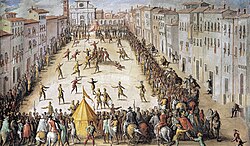
The roots of the game trace back to the Middle Ages, where various forms of football involved carrying and tossing the ball. However, the modern version of the sport was first codified in 1845 at Rugby School in Warwickshire, England. From there, the game spread rapidly through English public schools and across the British Empire.
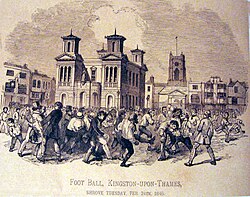
While rugby is the direct ancestor of American and Canadian football, these sports are no longer considered forms of rugby due to significant rule changes. For instance, Football Canada—the governing body for the sport in Canada—was known as the Canadian Rugby Union as late as 1967, highlighting how deeply intertwined these sports once were.
The Great Divide: Union vs. League
In 1895, a major schism occurred that split the sport into two separate codes. The conflict centered on broken-time payments, which were payments made to players to compensate them for time taken off work to play. Twenty-one clubs from Northern England left the Rugby Football Union (RFU) to form the Northern Rugby Football Union (later renamed the Rugby Football League in 1922) to allow these payments.
This move made rugby league the first football code to turn professional. In contrast, rugby union remained strictly amateur for another century, only allowing professional players in 1995. Today, the two versions are governed by separate bodies: World Rugby for union and the International Rugby League for league.
Comparing the Two Codes
While both sports share a common ancestry, they differ significantly in administration and gameplay. Both use an oval-shaped ball and strictly prohibit forward passing, meaning players must pass the ball laterally or backward to advance toward the opponent's try line. Unlike American football, rugby players do not wear helmets or heavy protective armor.
Rugby Union
Rugby union is the more globally popular version of the sport. It features 15 players per team and is characterized by a complex set of rules regarding possession. Key elements include the ruck (where players contest for the ball on the ground) and the maul (where players bind together to push the ball forward).
Set pieces in union include the scrum—where opposing packs of players push against each other after a minor infringement like a "knock-on" (accidentally knocking the ball forward)—and the line-out, where players jump to catch a ball thrown from the sidelines.


A faster variation called rugby sevens is based on union rules but features only seven players per side and seven-minute halves. This version has been part of the Olympic Games since Rio 2016.
Rugby League
Rugby league was designed to be faster and more attractive to spectators. To achieve this, the team size was reduced to 13 players, and the line-out was removed. The ruck was replaced by the play-the-ball, a process where the tackled player rolls the ball back with their foot to a teammate.
One of the most defining rules of league is the six-tackle limit; if a team fails to score within six tackles, they must surrender possession. While scrums still exist in league, they are rarely contested and involve fewer players than in union.
Global Reach and Cultural Impact
Rugby has expanded far beyond the United Kingdom. Rugby union is the national sport in countries such as New Zealand, Fiji, Samoa, Tonga, Georgia, Wales, and Madagascar. It is dominated by "first tier" nations, including South Africa, England, Ireland, and France.
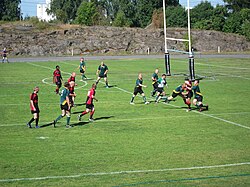
Rugby league has a powerful regional presence, particularly in Australia, England, and Papua New Guinea, where it is the national sport. The sport is also played in various capacities across Europe, the South Pacific, and the United States.

Culturally, the two codes have historically reflected social class divisions in England. Rugby union was often viewed as an "establishment" sport for the upper and middle classes, while rugby league was seen as a working-class pursuit. However, these stereotypes vary by region; in Wales and the Pacific Islands, rugby union is deeply rooted in working-class communities.
Technical Specifications and Safety
The equipment used in rugby is strictly regulated. According to World Rugby Law 2, an official union ball must be oval, made of four panels, and weigh between 410 and 460 grams. Its length is typically 280–300 millimeters, with a specific air pressure to ensure consistent bounce and grip.
Because it is a high-contact sport, injuries are common, with approximately 25% of players injured each season. Rugby union, in particular, has reported high rates of concussions. A 2014 study indicated that concussion rates during match play were higher than in most other sports.
Major International Competitions
Both codes host prestigious World Cups every four years. The Rugby League World Cup was the first to be established, debuting in France in 1954. Australia has been a dominant force in recent tournaments, winning both the 2017 and 2021 events.
The Rugby World Cup for union began in 1987, hosted by New Zealand and Australia. It has grown into one of the world's largest sporting events, with South Africa emerging as the champion of the 2023 tournament held in France.
| Feature | Rugby Union | Rugby League |
|---|---|---|
| Players per Team | 15 | 13 |
| Governing Body | World Rugby | International Rugby League |
| Possession Rule | Unlimited tackles (until loss/offence) | Six-tackle limit |
| Key Set Pieces | Scrums, Line-outs, Rucks, Mauls | Scrums, Play-the-ball |
| Professionalism | Since 1995 | Since 1895 |
| First World Cup | 1987 | 1954 |