1896 Summer Olympics: The Birth of the Modern Games
The 1896 Summer Olympics, officially known as the Games of the I Olympiad, marked the historic revival of the ancient Olympic tradition. Held in Athens, Greece, from April 6 to April 15, 1896, these Games established the foundation for the world's most prestigious international sporting event. Organized by the newly formed International Olympic Committee (IOC), the event brought together athletes from across the globe to compete in a spirit of internationalism and athletic excellence.
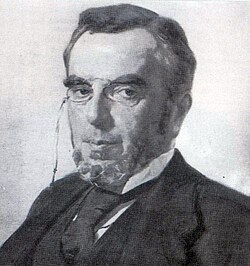
The vision for the modern Games was championed by French aristocrat Pierre de Coubertin, who sought to revive the Olympic spirit. Following a congress in Paris on June 23, 1894, Athens was selected as the inaugural host city, honoring the origins of the ancient Games.
Key Facts
- Host City: Athens, Greece
- Dates: April 6–15, 1896
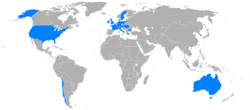
- Participation: 241 male athletes from 14 nations
- Scope: 43 events across 9 sports
- Primary Venue: Panathenaic Stadium
- Opening Official: King George I of Greece
Reviving the Olympic Spirit
The path to the 1896 Games was paved by both ancient inspiration and 19th-century philanthropy. Coubertin drew inspiration from earlier Greek games organized by businessman Evangelis Zappas in 1859, 1870, and 1875. The funding for the 1896 event was made possible through the legacies of Evangelis and Konstantinos Zappas, as well as a significant contribution from George Averoff, who sponsored the second refurbishment of the Panathenaic Stadium in marble.
While Coubertin initially suggested holding the first Games alongside the 1900 Universal Exposition in Paris, the congress members feared a six-year wait would dampen public enthusiasm. Consequently, they moved the date forward to 1896.
Venues and Organization
The centerpiece of the Games was the Panathenaic Stadium, a magnificent structure that hosted athletics, gymnastics, weightlifting, and wrestling. The stadium's capacity reached 80,000 spectators, creating an atmosphere of unprecedented scale for a sporting event.
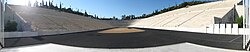
Other specialized venues included the Neo Phaliron Velodrome for cycling and the Zappeion for fencing. Interestingly, several of these sites maintained their legacy into the 21st century, serving as venues or administrative hubs for the 2004 Athens Olympics.
The Opening Ceremony
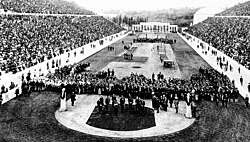
On April 6, King George I officially opened the Games following a speech by Crown Prince Constantine. The ceremony featured athletes grouped by nation on the infield, accompanied by an Olympic Hymn composed by Spyridon Samaras and written by Kostis Palamas, performed by nine bands and 150 choir singers.
Competition and Athletic Highlights
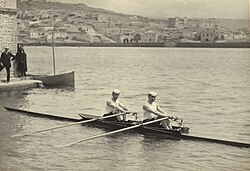
The 1896 Games featured 43 events. Because the organizers declined to build a dedicated swimming facility, the swimming competitions were held in the cold waters of the Bay of Zea off the Piraeus coast, attracting nearly 20,000 spectators.
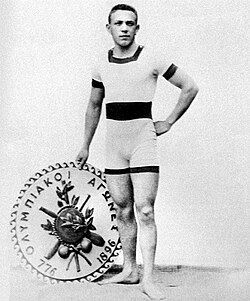
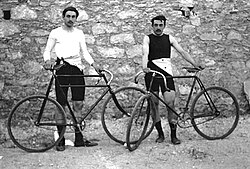
Notable achievements included the dominance of French cyclists Léon Flameng and Paul Masson, and the victory of Leonidas Pyrgos, who became the first Greek modern Olympic champion in the masters foil fencing competition.
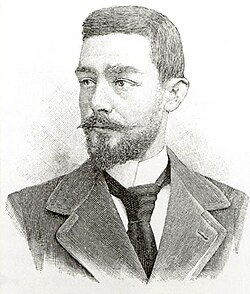
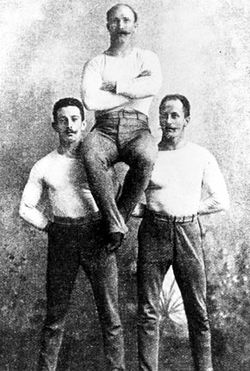
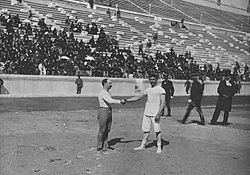
The Games also showcased strength and agility through gymnastics and wrestling. German athletes were particularly successful in gymnastics, while the wrestling finals saw a memorable encounter between Carl Schuhmann and Georgios Tsitas.
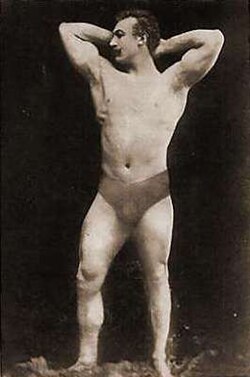
Weightlifting was another highlight, with Launceston Elliot winning the one-armed event, earning great popularity among the local Greek crowd.
Medals and Awards
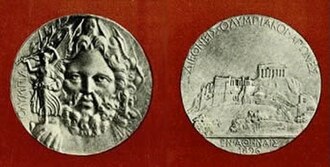
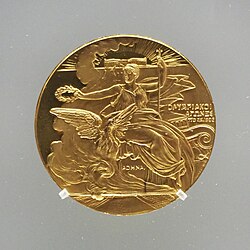
The reward system in 1896 differed significantly from today's standards. Winners were awarded silver medals, and participants received commemorative medals. The familiar gold, silver, and bronze hierarchy was not introduced until the 1906 Olympic Games.
Participation and Legacy
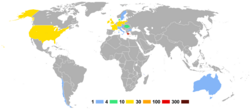
The 1896 Olympics were a resounding success, boasting the largest international participation of any sporting event to that date. While Greece provided the vast majority of athletes, the presence of 14 nations signaled the start of a global movement.
| Category | Details |
|---|---|
| Total Athletes | 241 (All men) |
| Nations | 14 |
| Sports | 9 (10 disciplines) |
| Total Events | 43 |
| Main Stadium | Panathenaic Stadium |
Despite petitions to keep the Games permanently in Athens, the IOC adhered to the principle of rotating host cities. The Olympics moved to Paris in 1900 and did not return to Greece until 2004, 108 years later.
Frequently Asked Questions
Who founded the modern Olympic Games?
The modern Olympic Games were the vision of French aristocrat Pierre de Coubertin, who created the International Olympic Committee (IOC) to organize the revival.
Why were the 1896 Games held in Athens?
Athens was chosen to honor the ancient Greek origins of the Olympics and was selected during a congress in Paris in 1894.
Were there any women competing in the 1896 Olympics?
No, all 241 athletes who participated in the 1896 Summer Olympics were men.
Did the 1896 Games use gold, silver, and bronze medals?
No. In 1896, winners were awarded silver medals and participants received commemorative medals. The gold, silver, and bronze system was implemented later, in 1906.
Where did the swimming events take place?
The swimming competitions were held in the open sea at the Bay of Zea because no dedicated swimming stadium was constructed for the event.