1988 Summer Olympics: A Landmark Era of Harmony and Progress in Seoul
The 1988 Summer Olympics, officially known as the Games of the XXIV Olympiad, represented a transformative moment for international sports. Branded as Seoul 1988, this multi-sport event took place in Seoul, South Korea, from 17 September to 2 October 1988. Under the official motto "Harmony and Progress" (화합과 전진), the Games brought together a massive global community to compete at the highest level.
The selection of Seoul as the host city was a decisive victory, winning the first round of bidding with 52 votes, surpassing Nagoya, Japan, which received 27. The event was a massive undertaking, supported by 27,221 volunteers and featuring 237 events across 23 sports and 31 disciplines.
Key Facts
- Host City: Seoul, South Korea
- Official Motto: Harmony and Progress
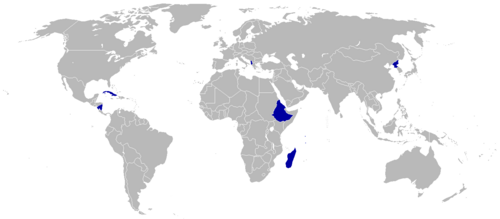
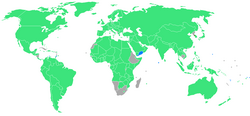
- Participating Nations: 159 to 160 nations
- Total Athletes: 8,453 (6,250 men and 2,203 women)
- Opening Ceremony: 17 September 1988, opened by President Roh Tae-woo
- Closing Ceremony: 2 October 1988, closed by IOC President Juan Antonio Samaranch
Olympic Venues and Infrastructure
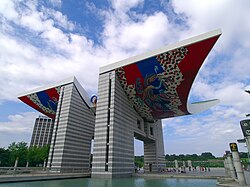
To accommodate the vast array of competitions, Seoul utilized a wide range of specialized facilities. The Seoul Olympic Stadium served as the primary hub for the opening and closing ceremonies, athletics, equestrian jumping individual finals, and the football final.
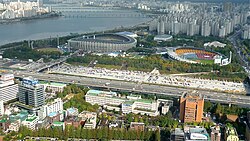
Seoul Sports Complex Venues
The Sports Complex housed several critical venues, including:
- Jamsil Indoor Swimming Pool: Hosted diving, swimming, synchronized swimming, water polo, and modern pentathlon swimming.
- Jamsil Gymnasium: Used for basketball and the volleyball final.
- Jamsil Students' Gymnasium: The site for boxing competitions.
- Jamsil Baseball Stadium: Hosted baseball as a demonstration sport.
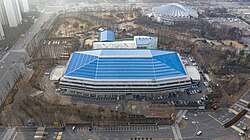
Olympic Park and Metropolitan Venues
The Olympic Park featured specialized facilities such as the Olympic Velodrome for track cycling, the Olympic Gymnastics Hall, and the Olympic Tennis Center. Other venues were spread throughout the metropolitan area and even outside Seoul to ensure diverse locations for specialized sports like archery at the Hwarang Archery Field and sailing at the Busan Yachting Center.
Competition and Participation
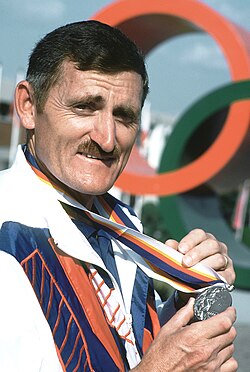
The scale of participation was immense. While records vary slightly, the Games saw approximately 8,453 athletes representing 159 to 160 National Olympic Committees (NOCs). The United States sent the largest contingent with 527 athletes, followed by the Soviet Union with 481. South Korea, the host nation, sent 401 athletes.
The competition schedule was rigorous, spanning the latter half of September and the beginning of October. Sports such as athletics, swimming, and gymnastics saw intense competition, with gold medals being awarded daily throughout the event period.
Summary of Games Statistics
| Category | Details |
|---|---|
| Official Name | Games of the XXIV Olympiad |
| Total Events | 237 |
| Total Sports | 23 |
| Total Athletes | 8,453 |
| Host Stadium Cost | 491 billion won (approx. US$354 million) |
Ceremonies and Traditions
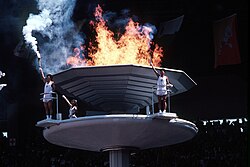
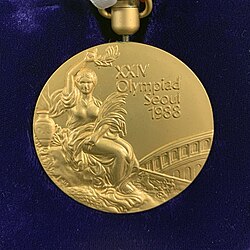
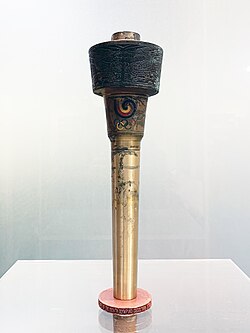
The ceremonies were central to the spirit of the Games. The lighting of the cauldron was a significant moment involving Kim Won-tak, Chong Son-man, and Son Mi-jong. The torch relay, a tradition of carrying the Olympic flame, utilized specialized torches to signal the arrival of the spirit of competition.
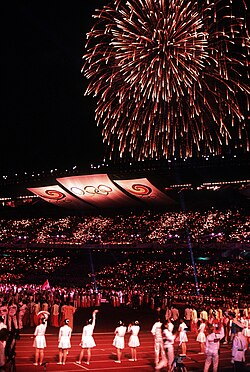
The closing ceremony provided a grand conclusion to the festivities, marked by spectacular displays, including fireworks that illuminated the Seoul sky.
Frequently Asked Questions
Where was the 1988 Summer Olympics held?
The 1988 Summer Olympics were held in Seoul, South Korea.
What was the official motto of the Seoul 1988 Games?
The official motto was "Harmony and Progress" (화합과 전진).
How many athletes participated in the 1988 Olympics?
A total of 8,453 athletes participated in the Games.
Which stadium hosted the opening and closing ceremonies?
The Seoul Olympic Stadium was the venue for both the opening and closing ceremonies.
What was the cost of the Seoul Olympic Stadium?
The cost of the stadium was 491 billion won, which was approximately US$354 million.