Yohl Ikʼnal: The First Divine Queen of Palenque
In the heart of the Classic Maya period, the city-state of Palenque witnessed a historic shift in power. While the Maya political structure was overwhelmingly patriarchal, one woman broke the mold to become a sovereign in her own right. Yohl Ikʼnal stands as a pivotal figure in Mesoamerican history, not only as a ruler who navigated the treacherous waters of superpower diplomacy but as the first known female to hold the highest title of authority in her civilization.
Key Facts
- Title: The first female ruler to hold the title of kʼuhul ajaw (divine lord/lady).
- Reign: December 23, 583 CE, to November 7, 604 CE.
- Dynasty: Member of the royal Bʼaakal dynasty, descended from Kʼukʼ Bahlam I.
- Major Conflict: Survived a devastating attack by the superpower Calakmul in 599 CE.
- Legacy: Ancestor to the celebrated ruler Kʼinich Janaab Pakal I.
Lineage and Family Ties
The exact parentage of Yohl Ikʼnal remains a subject of scholarly debate due to ambiguities in the hieroglyphic records. It is certain, however, that she belonged to the royal Bʼaakal dynasty and was a direct descendant of Kʼukʼ Bahlam I, the founder of the Palenque line. Most historians believe she was the daughter of either Kan Bahlam I or Kʼan Joy Chitam I.
Her relationship with Janahb Pakal is equally complex. While inscriptions indicate a parent-child bond, the fragmented nature of the texts leaves it unclear whether he was her husband or her son. Some scholars suggest he was her consort, aligning with the roles of other Maya queens, while others argue he was a son born during her reign.
Yohl Ikʼnal's descendants played critical roles in Palenque's future. Her son, Ajen Yohl Mat, succeeded her in 604 CE. She is also linked to Lady Sak Kʼukʼ (either as a mother or grandmother) and Kʼinich Janaab Pakal I (as a grandmother or great-grandmother). Pakal I, Palenque's most famous ruler, later emphasized his connection to Yohl Ikʼnal to legitimize his own claim to the throne.
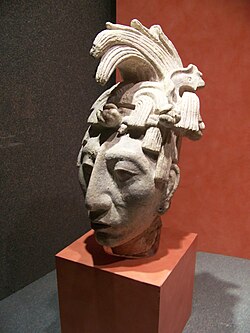
A Rare Ascent to Power
The accession of Yohl Ikʼnal on December 23, 583 CE, was a remarkable event. In the Classic Maya world, power was almost exclusively transmitted through the male line. The position of kʼuhul ajaw—a term meaning "divine lord" or "divine lady"—was rarely, if ever, held by women.
Historians have proposed three primary theories to explain how she came to power:
- Absence of Male Heirs: The previous king may have died without a mature son, leaving Yohl Ikʼnal to act as a conduit for royal authority.
- Political Crisis: A disputed succession or external threat may have necessitated the immediate appointment of the most legitimate claimant, regardless of gender.
- Regency: She may have started as a regent for a young male heir who died shortly after, leading her to assume full authority.
Regardless of the path, her use of the title kʼuhul ajaw confirms that she was viewed as the full embodiment of sacred and royal authority, rather than a mere placeholder or consort.
The Reign of Yohl Ikʼnal
Stability and Prosperity
For the first sixteen years of her rule, Palenque enjoyed a period of relative stability. The city flourished as a regional center, continuing its ritual activities and architectural expansions. During this time, the broader Maya world was embroiled in a power struggle between the superpowers of Tikal and Calakmul, but Palenque's western location provided a temporary buffer from the conflict.
The Calakmul Invasion
This peace ended abruptly on April 23, 599 CE. Palenque was struck by a devastating military defeat at the hands of Calakmul. Maya texts describe this event as och kʼahkʼ ("fire-entering"), a term used when enemy forces successfully sack and burn a city.
The attack was likely ordered by the ruler of Calakmul, Scroll Serpent (Uneh Chan), though it may have been executed by a subordinate lord from Santa Elena. While the city suffered significant damage, the dynasty survived. Yohl Ikʼnal remained in power for five more years, suggesting that Calakmul sought to turn Palenque into a tributary state—requiring political deference and economic payments—rather than destroying it entirely.
Evidence suggests that either Yohl Ikʼnal or her successor, Ajen Yohl Mat, eventually rebelled against Calakmul's dominance before 611 CE.
Death and Archaeological Legacy
Yohl Ikʼnal passed away on November 7, 604 CE (recorded in the Long Count calendar as 9.8.11.6.12 2 Eb 20 Keh). Her twenty-one-year reign was one of the longest in Palenque's early history, and she successfully ensured the dynastic line continued through Ajen Yohl Mat.
The mystery of her final resting place continues to intrigue archaeologists. Merle Greene Robertson has proposed that a vaulted tomb found beneath Temple 20 is her burial site. This theory is supported by the tomb's proximity to the Temple of the Inscriptions, the early seventh-century style of the ceramics, and the small size of the skeletal remains, which may indicate a female. However, this identification remains a subject of academic debate.
| Category | Details |
|---|---|
| Accession Date | December 23, 583 CE |
| Death Date | November 7, 604 CE |
| Total Reign | 21 Years |
| Key Title | Kʼuhul Ajaw (Divine Lady) |
| Major Adversary | Calakmul (under Scroll Serpent) |
| Proposed Tomb | Temple 20, Palenque |
Frequently Asked Questions
Why was Yohl Ikʼnal's reign unusual for the Maya?
Maya society was strictly patriarchal, and the title of kʼuhul ajaw (divine lord) was almost exclusively held by men. Yohl Ikʼnal was the first known female ruler to hold this full title of sacred authority.
What does the term "fire-entering" mean in Maya records?
The term och kʼahkʼ, or "fire-entering," is a standard Maya expression used to describe the military conquest or sacking of a city, specifically indicating that enemy forces entered the city and burned its buildings.
Who was the primary enemy of Palenque during Yohl Ikʼnal's reign?
The primary enemy was Calakmul, one of the two great Maya superpowers of the Classic Period, led by the ruler Scroll Serpent (Uneh Chan).
How did Yohl Ikʼnal influence the later ruler Pakal the Great?
Kʼinich Janaab Pakal I was a descendant of Yohl Ikʼnal. He heavily emphasized his relationship to her in historical records to legitimize his own claim to the throne of Palenque.
Where is Yohl Ikʼnal believed to be buried?
Some archaeologists, including Merle Greene Robertson, believe she is buried in a vaulted tomb beneath Temple 20 at Palenque, based on the dating of ceramics and the size of the skeletal remains.