Indigenous peoplesNative AmericansAmerindiansPre-Columbian eraIndigenous demographics

Indigenous Peoples of the Americas: History, Culture, and Demographics

Indigenous Peoples of the Americas: History, Culture, and Demographics The Indigenous peoples of the Americas represent a vast and diverse array of ethnic groups who inhabited the Western...

Indigenous Peoples of the Americas: History, Culture, and Demographics

The Indigenous peoples of the Americas represent a vast and diverse array of ethnic groups who inhabited the Western Hemisphere long before the arrival of European colonizers. With a total population exceeding 60 million today, these communities maintain a rich tapestry of languages, spiritual beliefs, and ancestral traditions that span from the Arctic reaches of Greenland to the southern tip of Chile.

From the complex urban centers of Mesoamerica to the nomadic hunters of the Great Plains and the rainforest dwellers of the Amazon, the history of these peoples is one of profound resilience, scientific innovation, and cultural endurance.
ภาพประกอบบทความ
ภาพประกอบจากบทความต้นฉบับ

Key Facts

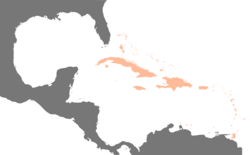
The West Indies (or Antilles) in relation to the continental Americas
  • Global Population: Over 60 million people identify as Indigenous across the Americas.
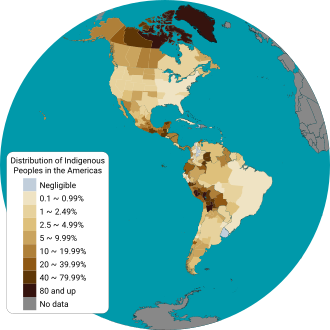
  • Highest Concentrations: Mexico, Peru, Guatemala, and Bolivia have some of the largest Indigenous populations.
  • Agricultural Legacy: Indigenous peoples domesticated essential global crops, including maize, tomatoes, and common beans.
  • Linguistic Diversity: Hundreds of distinct language families exist, ranging from the Mayan languages to Quechuan and Inuit dialects.
  • Genetic Origins: Research suggests early migrations from Asia via Beringia, involving Ancestral Northern Eurasian and Northeast Asian populations.

Origins and the Peopling of the Americas
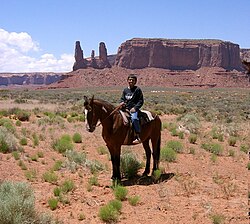
A Navajo boy in the desert in present-day Monument Valley in Arizona with the "Three Sisters" rock formation in the background in 2007

The arrival of humans in the Americas is a subject of extensive genetic and archaeological study. According to the Out of Africa theory, early humans migrated across the globe, eventually reaching the Americas. Genetic research indicates that the first wave of humans entered via Beringia (the land bridge between Siberia and Alaska).

This migration involved an admixture of Ancestral Northern Eurasian populations—a distinct Paleolithic Siberian group—and Northeast Asians. This genetic foundation paved the way for the diverse Paleo-Indian populations that eventually spread throughout North and South America.

Map of early human migrations based on the Out of Africa theory; figures are in thousands of years ago (kya).[78]
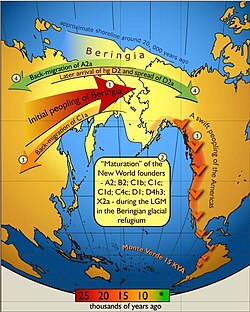
Schematic illustration of maternal geneflow in and out of Beringia. Colours of the arrows correspond to approximate timing of the events and are decoded in the coloured time-bar. The initial peopling of Berinigia (depicted in light yellow) was followed by a standstill after which the ancestors of Indigenous Americans spread swiftly throughout the New World while some of the Beringian maternal lineages, such as C1a, spread westwards. More recent genetic exchange (shown in green) is manifested by back-migration of A2a into Siberia and the spread of D2a into the Northeastern United States that post-dates the initial arrival of people in the New World.
A schematic illustration of maternal (mtDNA) gene-flow in and out of Beringia, from 25,000 years ago to present
A map showing the origin of the first wave of humans into the Americas, including the Ancestral Northern Eurasian, which represent a distinct Paleolithic Siberian population, and the Northeast Asians, which are an East Asian-related group. The admixture happened somewhere in Northeast Siberia.[281]

Pre-Columbian Civilizations and Culture
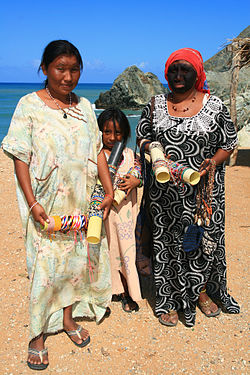
Wayuu women in the Guajira Peninsula, which encompasses parts of Colombia and Venezuela

Before European contact, the Americas were home to sophisticated societies with advanced knowledge of engineering, astronomy, and governance. In Mesoamerica, the Maya developed complex writing systems and glyphs, while in the Andes, the Quechua and Aymara peoples built expansive empires.

Agriculture and Global Impact

Indigenous peoples were master agriculturists. They developed farming techniques that not only sustained their own civilizations but also transformed global nutrition. Key contributions include:

  • Maize (Corn): A staple crop developed in Mesoamerica.
  • Common Beans: Native to Mexico and Central America before spreading south.
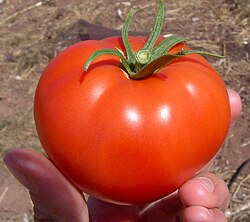
  • Tomatoes: Cultivated by pre-Hispanic civilizations in central Mexico.
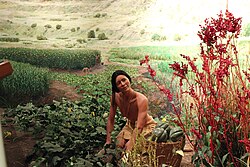
A representation of the domesticated plant species cultivated by Indigenous peoples have influenced the crops that were produced globally.
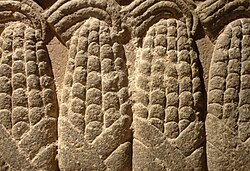
The ancient Mesoamerican engraving of maize now on display at the National Museum of Anthropology in Mexico
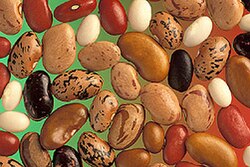
The common bean is native to Mexico and Central America and later began to be cultivated in South America.
The tomato (jitomate, in central Mexico) was later cultivated by the pre-Hispanic civilizations of Mexico.

Art and Expression

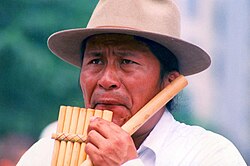
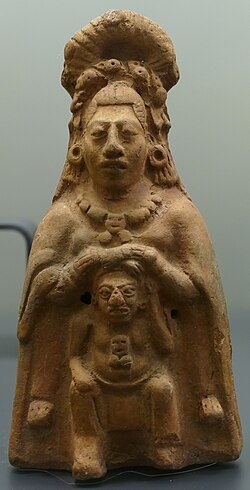
Cultural expression varied by region, from the intricate portrait vessels of the Moche in Peru to the detailed ceramic work of the Maya. Music was often central to spiritual life, utilizing instruments such as the antara or siku (panpipes), and textile arts remained a vital way of preserving identity and status.
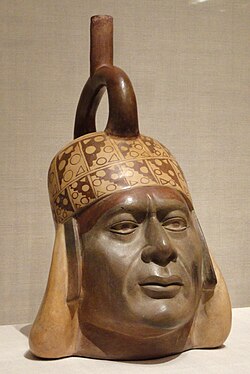
Moche portrait vessel from Peru, 100 BCE–500 CE
Ceramic portrait of a Maya noblewoman, Jaina Island, Mexico, 600–800 CE
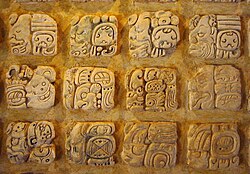
Maya glyphs in stucco now on display at Museo de sitio in Palenque, Mexico
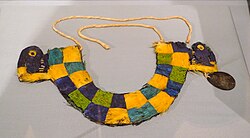
Chimu culture feather pectoral, feathers, reed, copper, silver, hide, cordage, c. 1350–1450
An Indigenous man playing a panpipe, antara, or siku

European Colonization and Historical Trauma
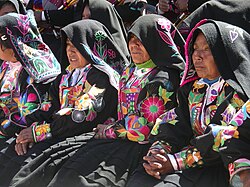
Quechua women in festive dress on Taquile Island on Lake Titicaca, west of Peru

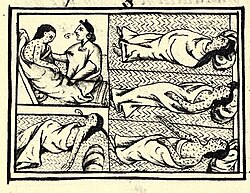
The arrival of Europeans triggered a period of catastrophic decline for many Indigenous populations. Beyond warfare and forced displacement, the introduction of Old World diseases—most notably smallpox—caused massive epidemics that decimated entire communities.

This era of colonization left a legacy of historical trauma, characterized by the loss of ancestral lands and the suppression of native languages and religions. Despite this, many groups fought to maintain their autonomy and cultural integrity.
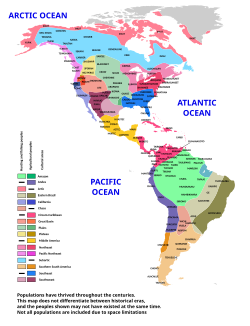
Areas of Indigenous peoples in the Americas at time of European colonization
An illustration in Florentine Codex, compiled between 1540 and 1585 CE, depicting the Nahua peoples suffering from smallpox during the conquest-era in central Mexico

Regional Demographics and Modern Status
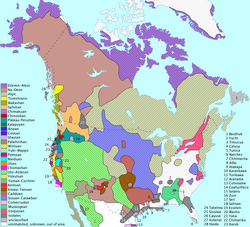
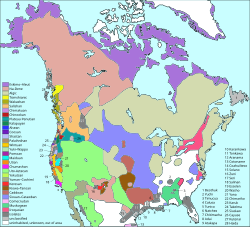
Language families of Indigenous peoples in North America shown across present-day Canada, Greenland, the United States, and northern Mexico

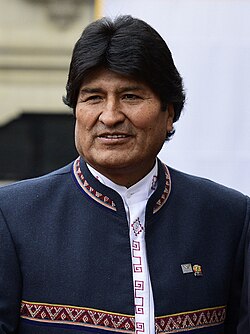
Today, Indigenous peoples continue to play a vital role in the social and political fabric of the Americas. In some nations, such as Bolivia, Indigenous leaders have reached the highest levels of government, including the presidency.

North America and the Caribbean

In Canada, Indigenous identity is categorized into First Nations, Inuit, and Métis. In Greenland, the population is predominantly Inuit, divided into groups such as the Kalaallit, Tunumiit, and Inughuit. In the United States, Native American populations are spread across various sovereign nations and tribal lands.

A map of Canada showing the percent of self-reported Indigenous identity (First Nations, Inuit, Métis) by census division, according to the 2021 Canadian census[201]
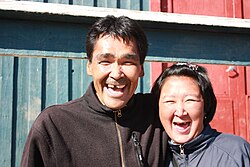
Tunumiit Inuit couple from Kulusuk, Greenland
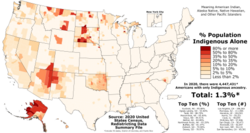
Proportion of Native Americans in each county in 2020.

Central and South America

Mexico and Guatemala maintain some of the highest proportions of Indigenous residents, with the Maya remaining a prominent group. In South America, the Mapuche in Chile and the Quechua in Peru and Bolivia preserve strong cultural ties to their ancestral lands.
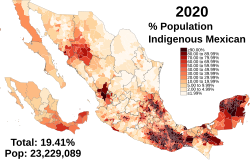
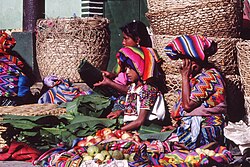
Proportion of Native Mexicans in each municipalities in 2020.
Modern Maya people in Sololá, Guatemala
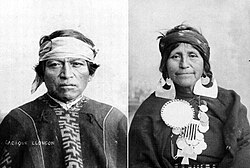
A Mapuche man and woman; the Mapuche make up about 85% of Indigenous population that live in Chile.

The following table provides a snapshot of Indigenous population percentages across selected countries based on the most recent available census data.

Indigenous Population Percentage by Country
Country or Territory Indigenous %
Greenland 89.5%
Guatemala 43.43%
Bolivia 37.63%
Peru 20.74%
Mexico 19.41%
Panama 17.17%
Chile 11.46%
Belize 11.15%
Canada 5.0%
United States 1.12%

Frequently Asked Questions
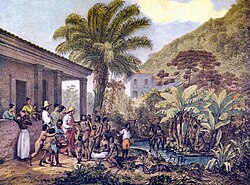
Indigenous people at a farm plantation in Minas Gerais in present-day Brazil, c. 1824
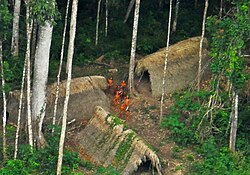
Members of an uncontacted tribe encountered in Acre in Brazil in 2009
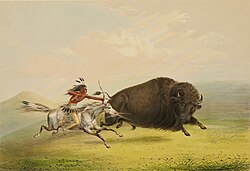
A bison hunt depicted in a painting by George Catlin (1844)
Pre-contact distribution of North American language families
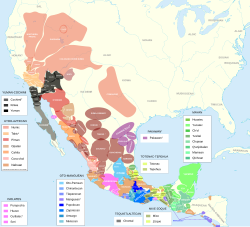
Pre-contact distribution of native American languages in the Southwest US, Mexico, and Central America
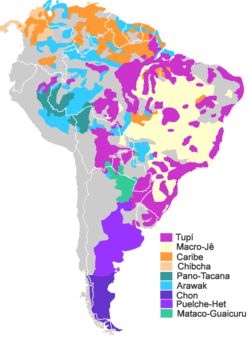
The major indigenous language families of South America, except Quechuan, Aymaran, and Mapuche
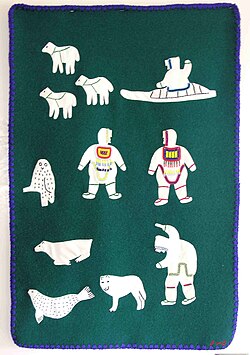
Indigenous peoples textile art in 1995 by Julia Pingushat, including Inuk, Arviat, Nunavut, Canada, wool, and embroidery floss
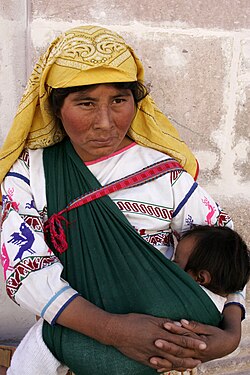
A Huichol woman from Zacatecas, Mexico
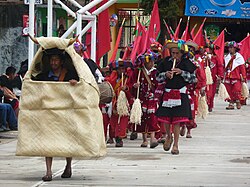
A carnival with Tzeltal people in Tenejapa Municipality, Chiapas
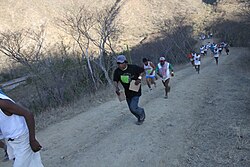
The Rarámuri marathon in Urique
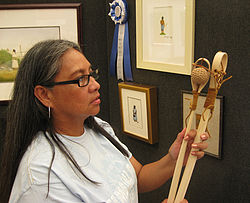
A Choctaw artist in present-day Oklahoma
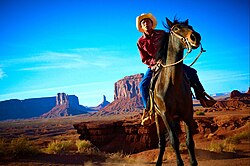
A Navajo man on horseback in present-day Monument Valley in Arizona
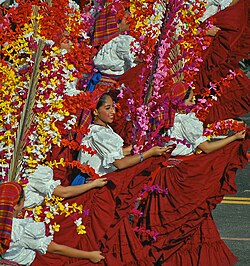
Indigenous Pipil women dancing in the traditional Procession of Palms in Panchimalco, El Salvador
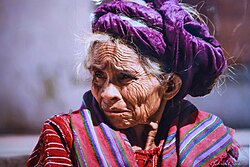
An elderly Maya woman
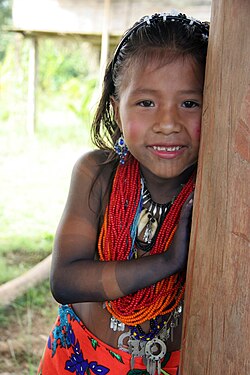
Embera girl in the Darién Province, 2006.
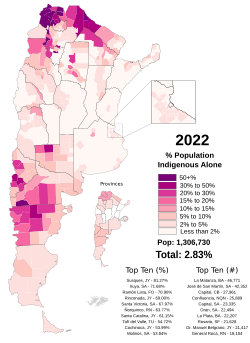
Proportion of Native Argentines in each department in 2022.
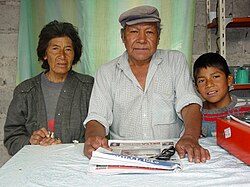
Owners of a roadside cafe near Cachi, Salta Province, Argentina
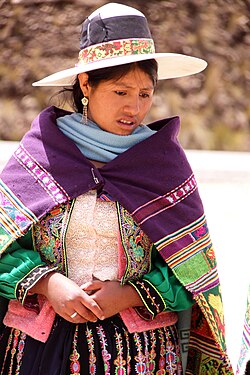
An Indigenous woman in traditional dress near Cochabamba, Bolivia
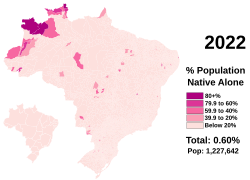
Proportion of Native Brazilians in each department in 2022.
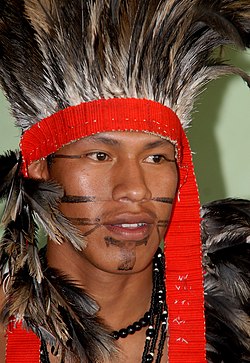
An Indigenous Terena man from present-day Brazil
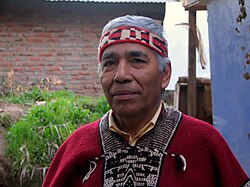
A Mapuche man in present-day Chile
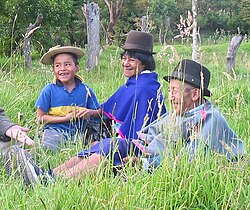
Guambía people relaxing in Colombia
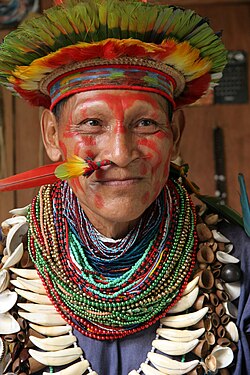
Shaman of the Cofán people from the Amazonian forest in present-day Ecuador
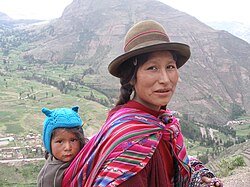
A Quechua woman and child in the Sacred Valley in Cuzco Region, Peru
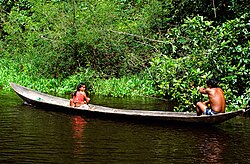
A Warao family traveling in their canoe in Venezuela
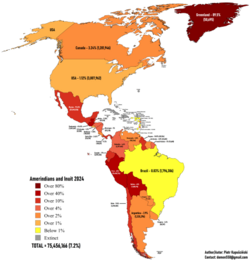
American Indian, Alaska Native, and Inuit populations of the Americas in 2024
Indigenous populations of the Americas in 2024.
Evo Morales, an Aymara member and former President of Bolivia
Principal component analysis showing the Native American cluster in other Eurasian populations.[282]
A qpGraph on the formation of Ancient Paleo-Siberians and Native American populations.[311]

Who are the Indigenous peoples of the Americas?

They are the descendants of the original inhabitants of the American continents, including North, Central, and South America, as well as the Caribbean, who lived there prior to European colonization.

What are some of the most prominent Indigenous groups?

Prominent groups include the Maya and Nahua in Mexico and Central America, the Inuit in the Arctic regions, the Quechua and Aymara in the Andes, and the Mapuche in Chile and Argentina.

How did Indigenous agriculture affect the world?

Indigenous peoples domesticated crops that are now global staples, such as maize, tomatoes, and common beans, which fundamentally changed the diets of people worldwide.

What is the current population of Indigenous peoples in the Americas?

The total population is estimated to be over 60 million, with significant populations residing in Mexico, Peru, Guatemala, and Bolivia.

How did early humans reach the Americas?

Scientific evidence suggests they migrated from Asia via Beringia, a land bridge that existed between Siberia and Alaska, involving a mix of Northeast Asian and Ancestral Northern Eurasian populations.