Yanomami People: Guardians of the Amazon Rainforest
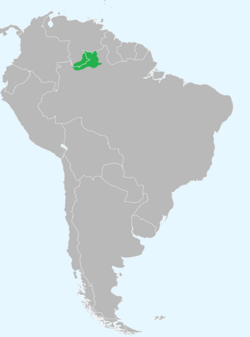
The Yanomami (also spelled Yąnomamö or Yanomama) are an Indigenous group of approximately 35,000 people residing in the heart of the Amazon rainforest. Their ancestral lands span the border between northern Brazil and southeastern Venezuela, where they maintain a unique cultural identity across 200 to 250 distinct villages.
For centuries, the Yanomami have lived in harmony with the dense jungle, though their history is marked by both resilience and struggle against external pressures. From their traditional communal living structures to their spiritual practices, the Yanomami represent one of the most significant Indigenous cultures in South America.
Key Facts
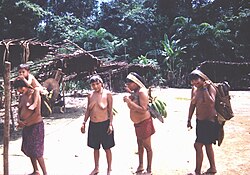
- Population: Approximately 35,339 people.
- Location: Northern Brazil and southeastern Venezuela.
- Housing: Live in large communal structures called shabonos.
- Language: Speak various Yanomaman languages.
- Spirituality: Practice shamanism.
- Land Rights: Exclusive use of nearly 96,650 square kilometers in Brazil (demarcated in 1992).
History and Territorial Struggles
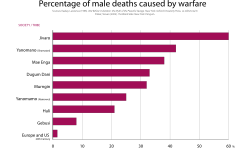
The origins of the Yanomami are a subject of historical study. Some researchers, including journalist Charles C. Mann, suggest they may descend from farmers who fled European expansion and slave-hunting expeditions conducted by conquistadors and bandeirantes between 1630 and 1720.
Sustained contact with the outside world increased in the 1950s through the arrival of Catholic missionaries (including the Society of Jesus and Salesians of Don Bosco) and the New Tribes Mission. However, this contact often brought conflict. By the mid-1970s, garimpeiros (independent gold-diggers) began infiltrating Yanomami lands, leading to violent clashes and environmental degradation.
In response to these threats, the Pro-Yanomami Commission (CCPY) was established in 1978. This non-profit organization campaigned for over a decade to secure the territorial and civil rights of the people. Their efforts culminated in 1992 when the Brazilian government officially registered an indigenous land area of approximately 96,650 square kilometers across the states of Amazonas and Roraima.
Social Organization and Domestic Life
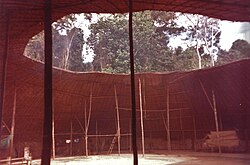
Yanomami society is organized around extended family units. Villages typically house between 50 and 400 residents who live together in a shabono—a massive, oval-shaped communal roof. The center of the shabono is an open communal space, while the perimeter is divided into sections for individual families.
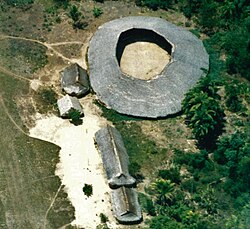
The shabono serves as both a home and a village center, providing shelter while maintaining a shared social environment. In some cases, smaller outlying buildings are constructed to provide privacy for newlywed couples or to serve as areas for preparing fish and game.
Cultural Expressions
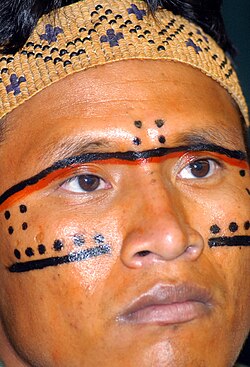
The Yanomami maintain rich traditions, including the use of traditional face painting and the practice of shamanism, which serves as the spiritual foundation of their community.
Health Challenges and Modern Threats
The Yanomami have faced severe health crises due to illegal incursions. Between 1987 and 1990, the population suffered from malnutrition, mercury poisoning, and violence caused by gold miners. Malaria, introduced by these miners, became a frequent and deadly ailment within the communities.
Recent years have brought new challenges. In April 2020, the first confirmed COVID-19 death among the Yanomami was recorded in a 15-year-old boy from the Uraricoera River area. Furthermore, the Brazilian government declared a national emergency in 2023 following reports of widespread malnutrition and deaths among Yanomami children.
Despite these hardships, organizations like the CCPY have made strides in healthcare. By training community health agents to diagnose and treat malaria, the incidence of the disease among Brazilian Yanomami dropped by 45% between 1998 and 2001.
Yanomami Population and Distribution
| Region | Estimated Population | Census Year |
|---|---|---|
| Northern Brazil | 19,420 | 2011 |
| Southeastern Venezuela | 16,069 | 2009 |
| Total | ~35,339 | Combined |
Frequently Asked Questions
What is a shabono?
A shabono is a traditional Yanomami communal dwelling. It is a large, oval-shaped structure with a thatched roof that covers the perimeter of the village, leaving a central open-air courtyard for communal activities.
Who are the garimpeiros?
Garimpeiros are small, independent gold-diggers. Their illegal entry into Yanomami territories has historically led to violent conflicts, the spread of diseases like malaria, and environmental damage through mercury poisoning.
What is the role of the CCPY?
The Comissão Pró-Yanomami (CCPY) is a Brazilian non-profit organization dedicated to defending the territorial, cultural, and political rights of the Yanomami, most notably helping to secure the demarcation of their indigenous lands in 1992.
What languages do the Yanomami speak?
The Yanomami speak a group of related languages known as the Yanomaman languages.
How has malaria affected the Yanomami?
Malaria was introduced to the Yanomami by gold miners in the 1980s and became a frequent cause of illness and death. However, targeted health programs have successfully reduced its incidence in several regions.