Articles/Brazil: A Comprehensive Overview of History, Geography, and Culture
Brazil historyBrazilian geographyAmazon rainforestBrazilian economyBrazilian culture
Brazil: A Comprehensive Overview of History, Geography, and Culture
Brazil: A Comprehensive Overview of History, Geography, and Culture The Federative Republic of Brazil is a nation of immense scale, diversity, and complexity. Spanning a vast portion of S...
Brazil: A Comprehensive Overview of History, Geography, and Culture
The Federative Republic of Brazil is a nation of immense scale, diversity, and complexity. Spanning a vast portion of South America, it stands as the fifth-largest country in the world by area and holds a significant position in the global economy and cultural landscape. From its ancient prehistoric roots to its modern status as a major global player, Brazil offers a rich tapestry of human history and natural wonder.
A topographic map of Brazil: A topographic map of Brazil
Key Facts
Construction of the National Congress building in Brasília, 1959, during the JK administration
Capital: Brasília
Largest City: São Paulo
Official Language: Portuguese
Population: Approximately 213 million (2025 estimate)
Total Area: 8,510,346 km²
Currency: Real (R$)
Government Type: Federal presidential republic
Historical Evolution
Itamaraty Palace, the seat of the Ministry of Foreign Affairs
The history of Brazil begins long before European arrival. The region contains significant prehistoric sites, such as the rock art found in Serra da Capivara National Park, which represents one of the oldest concentrations of prehistoric sites in the Americas.
Rock art at Serra da Capivara National Park, one of the largest and oldest concentrations of prehistoric sites in the Americas[43]: Rock art at Serra da Capivara National Park, one of the largest and oldest concentrations of prehistoric sites in the Americas[43]
Colonization and the Empire
European colonization effectively began with the arrival of Pedro Álvares Cabral in 1500. The establishment of São Vicente in 1532 marked the start of effective colonization. This era was deeply shaped by the Atlantic slave trade, which saw nearly 5 million enslaved Africans imported to Brazil—more than any other country.
Pedro Álvares Cabral landing in Porto Seguro in 1500: Pedro Álvares Cabral landing in Porto Seguro in 1500
The founding of São Vicente, in what is now the state of São Paulo, marks the effective beginning of colonization in Brazil, in 1532.: The founding of São Vicente, in what is now the state of São Paulo, marks the effective beginning of colonization in Brazil, in 1532.
Execution of the Punishment of the Whip by Jean-Baptiste Debret. Nearly 5 million enslaved Africans were imported to Brazil during the Atlantic slave trade, more than any other country.[62]: Execution of the Punishment of the Whip by Jean-Baptiste Debret. Nearly 5 million enslaved Africans were imported to Brazil during the Atlantic slave trade, more than any other country.[62]
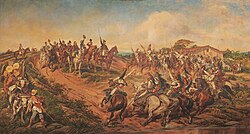
Brazil eventually transitioned through various political stages, including the Kingdom of Brazil and the Empire of Brazil. The nation declared independence from Portugal on 7 September 1822, led by Pedro I. The imperial period saw the reign of notable figures such as Pedro II, who served as Emperor between 1831 and 1889.
The Acclamation of King João VI of the United Kingdom of Portugal, Brazil and the Algarves in Rio de Janeiro, 6 February 1818: The Acclamation of King João VI of the United Kingdom of Portugal, Brazil and the Algarves in Rio de Janeiro, 6 February 1818
Declaration of the Brazilian independence by Pedro I on 7 September 1822: Declaration of the Brazilian independence by Pedro I on 7 September 1822
Pedro II, Emperor of Brazil between 1831 and 1889: Pedro II, Emperor of Brazil between 1831 and 1889
The Republic and Modern Era
The monarchy ended with the Proclamation of the Republic on 15 November 1889. The 20th century brought significant shifts, including a period of military dictatorship and the eventual establishment of the current constitution on 5 October 1988.
Proclamation of the Republic, 1893, oil on canvas by Benedito Calixto: Proclamation of the Republic, 1893, oil on canvas by Benedito Calixto
M41s along the Avenida Presidente Vargas, Rio de Janeiro, in April 1968, during the military dictatorship: M41s along the Avenida Presidente Vargas, Rio de Janeiro, in April 1968, during the military dictatorship
Ulysses Guimarães holding the Constitution of 1988: Ulysses Guimarães holding the Constitution of 1988
Geography and Biodiversity
Brazilian Navy's flagship PHM Atlântico and frigate Liberal (F-43) (background)
Brazil's geography is characterized by diverse climates and ecosystems. The country contains the massive Amazon rainforest, a critical component of global biodiversity, though it faces challenges regarding deforestation and land use.
Brazil map of Köppen climate classification zones: Brazil map of Köppen climate classification zones
Satellite image of the Amazon Delta: Satellite image of the Amazon Delta
Cumulatively, Brazil has the highest percentage of deforested and highly degraded rainforest of any Amazonia nation.[211]: Cumulatively, Brazil has the highest percentage of deforested and highly degraded rainforest of any Amazonia nation.[211]
Since 1850, Brazil has cumulatively contributed an amount of CO2 placing it among the top greenhouse gas emitters in the world, mainly due to its land use and forestry practices.[192]: Since 1850, Brazil has cumulatively contributed an amount of CO2 placing it among the top greenhouse gas emitters in the world, mainly due to its land use and forestry practices.[192]
The nation's fauna is equally diverse, featuring species such as the toco toucan, which is typical of the Brazilian savannas.
The toco toucan is an animal typical of the Brazilian savannas.: The toco toucan is an animal typical of the Brazilian savannas.
Economy and Infrastructure
Headquarters of the Federal Police of Brazil in Brasília
Brazil possesses a massive economy, with a GDP (PPP) estimated at $5.230 trillion for 2026. It is a global leader in several sectors, including agriculture, aviation, and energy production.
Key Economic Sectors
Finance: São Paulo serves as the main financial center, housing the B3, the largest stock exchange in Latin America.
Agriculture: Large-scale production of crops like soybeans is a major economic driver.
Aviation: Embraer is a major global producer of civil aircraft.
Energy: Brazil maintains one of the cleanest energy matrices in the world, utilizing massive hydroelectric projects like the Itaipu Dam and significant wind energy production.
São Paulo is considered the main financial center of Brazil: São Paulo is considered the main financial center of Brazil
B3, the largest stock exchange of Latin America by market capitalization[267]: B3, the largest stock exchange of Latin America by market capitalization[267]
Soybean crop in Tangará da Serra, Mato Grosso[268]: Soybean crop in Tangará da Serra, Mato Grosso[268]
The C-390, developed by Embraer, the third largest producer of civil aircraft, after Boeing and Airbus[269]: The C-390, developed by Embraer, the third largest producer of civil aircraft, after Boeing and Airbus[269]
The Itaipu Dam on the Paraná River, the second largest of the world. Brazilian energy matrix is one of the cleanest in the world: The Itaipu Dam on the Paraná River, the second largest of the world. Brazilian energy matrix is one of the cleanest in the world
Wind farm in Parnaíba, Piauí. Brazil is one of the 5 largest producers of wind energy in the world: Wind farm in Parnaíba, Piauí. Brazil is one of the 5 largest producers of wind energy in the world
Transportation and Technology
The country's infrastructure includes extensive highways, such as the BR-116, and major international hubs like the São Paulo–Guarulhos International Airport. Brazil also invests in high-tech sectors, including space launches and advanced scientific research through facilities like the Sirius synchrotron.
Terminal 3 of the São Paulo–Guarulhos International Airport, the busiest airport in Latin America: Terminal 3 of the São Paulo–Guarulhos International Airport, the busiest airport in Latin America
BR-116 in São José dos Campos, São Paulo, the longest highway in the country,[352] with 4,542 km (2,822 mi) of extension[353]: BR-116 in São José dos Campos, São Paulo, the longest highway in the country,[352] with 4,542 km (2,822 mi) of extension[353]
VLS-1 at the Alcântara Launch Center of the Brazilian Space Agency, in Alcântara, Maranhão: VLS-1 at the Alcântara Launch Center of the Brazilian Space Agency, in Alcântara, Maranhão
Sirius, a diffraction-limited storage ring synchrotron light source at the Laboratório Nacional de Luz Síncrotron, in Campinas, São Paulo: Sirius, a diffraction-limited storage ring synchrotron light source at the Laboratório Nacional de Luz Síncrotron, in Campinas, São Paulo
Culture and Society
Iguaçu National Park in Paraná
Brazilian culture is a vibrant blend of influences, reflected in its music, cuisine, and festivals. From the world-famous Rio Carnival to the rhythms of Bossa Nova and MPB (Música Popular Brasileira), the nation's artistic output is globally recognized.
Parade of Portela samba school at the Rio Carnival, the largest carnival in the world[462]: Parade of Portela samba school at the Rio Carnival, the largest carnival in the world[462]
Tom Jobim, one of the creators of bossa nova, and Chico Buarque, one of the leading names of MPB: Tom Jobim, one of the creators of bossa nova, and Chico Buarque, one of the leading names of MPB
Feijoada is the national dish of Brazilian cuisine: Feijoada is the national dish of Brazilian cuisine
The population is highly diverse, with significant Pardo (mixed), White, and Black ethnic groups. This diversity is also reflected in the country's religious landscape, which is predominantly Christian, with large Catholic and Protestant communities.
Population density of Brazilian municipalities: Population density of Brazilian municipalities
Quick Reference: Brazil Statistics
Category
Detail
Capital
Brasília
Largest City
São Paulo
Official Language
Portuguese
GDP (Nominal 2026 Est.)
$2.636 trillion
Main Religion
Christianity (83.6%)
Frequently Asked Questions
Alto Rio Negro Indigenous Territory, in São Gabriel da Cachoeira, Amazonas, where Nhengatu, Tucano and Baniwa are co-official languagesPomerode, Santa Catarina, where the East Pomeranian is the second language (see Brazilian German)The Cristo Redentor statue towers over Rio de Janeiro.Historical building of the Federal University of Paraná, one of the oldest universities in Brazil, located in CuritibaThe Clinical Hospital of Porto Alegre is academically linked to the Federal University of Rio Grande do Sul and is part of the SUS, the Brazilian publicly funded health care systemThe Cathedral of Brasília, designed by Brazilian architect Oscar Niemeyer for the federal capital, an example of Modern architectureEntry in the Forest mural at the Thomas Jefferson Building by Candido Portinari, one of the most important Brazilian paintersAugusto Boal presenting a workshop on the Theatre of the Oppressed at Riverside Church in New York City in 2008Gramado Film Festival, the biggest film festival in the countryFormer President Dilma Rousseff at Jornal Nacional news program. Rede Globo is the world's second-largest commercial television network.[516]The Brazil national team at the 1950 World Cup
What is the capital of Brazil?
The capital of Brazil is Brasília.
What is the official language spoken in Brazil?
The official and national language of Brazil is Portuguese.
Is Brazil a large country by land area?
Yes, Brazil is the 5th largest country in the world by total area, covering 8,510,346 km².
What are the main ethnic groups in Brazil?
According to 2022 data, the largest ethnic groups are Pardo (45.3%), White (43.5%), and Black (10.2%).


![Rock art at Serra da Capivara National Park, one of the largest and oldest concentrations of prehistoric sites in the Americas[43]](/images/d9/82/d982134bd49bf2ae28f67834e3f76924facc9294409916013426f8fa6523689e.jpg)


![Execution of the Punishment of the Whip by Jean-Baptiste Debret. Nearly 5 million enslaved Africans were imported to Brazil during the Atlantic slave trade, more than any other country.[62]](/images/3d/5b/3d5bbb7202780cff530c438d57980f9ca5835d86a04d3f85abf2df5a1e82fa43.jpg)



![Cumulatively, Brazil has the highest percentage of deforested and highly degraded rainforest of any Amazonia nation.[211]](/images/04/de/04de0d6443f14f267914eb71431fd72bd12906126f360c7d31eab1eeb73b5b01.webp)
![Since 1850, Brazil has cumulatively contributed an amount of CO2 placing it among the top greenhouse gas emitters in the world, mainly due to its land use and forestry practices.[192]](/images/d0/53/d053dd62edb1bde176669479d8b72aaadc2ee39cafb246b565fd17d6478d8940.webp)


![B3, the largest stock exchange of Latin America by market capitalization[267]](/images/68/57/6857a8f5ce7529d2b6f9f0f9c5b5c2e7278ffcaf7ac8c50b886e1da49eb49714.jpg)
![Soybean crop in Tangará da Serra, Mato Grosso[268]](/images/b1/f7/b1f7b0888ea0badeb558816f0e1191fd50c59083fb38cb2604edff2f2f023eb9.jpg)
![The C-390, developed by Embraer, the third largest producer of civil aircraft, after Boeing and Airbus[269]](/images/66/61/6661d8486dc31692bedda1c51dedf68c7ebe58f3d36384a857d25f951d39fd18.jpg)


![BR-116 in São José dos Campos, São Paulo, the longest highway in the country,[352] with 4,542 km (2,822 mi) of extension[353]](/images/61/f9/61f9f4140590c547a5d938675acb86ca003a77c0337e4bb14e4fe8589901a638.jpg)


![Parade of Portela samba school at the Rio Carnival, the largest carnival in the world[462]](/images/25/c9/25c92fa11a62eeb4546be6c536aed7531946e2a56de1cd443af777537580b62b.jpg)


![Former President Dilma Rousseff at Jornal Nacional news program. Rede Globo is the world's second-largest commercial television network.[516]](/images/75/5a/755a2777dd63d9b2d1ebe9849676ed3be58a1f960c511fd0015480ac9d32d5cd.jpg)
