Native Americans: History, Demographics, and Cultural Heritage
The Indigenous peoples of North America possess a rich and diverse history that spans millennia, long before the arrival of European settlers. From the complex social structures of the Pre-Columbian era to the resilient communities of the 21st century, Native Americans and Alaska Natives continue to shape the cultural and political landscape of the United States.
The journey of these populations is marked by profound adaptation, the struggle for tribal sovereignty—the inherent right of Indigenous tribes to govern themselves—and a persistent commitment to preserving ancestral languages and traditions.
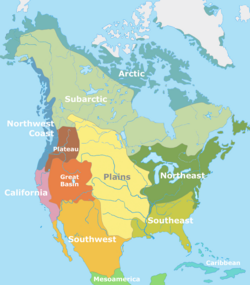
Key Facts
- Total Population: Approximately 9,666,058 people identify as American Indian or Alaska Native (alone or in combination) according to the 2020 US Census.
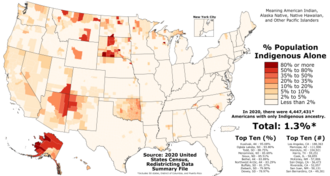
- Major Population Hubs: California, Oklahoma, Arizona, Texas, and New Mexico have the highest concentrations of Native American populations.
- Diverse Identities: The population includes those identifying as a single race (3,727,135) and those identifying as multiracial (5,938,923).
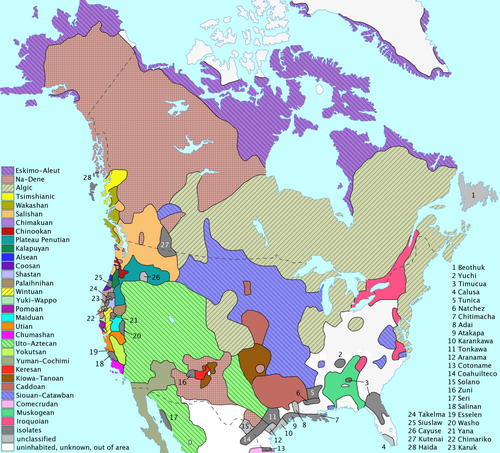
- Cultural Diversity: Indigenous identity encompasses hundreds of distinct tribal groupings, including the Navajo, Cherokee, and Sioux.
Demographics and Population Trends
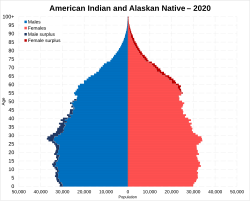
The demographic profile of Native Americans has shifted significantly over the last century. Data from the US Census Bureau shows a steady increase in the number of people identifying as American Indian or Alaska Native, driven by both natural growth and increased self-identification.
As of the 2020 Census, the population breakdown is as follows:
- Alone (One Race): 3,727,135 (1.12% of the total US population), consisting of 2,251,699 Native Americans and 1,475,436 Native Hispanics.
- In Combination (Multiracial): 5,938,923 (1.79% of the total US population).
- Total: 9,666,058 (2.92% of the total US population).
Regional Distribution
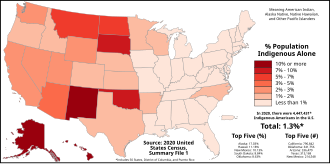
While Indigenous populations are found across all fifty states, certain regions maintain significantly larger communities. California leads with over 631,000 residents, followed by Oklahoma and Arizona.
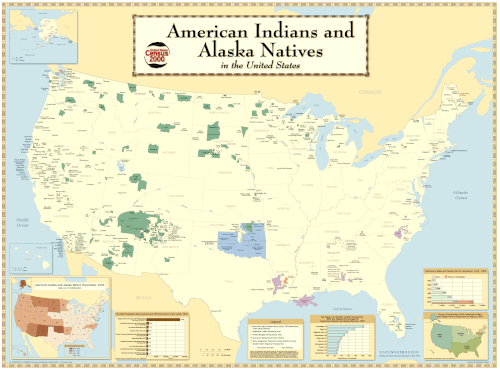
| State | Population |
|---|---|
| California | 631,016 |
| Oklahoma | 332,791 |
| Arizona | 319,512 |
| Texas | 278,948 |
| New Mexico | 212,241 |
Historical Context and Challenges
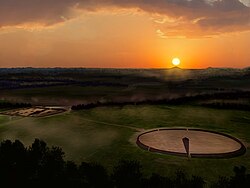
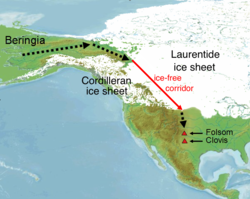
The history of Native Americans is one of both achievement and systemic hardship. Early Paleo-Indian settlements were established via the ice-free corridor, leading to the development of diverse cultures such as the Clovis culture.
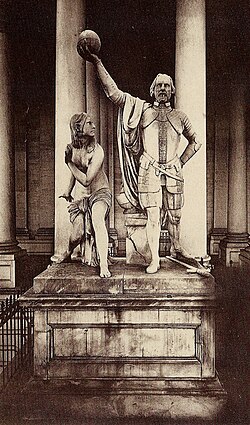
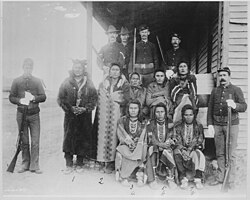
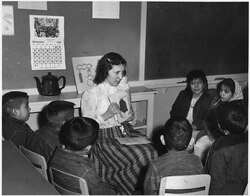
Following European contact, Indigenous peoples faced centuries of colonial violence, forced displacement, and policies of assimilation—the process of absorbing a minority group into the dominant culture. A stark example was the Carlisle Indian Industrial School, which operated from 1879 to 1918 with the explicit goal of eradicating Indigenous culture.
![The Carlisle Indian Industrial School was a major institution for the assimilation of Native Americans. From 1879 until 1918, over 10,000 children from 140 tribes attended Carlisle.[237] Founded by Richard Henry Pratt, his motto, "Kill the Indian, Save the Man", was in reference to the ethics of the school and efforts to eradicate Indigenous culture and forcibly assimilate the Natives into white American culture, and that "the goal of acculturation was to be accomplished by "total immersion" in the white man's world."[238][239]](/images/b1/34/b1344afa64db70903900e45b70d48a2d19e54fab4997f8f3739884eb06e7e832.jpg)
Economic and Social Barriers
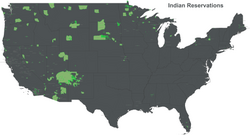
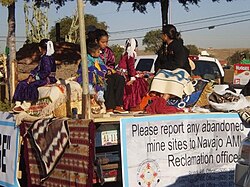
Many Native American communities, particularly those on reservations, continue to face significant barriers to economic development. These include:
- Lack of access to capital and human capital (education and technical expertise).
- Ineffective planning and limited control over natural resources.
- Geographic isolation from major markets, leading to high transportation costs.
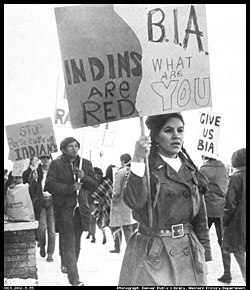
- Historical mismanagement by the Bureau of Indian Affairs.
Culture, Language, and Society
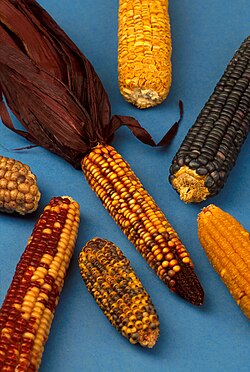
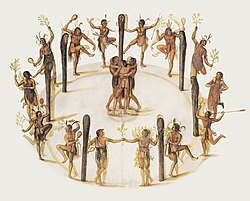
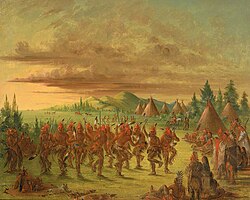
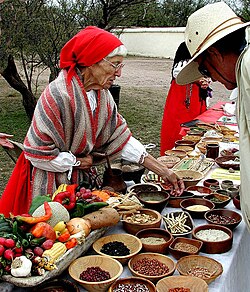
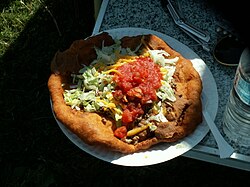
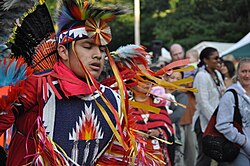
Despite historical pressures, Native American cultures remain vibrant. This is evident in the preservation of Indigenous foodways—traditional systems of food production and consumption—such as the cultivation of maize and the harvesting of wild rice.
Language and Education
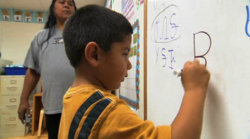
Language is a cornerstone of Indigenous identity. While many languages were suppressed in the past, there is a modern resurgence in language education, including immersion schools for languages like Cherokee.
Religion and Spirituality
Spiritual practices vary widely by tribe. Many maintain traditional religions unique to their bands, while others practice through the Native American Church or have adopted Christian denominations, including Protestantism, Catholicism, and Russian Orthodoxy (particularly in Alaska).
Contributions and Modern Achievements
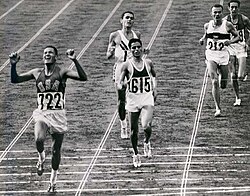
Native Americans have made indelible marks on American sports, politics, and medicine. From Jim Thorpe's gold medals in the 1912 Olympics to the pioneering work of Susan La Flesche Picotte, the first Native American woman physician in the US, these contributions are vast.
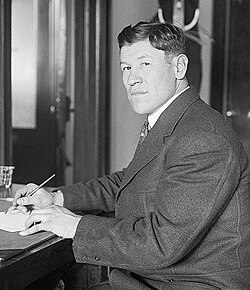
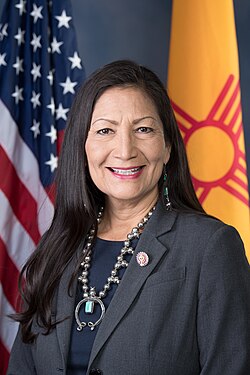
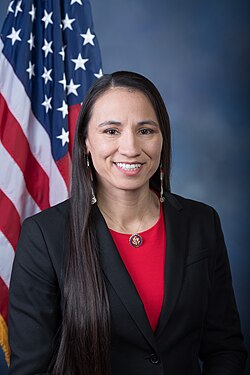
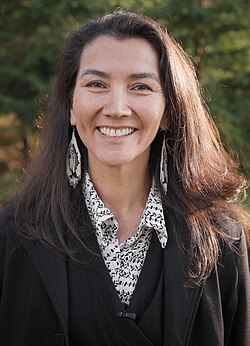
In recent years, Indigenous representation in the highest levels of government has increased. Notable milestones include Deb Haaland becoming the first Native American U.S. Secretary of the Interior and Mary Peltola becoming the first Alaska Native elected to the U.S. House of Representatives.
Frequently Asked Questions
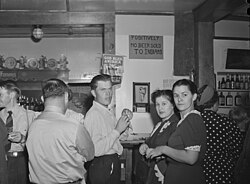
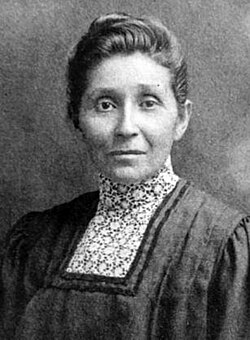

![Lillian Gross, described as a "Mixed Blood" by the Smithsonian source,[full citation needed] was of Cherokee and European American heritage. She identified with the Cherokee culture in which she was raised.](/images/df/c8/dfc808227a2d9002d852ed746b7c05b0a918e2125e92a0edaa84235ca4d5213a.jpg)
What is the total Native American population in the US?
According to the 2020 Census, there are 9,666,058 people who identify as American Indian or Alaska Native, either alone or in combination with other races.
Which US states have the largest Native American populations?
California has the largest population (631,016), followed by Oklahoma (332,791) and Arizona (319,512).
What is tribal sovereignty?
Tribal sovereignty is the inherent right of Indigenous tribes to govern themselves, manage their own lands, and maintain their own legal and social systems.
What are some of the biggest challenges facing reservations today?
Key challenges include limited access to capital, educational gaps, geographic isolation from markets, and the long-term effects of historical trauma and colonial policies.
How is the Native American population categorized in the census?
The census distinguishes between those who identify as American Indian or Alaska Native "alone" (one race) and those who identify "in combination" (multiracial).