Yitzhak Navon: The First Sephardi President of Israel
Yitzhak Navon was a multifaceted figure in Israeli history—a diplomat, playwright, author, and politician who broke significant social barriers. Serving as the fifth President of Israel from 1978 to 1983, Navon holds the distinction of being the first Israeli president born in Jerusalem and the first Sephardi Jew (Jews of Spanish or Portuguese origin) to hold the office.
His life was defined by a deep connection to the multicultural fabric of Jerusalem and a lifelong commitment to education and diplomacy.
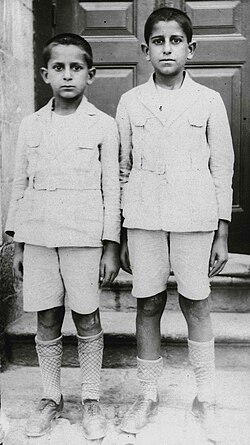
Early Life and Heritage
Born on April 9, 1921, in Jerusalem during the British Mandate for Palestine, Yitzhak Navon was born into a family with deep ancestral roots in the city. His father's lineage traced back to Sephardi Jews who settled in Turkey after the 1492 expulsion from Spain, eventually immigrating to Jerusalem in 1670. His mother's side included the renowned Moroccan-Jewish kabbalist rabbi Chaim ibn Attar, who arrived in Jerusalem in 1742.
Navon's education was diverse, attending Doresh Tziyon and Takhemoni elementary schools and the Hebrew University high school. He later studied Arabic and Islamic studies at the Hebrew University of Jerusalem. This academic background allowed him to become fluent in five languages: Hebrew, Arabic, Ladino, French, and English.
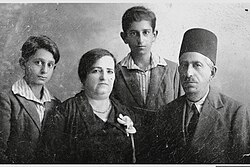
Intelligence Work and Early Career
Before entering formal politics, Navon served in the Haganah (the pre-state Zionist paramilitary organization) within the Arab Intelligence Unit. His linguistic skills were vital for undercover work in Jerusalem, where he monitored British Army wiretapped conversations. Later, the Israeli foreign service deployed him to Argentina and Uruguay to track down Nazi fugitives.
In 1951, Navon entered the inner circle of Israeli leadership as the political secretary to David Ben-Gurion, Israel's first prime minister. By 1952, he became Ben-Gurion's bureau chief, a role he maintained under Prime Minister Moshe Sharett. In this capacity, Navon provided critical advice during pivotal moments such as the Suez Crisis and the Lavon Affair.
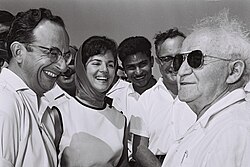
Political Rise and the Fight Against Illiteracy
After Ben-Gurion's resignation in 1963, Navon transitioned to the Ministry of Education and Culture. He became a passionate advocate for adult literacy, noting that approximately 12% of the Jewish population—over 200,000 adults—could not read or write in any language. To combat this, he mobilized hundreds of female soldiers performing national service to teach Hebrew to illiterate adults.
Navon's political trajectory continued in 1965 when he was elected to the Knesset (the Israeli parliament) as a member of the Rafi party, which later merged into the Labor Party as part of the Alignment. He eventually served as the deputy speaker of the Knesset and chairman of the Committee on Foreign and Defense Affairs.
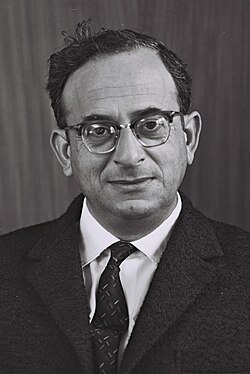
The Presidency (1978–1983)
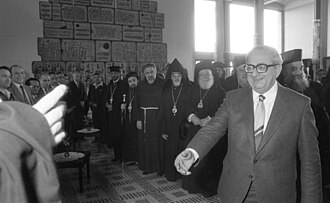
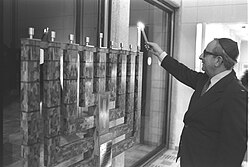
On April 19, 1978, the Knesset elected Navon as the fifth President of Israel. While the presidency is primarily a ceremonial role, Navon used his position to influence peace and social justice. He was particularly influential in peace talks with Egyptian President Anwar Sadat, with some reports suggesting his diplomatic visits were exceptionally productive.
Navon was also a voice for accountability, outspokenly advocating for a judicial commission of inquiry into Israel's role in the 1982 Sabra and Shatila massacre carried out by Lebanese Falangists.
Later Political and Literary Contributions
Unlike other former presidents, Navon returned to active politics after his term ended in 1983. He served as the Minister of Education and Culture from 1984 to 1990. During the first Intifada, he faced the challenge of school closures in Jerusalem, arguing that denying education to Palestinian children was immoral and would cause irreversible long-term damage.
Beyond politics, Navon was a celebrated author and playwright. He wrote two successful musicals based on Sephardic folklore, Romancero Sefardi and Bustan Sefardi, performed at the Habimah National Theater. He also authored The Six Days and the Seven Gates, a modern legend regarding the reunification of Jerusalem.
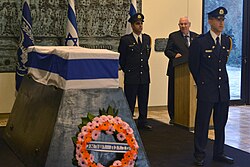
In his final years, he chaired a Commission of Inquiry regarding the controversial disposal of blood donated by Ethiopian Israelis due to AIDS concerns. He passed away in Jerusalem on November 6, 2015, at the age of 94.
Key Facts
- Firsts: First Israeli president born in Jerusalem and the first Sephardi Jew to hold the office.
- Linguistic Ability: Fluent in Hebrew, Arabic, Ladino, French, and English.
- Presidential Term: Served from May 29, 1978, to May 5, 1983.
- Education Advocacy: Led a major campaign to eradicate adult illiteracy in Israel.
- Literary Work: Wrote musicals for the Habimah National Theater and the book The Six Days and the Seven Gates.
| Role | Period | Key Contribution/Detail |
|---|---|---|
| Bureau Chief to PM | 1952–1963 | Advised during Suez Crisis and Lavon Affair |
| Knesset Member | 1965–1978; 1984–1992 | Deputy Speaker and Foreign/Defense Committee Chair |
| President of Israel | 1978–1983 | Diplomacy with Egypt; first Sephardi president |
| Minister of Education | 1984–1990 | Managed education during the first Intifada |
Frequently Asked Questions
Why was Yitzhak Navon's presidency historically significant?
His presidency was significant because he was the first Sephardi Jew to serve as President of Israel and the first president to have been born in Jerusalem, representing a shift in the ethnic and social representation of the state's highest office.
What languages did Yitzhak Navon speak?
Navon was a polyglot, fluent in Hebrew, Arabic, Ladino, French, and English, which greatly aided his work in intelligence and international diplomacy.
What was Navon's contribution to Israeli education?
He launched a significant campaign against adult illiteracy, mobilizing female soldiers to teach Hebrew to hundreds of thousands of adults who could not read or write.
Did Yitzhak Navon have a career outside of politics?
Yes, he was a accomplished author and playwright, creating musicals based on Sephardic folklore and writing literature about the reunification of Jerusalem.
How is Yitzhak Navon remembered in Jerusalem today?
He is honored through the naming of the Jerusalem - Yitzchak Navon railway station in central Jerusalem.