Yiddish Theatre District: The Cultural Heart of Second Avenue
Long before the modern neon lights of Broadway dominated the New York City stage, a vibrant cultural epicenter flourished in Manhattan's Lower East Side. The Yiddish Theatre District served as a sanctuary for art, language, and community, blending traditional Jewish heritage with the evolving energy of American urban life.
The journey of Yiddish performance in the United States began in 1882 at the New York Turn Verein, a gymnastic club located at 66 East 4th Street in the Little Germany neighborhood. While early productions were concentrated south of Houston Street, the center of gravity shifted north toward Second Avenue during the first decades of the 20th century.
The Rise of Second Avenue
The architectural landscape of the district changed forever in 1903 with the construction of the Grand Theatre, the first purpose-built Yiddish theater in New York. This venue was more than just a playhouse; it was a variety hub featuring musicals, vaudeville acts, and translated versions of classic plays.
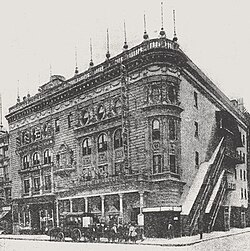
The 1910s saw Second Avenue solidify its reputation as a premier destination for Yiddish drama. Two landmark venues opened during this era: the Second Avenue Theatre in 1911 (located at 35–37 Second Avenue) and the National Theater in 1912 (located at 111–117 East Houston Street).
One notable addition to the area was the theater built in 1926 by developer Louis N. Jaffe for actor Maurice Schwartz, known as "Mr. Second Avenue," and his Yiddish Art Theatre. Over the decades, this versatile space transitioned from the Yiddish Folks Theatre to a movie house, the home of the Phoenix Theatre, and the Entermedia Theatre, before becoming the Village East Cinema. It was officially designated a New York City landmark in 1993.
![In 1926, developer Louis N. Jaffe built this theatre for actor Maurice Schwartz ("Mr. Second Avenue") and his Yiddish Art Theatre. After four seasons it became the Yiddish Folks Theatre,[17] then a movie theatre, the home of the Phoenix Theatre, the Entermedia Theatre, and now a movie theater again, the Village East Cinema.[18] It was designated a New York City landmark in 1993.[17]](/images/0c/cc/0ccc9be42ce2614edd0b5319fe430abfa13d1c65bc98a5b3554445c358f396d6.jpg)
A Complete Cultural Ecosystem
The district was more than just a collection of stages; it was a fully integrated neighborhood. The streets were lined with photography studios, flower shops, restaurants, and cafes, such as the famous Cafe Royal on East 12th Street and Second Avenue. Music played a central role, with Metro Music publishing the majority of Yiddish and Hebrew sheet music for the American market until the 1970s.
The district also fostered professional organization. The building at 31 East 7th Street is owned by the Hebrew Actors Union, which holds the distinction of being the first theatrical union established in the United States.
Legendary Figures and Lasting Legacies
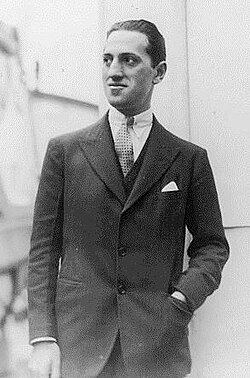
The Yiddish Theatre District acted as a cradle for some of the most influential figures in American music and film. Composer and pianist George Gershwin (born Jacob Gershvin) and his brother, lyricist Ira Gershwin (born Israel Gershowitz), grew up at 91 Second Avenue, where they frequently attended local performances.
Other notable residents and alumni include:
- Irving Berlin (born Israel Baline), who grew up in a Yiddish-speaking home within the district.
- John Garfield (born Jacob Garfinkle), who spent his childhood in the heart of the neighborhood.
- Walter Matthau, who began his professional life working as a concessions stand cashier in the district.
The stage itself launched the careers of powerhouse performers like Paul Muni and Molly Picon (born Małka Opiekun), the latter of whom performed in the district for seven years. Jacob Adler, father of acting teacher Stella Adler, also rose to prominence here, starring in Der Yiddisher King Lear before transitioning to Broadway in The Merchant of Venice.
Preserving the Heritage
By 1954, most of the original Yiddish theaters had vanished, but the spirit of the area persisted through local businesses. The Second Avenue Deli opened that year at the corner of Second Avenue and East 10th Street. Although the deli has since moved, the Yiddish Walk of Fame remains outside its original location, honoring stars such as Menasha Skulnik, Boris Thomashevsky, Fyvush Finkel, and Molly Picon.
Efforts to keep the tradition alive continue today. In 2006, New York Governor George Pataki provided $200,000 in state funding to the Folksbiene, the last remaining historical Yiddish theatre company.
| Category | Key Details |
|---|---|
| First Production | 1882 at New York Turn Verein |
| First Purpose-Built Theatre | Grand Theatre (1903) |
| Key Venues | Second Avenue Theatre, National Theater, Yiddish Art Theatre |
| Notable Alumni | George & Ira Gershwin, Irving Berlin, Paul Muni, Molly Picon |
| Historic Union | Hebrew Actors Union (First in the US) |
| Current Legacy | Folksbiene theatre company, Yiddish Walk of Fame |
Key Facts
- The first Yiddish theater production in the US took place in 1882.
- The Grand Theatre, built in 1903, was the first dedicated Yiddish theater in New York.
- The Hebrew Actors Union was the first theatrical union in the United States.
- The district was the childhood home of George and Ira Gershwin.
- The Folksbiene is the last remaining historical Yiddish theatre company.
Frequently Asked Questions
Where was the first Yiddish theater production held in the US?
The first production took place in 1882 at the New York Turn Verein, a gymnastic club located at 66 East 4th Street in Manhattan's Little Germany neighborhood.
Which famous musicians grew up in the Yiddish Theatre District?
Composer George Gershwin, lyricist Ira Gershwin, and composer/lyricist Irving Berlin all grew up in the district.
What is the significance of the Hebrew Actors Union?
The Hebrew Actors Union, located at 31 East 7th Street, is significant for being the first theatrical union established in the United States.
What remains of the district's legacy today?
The legacy is preserved through the Yiddish Walk of Fame, the landmarked Village East Cinema (formerly the Yiddish Art Theatre), and the continued work of the Folksbiene theatre company.
Who was known as "Mr. Second Avenue"?
Actor Maurice Schwartz was known as "Mr. Second Avenue" and founded the Yiddish Art Theatre in a building developed by Louis N. Jaffe in 1926.