Yellowstone National Parkgeothermal featuresOld FaithfulNational Park Servicewildlife conservation

Yellowstone National Park: A Legacy of Geothermal Wonders and Wild Landscapes

Exploring Yellowstone National Park: A Guide to the World's First National Park Spanning across Wyoming, Montana, and Idaho, Yellowstone National Park is a landscape of unparalleled natur...

Exploring Yellowstone National Park: A Guide to the World's First National Park

Spanning across Wyoming, Montana, and Idaho, Yellowstone National Park is a landscape of unparalleled natural wonder. Established on March 1, 1872, it holds the historic distinction of being the world's first national park. From its roaring waterfalls and erupting geysers to its vast wilderness inhabited by iconic wildlife, Yellowstone offers a profound look at the raw power of Earth's geological and biological processes.
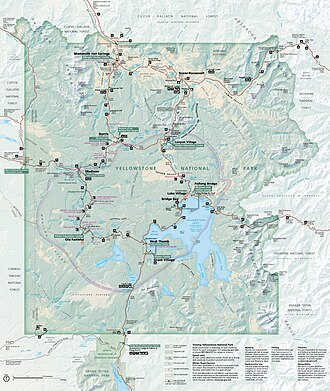
Official park map c. 2020 (click on map to enlarge)
: Official park map c. 2020 (click on map to enlarge)

Key Facts

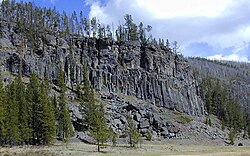
Exposed rock at Obsidian Cliff
  • Established: March 1, 1872
  • Total Area: 2,219,791 acres
  • Location: Wyoming, Montana, and Idaho, USA
  • Governing Body: U.S. National Park Service
  • UNESCO Status: World Heritage Site (designated 1978)
  • Primary Features: Geysers, hydrothermal systems, and diverse wildlife

A Legacy of Preservation and History
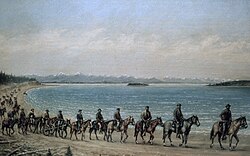
Hayden Geological Survey at Yellowstone Lake. Illustration by William Henry Jackson, 1871

The history of Yellowstone is a journey from early exploration to formal protection. Long before its official designation, the area was utilized by Native American tribes. In the era of Western exploration, mountain men encountered the region's unique geothermal features, such as the area known as Colter's Hell.
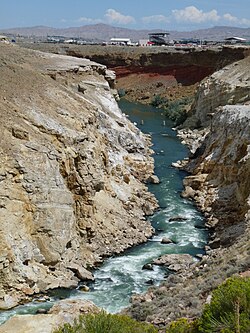
Colter's Hell near Cody, Wyoming, one of the first geothermal sites to be spotted by mountain men
: Colter's Hell near Cody, Wyoming, one of the first geothermal sites to be spotted by mountain men

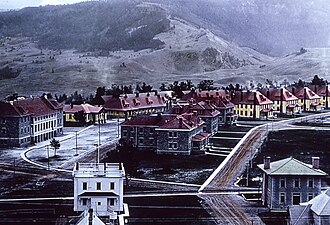
The formal establishment of the park in 1872 was a landmark moment in conservation history. Early administration saw various stages of management, including periods of military oversight. For instance, Fort Yellowstone served as a U.S. Army post before eventually becoming the park's headquarters.
A group of buildings with trees and hills in background
Fort Yellowstone (circa 1910), formerly a U.S. Army post, now serves as park headquarters
: Fort Yellowstone (circa 1910), formerly a U.S. Army post, now serves as park headquarters

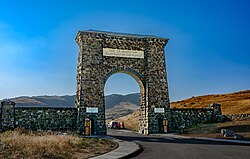
As the park grew in popularity, infrastructure evolved to accommodate visitors. From the historic Old Faithful Inn—noted as perhaps the largest log building in the world—to the iconic Roosevelt Arch at the north entrance, the park's development reflects its enduring appeal to travelers.
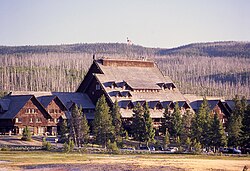
Old Faithful Inn, constructed 1904, serves Yellowstone. It is perhaps the largest log building in the world
: Old Faithful Inn, constructed 1904, serves Yellowstone. It is perhaps the largest log building in the world
A large arch made of irregular-shaped natural stone over a road
The Roosevelt Arch in Gardiner, Montana, at the north entrance
: The Roosevelt Arch in Gardiner, Montana, at the north entrance

Geology and the Power of Volcanism

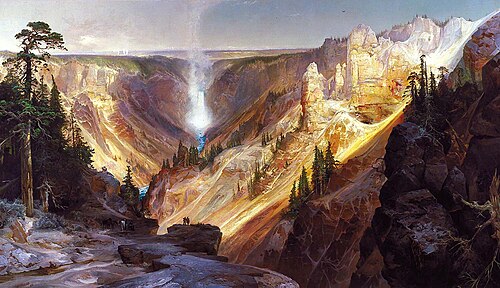
Brightly lit artistic depiction of the Grand Canyon of the Yellowstone
The Grand Canyon of the Yellowstone (1872), a painting by Hayden survey participant Thomas Moran, demonstrated the grandeur of the new park to American viewers

Yellowstone is defined by its intense volcanism. The park sits atop a massive volcanic system, characterized by a caldera—a large cauldron-like hollow that forms following an eruption. The landscape is shaped by past massive floods of basalt and other lava types that preceded the eruption of superheated ash and pumice.
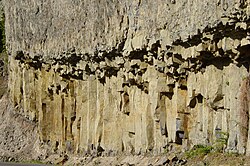
Columnar basalt near Tower Fall; large floods of basalt and other lava types preceded mega-eruptions of superheated ash and pumice.
: Columnar basalt near Tower Fall; large floods of basalt and other lava types preceded mega-eruptions of superheated ash and pumice.
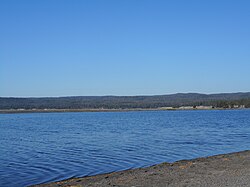
Caldera rim on the horizon south of Yellowstone Lake
: Caldera rim on the horizon south of Yellowstone Lake

Hydrothermal Wonders

One of the most famous aspects of Yellowstone is its hydrothermal system. This includes a vast array of geysers, hot springs, and steam vents. These features are driven by the heat from the underlying volcanic activity. Visitors can safely observe these incredible phenomena via extensive boardwalk systems.
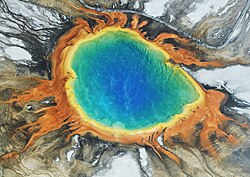
Boardwalks allow visitors to safely approach the thermal features, such as Grand Prismatic Spring
: Boardwalks allow visitors to safely approach the thermal features, such as Grand Prismatic Spring

The chemistry and heat of these waters also support unique life forms, such as microbial mats—layers of microorganisms that thrive in the extreme temperatures of cooled geyser water.
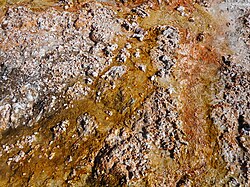
Microbial mat in cooled geyser water, Upper Geyser Basin
: Microbial mat in cooled geyser water, Upper Geyser Basin

Seismic Activity

Because of its volcanic nature, the region is subject to earthquakes. These seismic events can cause significant infrastructure damage, as seen during the 7.2 magnitude earthquake at Hebgen Lake in 1959.
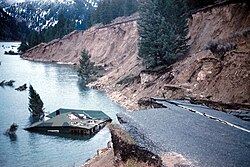
Infrastructure damage at Hebgen Lake due to the 7.2 magnitude earthquake of 1959
: Infrastructure damage at Hebgen Lake due to the 7.2 magnitude earthquake of 1959

Biodiversity: Flora and Fauna

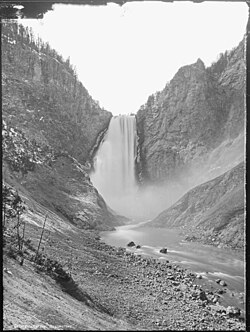
Great Falls of the Yellowstone, U.S. Geological and Geographic Survey of the Territories (1874–1879), photographer William Henry Jackson

Yellowstone serves as a vital sanctuary for a wide variety of species. The park's ecosystems support everything from massive mammals to specialized plant life.

Wildlife of the Park

The park is famous for its "charismatic megafauna." Visitors frequently encounter:

  • American Bison: One of the most iconic residents of the plains.
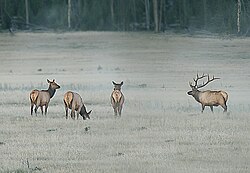
  • Elk: Often seen in valleys like Hayden Valley.
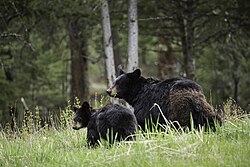
  • Black Bears: A species that requires careful management to ensure both human and animal safety.
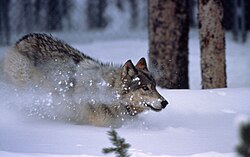
  • Wolves: A key species that has been reintroduced to the ecosystem.
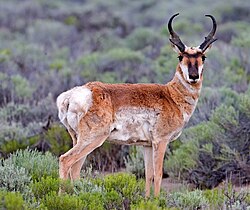
  • Pronghorn: Commonly found roaming the park's grasslands.
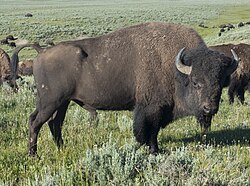
American bison
American bison
: American bison
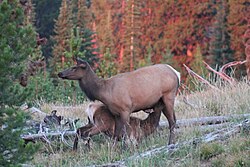
Elk mother nursing her calf
: Elk mother nursing her calf
A reintroduced wolf in Yellowstone National Park
: A reintroduced wolf in Yellowstone National Park
Black bear and cub near Tower Fall
: Black bear and cub near Tower Fall
Elk in Hayden Valley
: Elk in Hayden Valley
Pronghorn are commonly found on the grasslands in the park
: Pronghorn are commonly found on the grasslands in the park

Flora and Ecosystems

The vegetation in Yellowstone is as diverse as its animals. This includes vast meadows and specialized plants like the Yellowstone sand verbena, which is endemic—meaning it is found nowhere else on Earth—to the park's lakeshores.
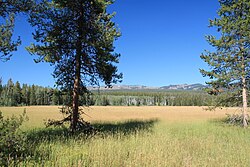
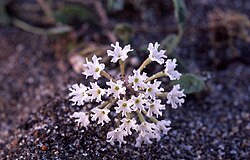
Meadow in Yellowstone National Park
: Meadow in Yellowstone National Park
Yellowstone sand verbena is endemic to Yellowstone's lakeshores
: Yellowstone sand verbena is endemic to Yellowstone's lakeshores

Climate and Natural Forces

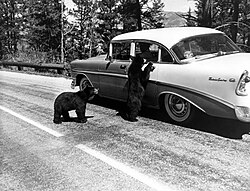
Superintendent Horace M. Albright and black bears (1922). Tourists often fed black bears in the park's early years, with 527 injuries reported from 1931 to 1939.[68]

Yellowstone experiences significant seasonal shifts. The climate at Yellowstone Lake and Mammoth, Wyoming, shows extreme temperature ranges, with winter lows often dropping well below freezing and summer highs reaching the 90s (°F).

Comparison of Annual Average Precipitation (Inches)
Location Annual Average Precipitation Annual Average Snowfall
Yellowstone Lake 22.54 199.4
Mammoth, WY 14.80 71.5
Old Faithful 25.63 197.0

The Role of Fire

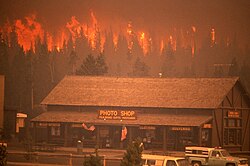
Forest fires are a natural part of the Yellowstone ecosystem. While they can be destructive, they also play a role in ecological renewal. However, extreme events, such as the crown fires near the Old Faithful complex in 1988, demonstrate the intense power of wildfires in this environment.
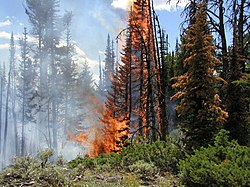
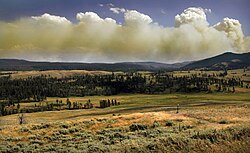
Fire in Yellowstone National Park
: Fire in Yellowstone National Park
Wildfire in Yellowstone National Park produces a pyrocumulus cloud
: Wildfire in Yellowstone National Park produces a pyrocumulus cloud
A crown fire approaches the Old Faithful complex on September 7, 1988
: A crown fire approaches the Old Faithful complex on September 7, 1988

Frequently Asked Questions

NPS staff sitting on the set for the 1972 Centennial for the creation of the first National Park, in a NBC Today Show. Left to right: George Hartzog, William Everhart, Frank McGee and Jack K. Anderson.
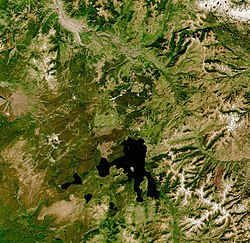
Satellite image of Yellowstone National Park in 2020
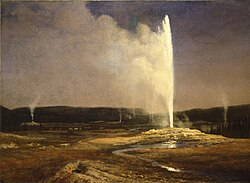
Geysers erupting vertically. Sunlight illuminating the one in the foreground and the breeze is blowing the steam and spray to the left.
Albert Bierstadt, Geysers in Yellowstone, 1881
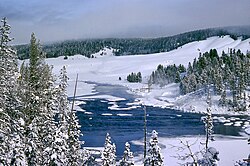
Winter scene in Yellowstone
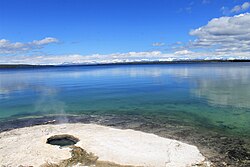
Geyser at Yellowstone Lake
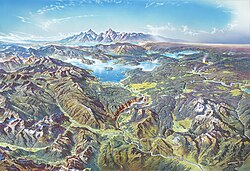
Pictorial map by Heinrich C. Berann (1991); scale exaggerated
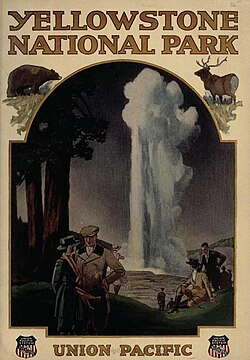
Union Pacific Railroad brochure promoting travel to the park (1921)
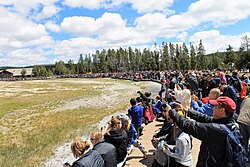
Tourists watch Old Faithful erupt, 2019
1958 photo of human-habituated bears seeking food from visitors

What makes Yellowstone a UNESCO World Heritage Site?

Yellowstone was designated a UNESCO World Heritage Site in 1978 due to its exceptional natural beauty and its significant geological and biological importance, meeting multiple international criteria for preservation.

How can I safely view the geysers?

The best way to view thermal features like Grand Prismatic Spring is by using the provided boardwalks. These allow visitors to get close to the heat and steam while staying on a safe, stable path.

Is it safe to feed the animals in the park?

No. Feeding wildlife is dangerous for both humans and animals. Historically, human-habituated bears seeking food from visitors led to numerous injuries. The National Park Service emphasizes keeping a safe distance from all wildlife.

What is the best time of year to visit?

Because Yellowstone experiences extreme weather, including heavy snow in the winter and high temperatures in the summer, the best time depends on your interests. Summer offers the most accessible trails, while winter provides a unique, snowy landscape.

What is the "caldera" in Yellowstone?

The caldera is a massive volcanic crater formed by the collapse of the ground following a huge eruption. It is a central feature of the park's geology and drives much of its hydrothermal activity.

References

  1. While antagonism towards Indians is sometimes described as originating a "Yellowstone model" for national parks which empty them of preexisting human presence, park managers outside of the United States have historically used a variety of models to inform their administration and preservation policies.[41][42]
  2. Northern Pacific Railroad manager A.B. Nettleton, forwarding Kelley's comments to F.V. Hayden, was the first to put into writing that Yellowstone ought to be called a "public park."[45]
  3. Ludlow's survey included letters and attachments by other expedition members, including naturalist and mineralogist George Bird Grinnell.[55] Grinnell documented the poaching of buffalo, deer, elk, and antelope for hides: "It is estimated that during the winter of 1874–1875, not less than 3,000 buffalo and mule deer suffer even more severely than the elk, and the antelope nearly as much."[56]
  4. "Yellowstone in United States of America". protectedplanet.net. IUCN. Archived from the original on August 27, 2019. Retrieved December 31, 2018.
  5. "Yellowstone National Park". Geographic Names Information System. United States Geological Survey, United States Department of the Interior. August 31, 1992. Retrieved October 13, 2020.