Wytheville History: From Colonial Foundations to Modern Legacy
Nestled in the heart of Virginia, Wytheville serves as a poignant reflection of American history, embodying the complexities of growth, tragedy, and resilience. From its establishment as a frontier county seat to its struggle with public health crises and social injustice, the town's evolution offers a detailed look at the socio-political landscape of the American South.
The Founding of Wythe County and Town
Wythe County was established in 1789, taking its name from George Wythe, a signer of the Declaration of Independence and a man widely regarded as the "father of American Jurisprudence," or the study of the theory and philosophy of law. The town that would become the county seat was born from the generosity of local landowners in May 1790, when Chris Simmerman (85 acres), Robert Williams II (50 acres), and John Davis (10 acres) donated land for its creation.
By November 1790, Robert Adams had completed a survey of the area, partitioning the land into half-acre lots. For several years, the settlement lacked a formal name and was commonly referred to as Wythe Court House. It wasn't until October 1792 that the town was officially named Evansham, in honor of Jesse Evans, a prominent local citizen.
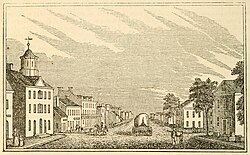
The town underwent another transformation in March 1839 following a devastating fire. In the aftermath of the blaze, the community was renamed Wytheville. At that time, the town was a modest settlement with a population of approximately 500 residents.
The Lynching of Raymond Byrd
The town's history is also marked by a dark chapter of racial violence. In 1926, Wytheville became the site of the last documented lynching in the state of Virginia. Raymond Byrd, an African-American man, was murdered by a mob of masked and costumed men while held in the local jail.
Byrd had been accused of assaulting the minor daughter of his employer, Grover Grubb. While the two older daughters of Grubb—both of whom had children with Byrd—confirmed that their own relationships with him were consensual and not criminal, Byrd remained in custody on the charges regarding the youngest daughter. The mob shot Byrd in his cell, dragged his body for several miles behind a truck, and eventually hanged him from a tree on the land of Charley Brown, near St. Paul Lutheran Church.
The brutality of the event sparked national outrage and became a catalyst for legislative change. Led by Louis I. Jaffé, editor of the Norfolk Virginian-Pilot, a campaign for justice resulted in Virginia passing an anti-lynching law in 1928. This legislation was supported by Governor Harry Flood Byrd Sr., who viewed the law as a necessary step in improving the state's image to attract new business investments.
The 1950 Polio Epidemic
In the summer of 1950, Wytheville faced a severe public health crisis when a few initial cases of polio—a viral disease known to cause paralysis in both children and adults—spiraled into a full-scale epidemic. Out of a population of 5,513, 184 people contracted the disease, leading to 17 deaths.
From June through August, the community entered a state of emergency. Parents kept children indoors and large public gatherings were cancelled to slow the spread of infection. The crisis highlighted the stark racial segregation of the era; while white patients were transported 80 miles to Memorial Crippled Children's Hospital in Roanoke, African-American patients were denied admission there. Instead, they were forced to travel approximately 180 miles to St. Philip's Hospital in Richmond, the nearest facility serving Black patients.
In an attempt to protect the local economy and warn outsiders, the Town Council placed billboards at all five county entrances urging tourists to avoid the area and return the following year. However, by the end of the summer, all five signs had been stolen or destroyed, and despite rewards offered by the council, no culprits were ever found.
Key Facts
- Founded: Wythe County was created in 1789; the town was officially named Evansham in 1792 and Wytheville in 1839.
- Legal Legacy: The 1926 lynching of Raymond Byrd led to Virginia's 1928 anti-lynching law.
- Health Crisis: The 1950 polio epidemic affected 184 residents and caused 17 fatalities.
- Segregation: During the polio outbreak, Black patients had to travel 180 miles to Richmond for care, compared to 80 miles for white patients.
Historic Sites
Wytheville preserves its rich and varied history through several locations listed on the National Register of Historic Places. These sites offer a tangible connection to the town's architectural and social past.
| Site Name | Type/Category |
|---|---|
| Wytheville Historic District | District |
| Crockett's Cove Presbyterian Church | Religious |
| St. John's Episcopal Church | Religious |
| St. John's Lutheran Church and Cemetery | Religious |
| Haller-Gibboney Rock House | Residential/Historic |
| Loretto | Historic Site |
| Wythe County Poorhouse Farm | Social Welfare |
Frequently Asked Questions
Who was Wythe County named after?
The county was named for George Wythe, a signer of the Declaration of Independence and a renowned legal scholar known as the "father of American Jurisprudence."
Why was the town renamed from Evansham to Wytheville?
The town was renamed Wytheville following a disastrous fire in March 1839.
What was the significance of Raymond Byrd's death?
The 1926 lynching of Raymond Byrd drew national attention to racial violence in Virginia and served as the primary catalyst for the state's anti-lynching law passed in 1928.
How did the 1950 polio epidemic affect the town's residents?
The epidemic infected 184 people and killed 17. It led to the cancellation of public gatherings and revealed systemic racial inequality in healthcare access, as Black patients were forced to travel much further for treatment.
Which sites in Wytheville are on the National Register of Historic Places?
Listed sites include the Wytheville Historic District, Crockett's Cove Presbyterian Church, St. John's Episcopal Church, St. John's Lutheran Church and Cemetery, the Haller-Gibboney Rock House, Loretto, and the Wythe County Poorhouse Farm.