Albert Einstein House: The Historic Princeton Residence
Tucked away at 112 Mercer Street in Princeton, New Jersey, stands a modest cottage that once served as the sanctuary for one of the greatest minds in human history. The Albert Einstein House was the primary residence of the physicist from 1935 until his passing in 1955. While the structure itself is a simple example of pattern-book architecture—homes built from standardized design manuals of the era—its significance lies in the intellectual legacy of the man who lived within its walls.
For two decades, this home was a hub of private life and intellectual reflection. It was here that Einstein spent his final years, navigating the complexities of theoretical physics and the quiet rhythms of domesticity.
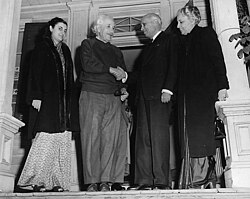
Key Facts
- Location: 112 Mercer Street, Princeton, Mercer County, New Jersey.
- Occupancy: Albert Einstein lived here from 1935 to 1955.
- Designations: U.S. National Historic Landmark and listed on the National Register of Historic Places (NRHP).
- Current Status: Owned by the Institute for Advanced Study (IAS) and used as a private residence.
- Size: 3,674 square feet on a half-acre parcel.
A History of the Residence
The house has a nomadic history, having been built in 1838. It originally stood on Alexander Street before being moved to its current location on Mercer Street. The property was purchased by Elsa Einstein, Albert's second wife, on July 24, 1935, from Mary Clark Marden. Tragically, Elsa passed away in the home just a year later, in 1936.
During his tenure at the house, Einstein shared the space with several women: his sister Maja, his secretary Helen Dukas, and his step-daughter, Margot Einstein-Marianoff. Following Albert's death in 1955, the home remained in the family, owned by Margot Einstein until her death in 1986.
Preservation and Public Access
Interestingly, Albert Einstein reportedly requested that his home never be converted into a museum, a wish shared by his family. Despite this desire for privacy, the historical importance of the site led to its official recognition. On January 7, 1976, the house was added to the National Register of Historic Places (NRHP) and designated as a U.S. National Historic Landmark (NHL). It was also added to the New Jersey Register of Historic Places (NJRHP) on January 1, 1976.
Later Ownership and Current Status
After 1986, the house was owned by Eric Maskin, a Nobel Prize-winning economist and former professor at the Institute for Advanced Study (IAS). Before Maskin, the residence was occupied by Frank Wilczek, a 2004 Nobel Prize winner in physics, who used the home to host evening seminars for graduate students between 1989 and 2001.
In 2012, the Institute for Advanced Study purchased the property for $1,417,500. Today, the house remains a private residence and is not open to the public. To maintain the privacy of its occupants, there are no historical markers on the property; instead, "Private Residence" signs are strategically placed around the perimeter.
| Feature | Detail |
|---|---|
| Address | 112 Mercer Street, Princeton, NJ |
| Year Built | 1838 |
| Living Area | 3,674 sq ft |
| Layout | 1 Bedroom, 2 Bathrooms |
| Lot Size | 0.5 Acres |
| NRHP Reference No. | 76002297 |
Frequently Asked Questions
Can I visit the Albert Einstein House today?
No. The house is currently a private residence owned by the Institute for Advanced Study and is not open for public tours or visits.
Why isn't the house a museum?
Albert Einstein specifically requested that his home not be turned into a museum, and his family supported this wish to maintain the privacy of his personal sanctuary.
Who owned the house after the Einstein family?
Following Margot Einstein's death in 1986, the house was owned by Eric Maskin, a Nobel Prize-winning economist, before being acquired by the Institute for Advanced Study in 2012.
What makes the house architecturally significant?
Architecturally, the house is a simple pattern-book cottage and is not considered unusual in design; its significance is derived entirely from its association with Albert Einstein.
Is there a historical plaque at the site?
No, there is no historical marker explaining the significance of the house. The property features "Private Residence" signs to discourage visitors.