Institute for Advanced Study: A Sanctuary for Theoretical Research
Founded on the principle of pursuing knowledge for its own sake, the Institute for Advanced Study (IAS) in Princeton, New Jersey, stands as one of the world's most prestigious centers for theoretical research. Established in 1930 by Abraham Flexner, the IAS is a private institution designed to provide scholars with the freedom to explore the most profound questions of mathematics, physics, and the humanities without the constraints of traditional teaching duties.
Unlike a standard university, the IAS has no students. Instead, it serves as a collaborative hub for a small, elite faculty and a rotating group of visiting scholars, all dedicated to the motto "Truth and Beauty."
Key Facts
- Established: 1930 by Abraham Flexner.
- Location: Princeton, New Jersey, USA.
- Endowment: $784.7 million (as of 2020).
- Academic Structure: No students; focused entirely on research.
- Distinctions: Affiliated with 34 Nobel Laureates and 42 Fields Medalists.
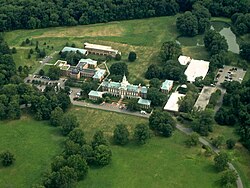
- Campus: Over 600 acres, including the historic Olden Manor.
History and Evolution
Founding and Early Years
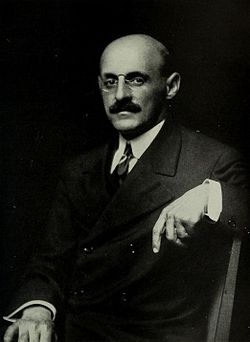
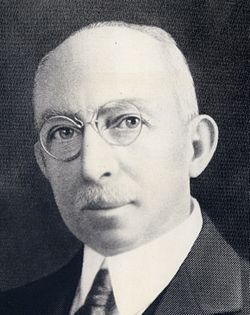
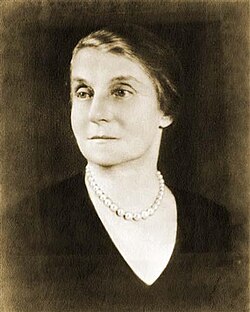
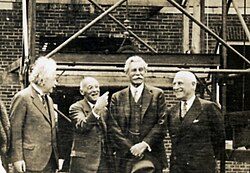
The IAS was brought to fruition through the vision of Abraham Flexner and the support of benefactors like Louis Bamberger and Caroline Bamberger Fuld. The institution began its journey by assembling a faculty of unrivaled prestige, particularly within the School of Mathematics, which officially opened in 1933.
Overcoming Institutional Barriers
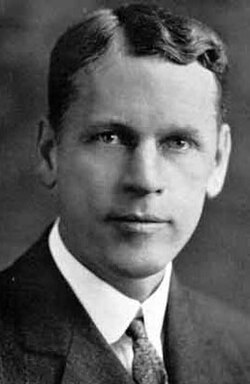
The early history of the IAS was not without struggle. In its first few decades, the institute faced challenges regarding racial and gender discrimination. For instance, in 1937, Princeton University blocked the appointment of African-American mathematician William S. Claytor. While the IAS eventually offered him a position in 1939 after moving into its own facilities, Claytor declined on principle. David Blackwell became the first African-American mathematician to visit in 1941.
Women also faced significant hurdles. Early scholars included Emmy Noether and Anna Stafford Henriques, but permanent faculty positions remained elusive. Hetty Goldman served as the only woman professor from 1936 until 1972. Progress continued into the 21st century, with the first African-American permanent faculty member joining in 2007 and the first woman permanent faculty member in the School of Mathematics hired in 2024.
Campus Expansion and Infrastructure
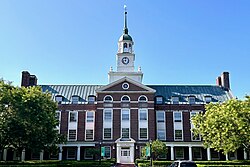
In 1939, the institute moved into Fuld Hall, which housed the director's office and the schools of mathematics, economics, and humanities. The campus grew to encompass over 600 acres, including the 200-acre Olden Farm. Since 1940, Olden Manor has served as the official residence of the institute's director.

Academic Impact and Scientific Legacy
Computing and Physics
The IAS has been a crucible for some of the most important scientific breakthroughs of the modern era. John von Neumann, building on the theories of Alan Turing, developed the basic architecture for most modern digital computers using the "IAS machine" built in the basement of Fuld Hall between 1942 and 1951.

In the realm of physics, the institute is a global leader in string theory and M-theory, the latter introduced by Edward Witten in 1995. It also remains a primary center for research into homotopy type theory, a modern foundation for mathematics that serves as an alternative to classical set theory.
The Langlands Program
The institute is the key repository for the work of Robert Langlands, whose "Langlands program" seeks to unite geometry, number theory, and mathematical analysis. Langlands currently occupies the office once used by Albert Einstein, continuing a legacy of interdisciplinary brilliance.
Special Year Programs
To foster intense collaboration, the School of Mathematics hosts "Special Year" programs. A notable example occurred in 2012–13, focusing on the Univalent Foundations of Mathematics. This initiative brought together experts in topology, computer science, and logic to formalize intuitionistic type theory, resulting in a benchmark publication in 2013.
Institutional Overview
The following table summarizes the core components of the Institute for Advanced Study.
| Category | Details |
|---|---|
| Motto | Truth and Beauty |
| Current Director | David Nirenberg |
| Academic Staff | 25 Faculty Members |
| Student Body | None |
| Key Schools | Mathematics, Historical Studies, Natural Sciences, Social Science |
| Major Awards | Fields Medals, Nobel Prizes, Abel Prizes, Cole Prizes, Wolf Prizes |
Frequently Asked Questions
Does the Institute for Advanced Study grant degrees?
No, the IAS is not a degree-granting university. It has no students and focuses exclusively on advanced research conducted by faculty and visiting scholars.
Who was the founder of the IAS?
The institute was founded in 1930 by Abraham Flexner, who envisioned a place where scholars could pursue "useless knowledge" for the sake of pure discovery.
What is the significance of the IAS machine?
Developed by John von Neumann between 1942 and 1951, the IAS machine introduced the fundamental architecture used in the majority of modern digital computers.
How does the IAS differ from Princeton University?
While located in the same town, the IAS is a separate, private institution. It does not have an undergraduate or graduate student body and is dedicated solely to theoretical research rather than instruction.
What are the 'Special Year' programs?
These are intensive, year-long thematic research programs organized by the School of Mathematics to bring together global experts to solve specific, complex problems in mathematics and logic.