National Historic Landmarks: Preserving America's Most Significant Sites
A National Historic Landmark (NHL) is a building, district, object, site, or structure officially recognized by the United States government for its outstanding historical significance. While the National Register of Historic Places (NRHP) tracks over 90,000 locations across the country, only about 2,500—roughly three percent—attain the prestigious status of a National Historic Landmark.
These landmarks can exist as individual properties or as part of a National Historic Landmark District. A district may contain multiple contributing properties (buildings or sites that add to the historical value) as well as non-contributing properties. Some contributing properties may be separately listed as NHLs or on the NRHP in their own right.
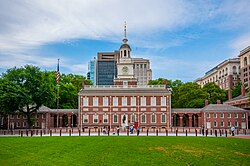
Key Facts
- Exclusivity: Only about 3% of sites on the National Register of Historic Places are designated as NHLs.
- Scope: There are more than 2,500 designated NHLs, including over 100 ships and shipwrecks.
- Ownership: Approximately half of all National Historic Landmarks are privately owned.
- Geography: While most are in the U.S., NHLs exist in U.S. territories, associated states, and even in Morocco.
- Concentration: New York, Pennsylvania, and Massachusetts account for nearly 25% of all NHLs.
The Evolution of Historic Preservation
19th Century Origins
The roots of the program trace back to a simple cedar post placed by the Lewis and Clark Expedition in 1804. This marker commemorated the death of Sergeant Charles Floyd. Eventually replaced by a 100-foot marble obelisk, the Sergeant Floyd Monument in Sioux City, Iowa, was officially designated as an NHL on June 30, 1960.
20th Century Formalization
Before 1935, the U.S. Congress preserved cultural heritage through fragmented, piecemeal efforts. This changed with the Historic Sites Act of 1935, which empowered the Secretary of the Interior to record and organize historic properties and designate those with "national historical significance." This act also gave the National Park Service (NPS) the authority to manage federally owned historic properties.
Early efforts included the Historic American Buildings Survey, which gathered data on architectural and cultural significance. The first designation under this legislation occurred on December 20, 1935, for the Jefferson National Expansion Memorial (now Gateway Arch National Park) in St. Louis, Missouri. The first National Historic Site designation followed on March 17, 1938, for the Salem Maritime National Historic Site.

By 1960, the NPS began formally administering survey data, and the NHL program took a more structured shape. In 1966, the program was integrated into the newly established National Register of Historic Places. To balance preservation with property rights, 1980 legislation amended the process to require owner agreement before a designation could be made.
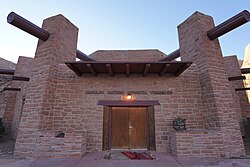
Criteria for Designation
The U.S. Secretary of the Interior designates NHLs based on specific criteria. A site must meet one or more of the following:
- Events of national historical significance occurred there.
- Prominent persons lived or worked at the location.
- The site is an icon of ideals that shaped the nation.
- It is an outstanding example of construction or design.
- The place characterizes a specific way of life.
- It is an archeological site capable of yielding vital information.
Distribution and Management
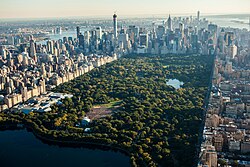
National Historic Landmarks are found in all 50 states and Washington, D.C. The distribution is heavily weighted toward the Northeast; New York City alone possesses more NHLs than 45 of the 50 states. In fact, Philadelphia, Boston, and New York City each have more NHLs than 40 individual states.
Beyond the 50 states, there are 15 NHLs in U.S. commonwealths and territories (such as Puerto Rico and the Virgin Islands), five in U.S.-associated states like Micronesia, and one located in Morocco.
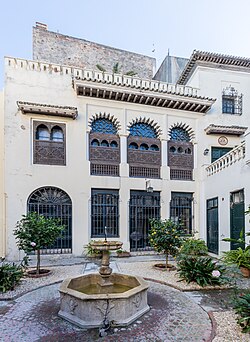
Management of these sites is a collaborative effort. The NPS provides suggestions for new designations and assists with maintenance. Additionally, the National Historic Landmark Stewards Association—a group of owners and managers—works to promote and protect these sites.
| Category/Region | Details | |
|---|---|---|
| Total NHLs | Over 2,500 | |
| Percentage of NRHP | Approximately 3% | |
| Top States | New York, Pennsylvania, Massachusetts | |
| Top Cities | New York City, Philadelphia, Boston | |
| International Sites | 1 (Morocco) | |
| Maritime Sites | Over 100 ships/shipwrecks |
Frequently Asked Questions
What is the difference between the National Register of Historic Places and a National Historic Landmark?
The National Register of Historic Places (NRHP) is a comprehensive list of over 90,000 sites deemed worthy of preservation. A National Historic Landmark (NHL) is a much more exclusive designation reserved for sites with outstanding national significance; only about 3% of NRHP listings are NHLs.
Are all National Historic Landmarks listed on the National Register?
Generally, yes. If a site is designated as an NHL, it is automatically added to the National Register. However, there are three legislated exceptions in Washington, D.C.: the White House, the United States Capitol, and the United States Supreme Court Building.
Who owns National Historic Landmarks?
Ownership varies; approximately half of all NHLs are privately owned, while others are federally or locally owned.
Can a site outside the United States be a National Historic Landmark?
Yes. While most are domestic, there are NHLs in U.S. territories and associated states, as well as one landmark located in Morocco (the American Legation in Tangier).
How are new landmarks chosen?
The National Park Service suggests new designations to the U.S. Secretary of the Interior, who makes the final designation based on specific criteria regarding historical events, prominent figures, or architectural excellence.