Wu Chinese: History, Linguistics, and Regional Diversity
Wu Chinese (吴语) is a major group of Sinitic languages spoken primarily in the eastern coastal regions of China. With approximately 83 million native speakers as of 2021, it is one of the most significant linguistic branches of the Sino-Tibetan family. The language is central to the cultural identity of Shanghai, Zhejiang, southern Jiangsu, and parts of Anhui and Jiangxi provinces.
Unlike Standard Mandarin, Wu is characterized by its distinct phonology and a rich history of regional evolution, reflecting centuries of migration, trade, and cultural exchange in the Jiangnan region.
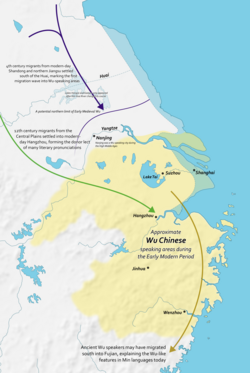
Key Facts
- Native Speakers: Approximately 83 million (2021).
- Primary Regions: Shanghai, Zhejiang, southern Jiangsu, Anhui, and Jiangxi.
- Language Family: Sino-Tibetan > Sinitic > Chinese > Wu.
- Writing System: Primarily Chinese characters, with some use of Latin script for romanization.
- Major Varieties: Includes Shanghainese, Suzhounese, and Wenzhounese.
Historical Evolution
Ancient and Early Dynastic Roots
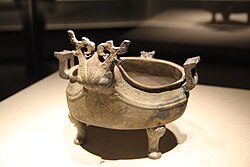
The origins of Wu Chinese are deeply intertwined with the early inhabitants of the region. Linguistic evidence suggests a non-Sinitic substrate, specifically from the Kra-Dai language family. This is evident in the Maqiao Wu dialect, where certain phonetic patterns—such as the transformation of final consonants -m and -n into -ŋ—mirror Kra-Dai languages like Zhuang and Dai.
Medieval and Late Dynastic Periods
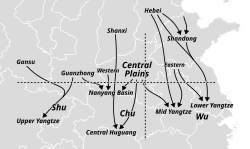
During the medieval period, Wu underwent significant shifts. The migration of populations during the Upheaval of the Five Barbarians further shaped the linguistic landscape of southern China.
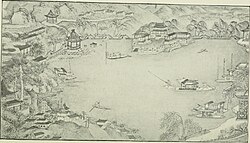
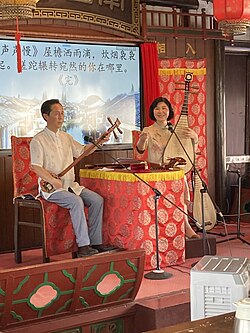
By the Ming and Qing dynasties, Wu became a vehicle for sophisticated literature and opera. Notable works include the Sanyan (a trilogy of collected stories) and the opera Huanshaji. During the Qing dynasty and the Republican era, the language continued to evolve, as seen in works like Officialdom Unmasked.
Linguistic Characteristics
Phonology and Tones
Wu is renowned for its complex sound systems. For example, Xuanzhou Wu features highly unique syllables such as /tʃɦʯəi/ for "water." The language also exhibits a variety of polysyllabic terms, verb-object compounds, and reduplication (e.g., tong tong meaning "every bucket").
Grammar and Syntax
The syntax of Wu varies across its subgroups. In Wenzhounese, a typical sentence structure might be: "Xiaozhang caught a big fish yesterday night." A distinguishing feature of Wu grammar is the use of a fricative-initial negator (弗 / 勿) and specific kinship terms, such as mā for mother and niángjiù for maternal uncle.
Vocabulary and Loanwords
The Wu lexicon contains a mix of native Sinitic words, substrate terms (like báixiàng for "to play"), and loanwords from trade. Due to the historical importance of Hangzhou as a trade hub, many Old Mandarin loanwords entered the language. In more recent history, Western influence has introduced terms such as sy-men-thin (cement) and chiau-kheq-liq (chocolate).
Regional Distribution and Classification
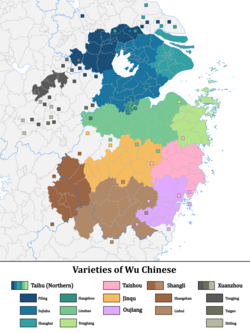
The classification of Wu is complex. The Language Atlas of China has historically divided Wu into several groups, including the Tiaoxi (or Shaoxi) and Shangli groups. The core area of Wu is divided into various subgroups that reflect the geographic and social boundaries of the region.
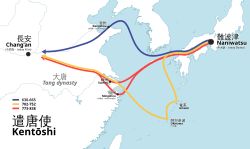
Beyond mainland China, Wu is spoken in overseas migrant communities. Historically, the kentōshi sea route between Japan and China also facilitated linguistic and cultural exchange.
Modern Status and Orthography
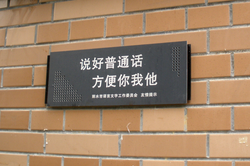
In the modern era, Wu exists alongside Standard Mandarin. While Mandarin is the official language of instruction and government, Wu remains a vital part of daily life and local identity. However, there are ongoing efforts to promote Mandarin, as seen in public signage in cities like Lishui.
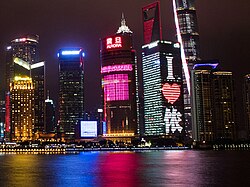
Despite the pressure of standardization, Wu persists in public spaces. For instance, Shanghainese phrases can be found on the facades of modern buildings in Lujiazui, Shanghai.
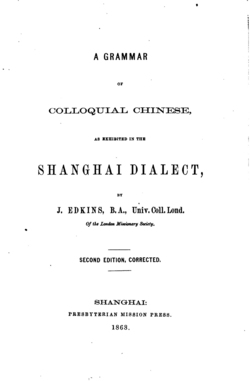
Historically, Western scholars have attempted to document the language, such as Joseph Edkins in his 1868 grammar of the Shanghai dialect.
Summary of Wu Chinese
| Feature | Details |
|---|---|
| ISO 639-3 Code | wuu |
| Core Regions | Shanghai, Zhejiang, Southern Jiangsu |
| Estimated Speakers | 83 Million (2021) |
| Key Substrates | Kra-Dai |
| Notable Dialects | Shanghainese, Suzhounese, Wenzhounese |
Frequently Asked Questions
Is Wu Chinese a dialect or a language?
While often referred to as a "dialect" (方言) within China for political and cultural reasons, linguistically, Wu is a group of Sinitic languages that are often not mutually intelligible with Standard Mandarin.
What is the relationship between Wu and Kra-Dai languages?
Wu Chinese contains a non-Sinitic substrate from the Kra-Dai family, which influenced its early phonology and vocabulary, particularly in certain rural dialects like Maqiao Wu.
How does Shanghainese differ from other Wu varieties?
Shanghainese is one of the most prominent varieties of Wu, but it differs from others like Wenzhounese in phonology and vocabulary, reflecting Shanghai's history as a cosmopolitan trade center.
Can a Mandarin speaker understand Wu Chinese?
Generally, no. Due to significant differences in tones, phonology, and vocabulary, a speaker of Standard Mandarin would find it very difficult to understand a native Wu speaker without specific study.
What is the current status of Wu Chinese in schools?
Standard Mandarin is the primary language of education in China. While Wu is spoken at home and in the community, it is rarely used as a formal medium of instruction in schools.