Standard Mandarin: The Evolution and Global Reach of the Common Chinese Tongue
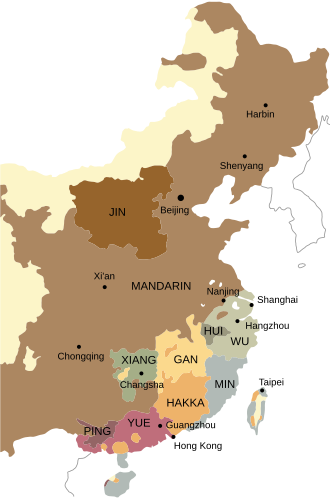
Standard Mandarin serves as the primary linguistic bridge across the vast and diverse landscape of the Chinese-speaking world. As a member of the Sino-Tibetan language family, specifically within the Sinitic branch, it has evolved from ancient roots into a modern lingua franca used by hundreds of millions of people. Whether referred to as Putonghua in mainland China, Guoyu in Taiwan, or Huayu in Singapore and Malaysia, this standardized form of speech facilitates communication across various regional dialects.
![Zhongguo Guanhua (中國官話; 中国官话), or Medii Regni Communis Loquela ('Middle Kingdom's Common Speech'), used on the frontispiece of an early Chinese grammar published by Étienne Fourmont (with Arcadio Huang) in 1742[33]](/images/32/f9/32f908611110ebbf5d9d9ad5e9a23fcf9cabbf92bd4cbf7fab084a68424ce6f2.png)
Key Facts
- Speakers: Over 80% of the population in China can speak Standard Chinese as of 2020.
- Official Status: It is the de facto official language in China, Taiwan, and Singapore.
- Linguistic Basis: The standard pronunciation is based on the Beijing dialect.
- Writing System: Utilizes Chinese characters, with various phonetic systems like Hanyu Pinyin for transcription.
- Global Presence: Recognized as an official language of the United Nations and the Shanghai Cooperation Organisation.
Historical Evolution
The roots of Mandarin can be traced through several historical stages, including Old Chinese, Middle Chinese, and Old Mandarin. During the Ming (1368–1644) and Qing (1644–1912) dynasties, the term Guanhua (official speech) was used to describe the lingua franca spoken within imperial courts.
The English term "Mandarin" has a unique etymological journey. It was borrowed from the Portuguese word mandarim, which originated from the Sanskrit word mantrin, meaning "minister." Initially, the term referred to Chinese scholar-officials, but Portuguese explorers eventually applied it to the language they heard them speak.
The Rise of Standardization
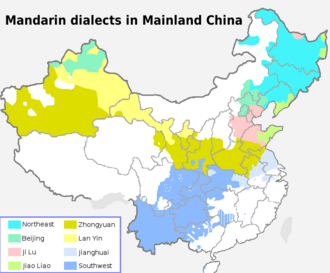
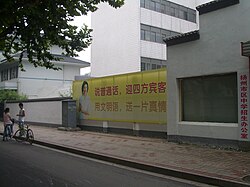
In the modern era, the standardization of the language has been a significant social and political project. In mainland China, the government has set ambitious goals for language proficiency, aiming for 85% of the population to speak Standard Chinese by 2025 and nearly the entire country by 2035. This process has led to diglossia, a situation where a standardized language exists alongside local varieties, often influencing or replacing local dialects among younger urban populations.
Linguistic Structure and Phonology
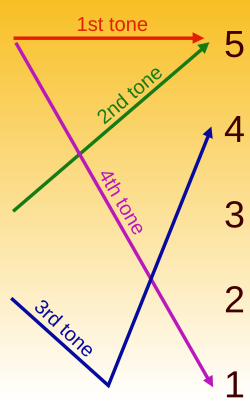
Standard Mandarin is characterized by a specific set of sounds and tones. The phonology includes various consonants such as labials, dentals, and retroflexes, as well as a range of vowels and nasals. A defining feature of the language is its tonal nature, where the pitch contour of a syllable changes its meaning.
Writing and Transcription
While the core writing system relies on Chinese characters, several phonetic systems assist in learning and transcription. Hanyu Pinyin is the most widely used system for romanization, but other systems like Bopomofo (used in Taiwan) and Wade–Giles also exist. The writing system is further divided into Simplified characters, primarily used in mainland China, and Traditional characters, used in Taiwan and Hong Kong.
Regional Usage and Global Distribution
The application of Standard Mandarin varies by region. In mainland China, it is regulated as Putonghua by the Ministry of Education. In Taiwan, it is known as Guoyu, and in Singapore and Malaysia, it is often referred to as Huayu. The language is also a vital tool for education and international diplomacy, serving as a major language within the United Nations.
| Term | Chinese (Trad/Simp) | Literal Meaning | Primary Region/Context |
|---|---|---|---|
| Putonghua | 普通話 / 普通话 | Common speech | Mainland China |
| Guoyu | 國語 / 国语 | National language | Taiwan |
| Huayu | 華語 / 华语 | Chinese language | Singapore, Malaysia |
Frequently Asked Questions
What is the difference between Putonghua, Guoyu, and Huayu?
These terms all refer to Standard Mandarin but are used in different geopolitical contexts. Putonghua is the term used in mainland China, Guoyu is used in Taiwan, and Huayu is commonly used in Singapore and Malaysia.
What is the basis for Standard Mandarin pronunciation?
The standard pronunciation of Mandarin is based on the Beijing dialect (Beijingese), serving as the phonetic foundation for the language across the country.
How many people speak Standard Chinese?
As of 2020, over 80% of the population in China is able to speak Standard Chinese, making it one of the most widely spoken languages in the world.
Does Standard Mandarin use the same writing system everywhere?
While the characters represent the same language, there is a distinction between the Simplified characters used in mainland China and the Traditional characters used in places like Taiwan and Hong Kong.
Is Mandarin a single language or a group of dialects?
Mandarin is a standardized form of speech that belongs to the Sinitic branch of the Sino-Tibetan language family. While it is based on certain dialects, it serves as a unified standard to bridge many different regional Chinese varieties.