Classical Chinese: The Literary Foundation of the Sinosphere
For millennia, a single written form served as the intellectual and diplomatic backbone of East Asia. Known as Classical Chinese (or wényán), this language provided the medium for the most profound philosophical, historical, and literary works in the region. While the spoken languages of China and its neighbors evolved dramatically over the centuries, this written standard remained a constant, bridging cultures across the Sinosphere.
To understand Classical Chinese, one must distinguish it from its later evolution, Literary Chinese. While the terms are often used interchangeably, scholars note that Literary Chinese represents a continuous imitation of the classical style, gradually incorporating new vocabulary and shifting grammatical structures as the direct connection to the original spoken forms of the ancient era faded.
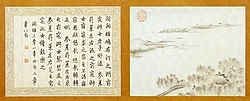
Key Facts
- Core Era: Originally written from approximately the 5th century BCE to the 2nd century CE.
- Geographic Reach: Used extensively across China, Japan, Korea, Vietnam, and the Ryukyu Islands.
- Linguistic Nature: Characterized by a terse style where each character typically corresponds to a single independent word.
- Writing System: Utilizes Chinese characters (Hanzi/Kanji/Hanja).
- Modern Legacy: Elements of the literary style still influence legal terminology in Taiwan.
Defining the Classical and Literary Eras
There is no single universal definition of "Classical Chinese," but it generally refers to the language used in the classics of Chinese literature from the 5th century BCE through the end of the Han dynasty (202 BCE – 220 CE). Within this period, a distinction is often made: works written before the 4th century BCE, such as the Five Classics, are sometimes categorized as pre-Classical Chinese because they did not serve as the primary model for later imitation in the same way later classical works did.
As the spoken languages of China diverged from the written word, the gap widened. From the end of the Han dynasty until the early 20th century, Literary Chinese became the standard for almost all formal writing. This form was a conscious effort to maintain the prestige of the classics while adapting to the linguistic realities of a changing world.
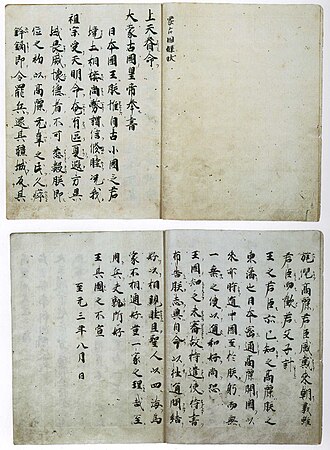
The Spread of the Written Word
The influence of Classical Chinese extended far beyond the borders of China. Through diplomatic, cultural, and migratory ties, the language was adopted by Korea, Japan, and Vietnam. This shared literary heritage created a unique intellectual environment across East Asia, where scholars could communicate through a common written medium regardless of their spoken dialects.
Historical Transmission and Loss
The survival of these ancient texts is a testament to historical resilience. The tradition recounts the "burning of books and burying of scholars" in 213 BCE under Qin Shi Huang, an event that threatened the very existence of the Hundred Schools of Thought. Furthermore, the collapse of the Qin dynasty led to the destruction of the imperial library. Consequently, many surviving classical works are not original manuscripts but copies produced centuries after their initial composition.
| Feature | Classical Chinese (Proper) | Literary Chinese |
|---|---|---|
| Primary Era | c. 5th Century BCE – 2nd Century CE | End of Han Dynasty – Early 20th Century |
| Function | Original composition of the classics | Formal writing and imitation of classics |
| Linguistic Style | Highly archaic and foundational | Evolving vocabulary and grammar |
| Modern Status | Historical/Academic study | Influences modern legal/formal subsets |
Phonology and the Challenge of Pronunciation
One of the most complex aspects of Classical Chinese is its pronunciation. Because the written characters remained stable while spoken sounds shifted, the relationship between text and speech became increasingly disconnected. By the Song dynasty, scholars even practiced "harmonizing the rhymes"—adjusting the perceived pronunciation of words to ensure they fit the poetic requirements of ancient verses.
A famous demonstration of this linguistic gap is the poem Lion-Eating Poet in the Stone Den, composed by Yuen Ren Chao in the 1930s. The poem consists entirely of words pronounced "shi" in modern Standard Chinese, but with different tones. While the poem is perfectly legible to a reader, it highlights how the phonetic evolution of the language has made the direct oral recitation of ancient literary forms nearly incomprehensible to the modern ear.
Modern Usage and the Literary Revolution
The dominance of Literary Chinese began to wane with the May Fourth Movement in 1919, which championed the use of vernacular Chinese (the spoken language) in writing. However, the transition was not instantaneous. In Taiwan, for example, many government documents were written in Literary Chinese until reforms in the 1970s. Even today, a subset of the literary language remains essential for legal professionals in Taiwan, much like Law French or Law Latin in the Anglophone tradition.
Frequently Asked Questions
What is the difference between Classical and Literary Chinese?
Classical Chinese refers to the specific language used in the original classics from roughly the 5th century BCE to the Han dynasty. Literary Chinese refers to the later formal writing style that imitated those classics and was used for official business until the 20th century.
Why is Classical Chinese difficult for modern speakers to read?
The language is extremely terse, with each character often representing an independent word. Because the syntax and vocabulary have diverged significantly from modern spoken Chinese over thousands of years, it requires specialized literary training to master.
How did Classical Chinese influence other countries?
Through cultural and diplomatic ties, the writing system and literary style were adopted in Japan, Korea, and Vietnam, creating a shared written culture known as the Sinosphere.
Is Classical Chinese still used today?
While it is no longer the standard for daily communication, it remains a subject of intense academic study. In certain specialized fields, such as law in Taiwan, subsets of the literary style are still utilized.
What was the Qieyun?
The Qieyun, created in 601 CE, was a highly influential dictionary that established a standard for pronunciation and rhyming, helping to unify the prestigious linguistic standards of the time.