WSP USA: A Legacy of Global Engineering and Infrastructure Design
WSP USA, formerly known as Parsons Brinckerhoff, is a premier American multinational engineering and design firm. As a key subsidiary of the Canadian-based WSP Global, the firm provides a comprehensive suite of professional services, including strategic consulting, planning, energy infrastructure, and community planning. With a workforce of approximately 14,000 employees worldwide, WSP USA operates as a critical hub in a global network of 500 offices serving 39 countries.
The firm's influence on the modern built environment is vast, spanning from the early days of urban transit to contemporary airport expansions. Its expertise covers the entire project lifecycle, from initial strategic planning and design to construction management and long-term operations and maintenance.
Key Facts
- Founded: 1885 as Parsons Brinckerhoff.
- Founder: William Barclay Parsons.
- Parent Company: WSP Global.
- Global Reach: Offices in New York, London, Dubai, Hong Kong, Singapore, Sydney, and 150 other locations.
- Industry Focus: Design, engineering, environmental consulting, and project management.
- Workforce: Approximately 14,000 employees globally for WSP USA.
Historical Foundations and Early Milestones
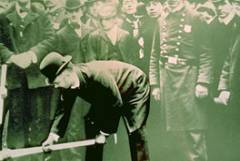
The firm was established in 1885 in New York City by civil engineer William Barclay Parsons. One of its most enduring early achievements was the design of the original IRT line of the New York City Subway, which opened in 1904 and fundamentally changed urban mobility.
In 1906, the firm expanded its technical capabilities when highway engineer Henry M. Brinckerhoff joined. Brinckerhoff brought specialized knowledge in electric railways and is credited as a co-inventor of the third rail—the electrified third rail used to power trains.
Beyond New York, the firm's early portfolio included the Cape Cod Canal (opened 1914) and a railway line in China connecting Hankow (Wuhan) to Canton (Guangzhou), which remains in use today.
A Century of Infrastructure Innovation
Throughout the 20th century, the firm became a go-to partner for complex infrastructure projects. Its portfolio includes a diverse array of tunnels, bridges, and transit systems across the globe.
Notable 20th Century Projects
- Tunnels and Bridges: The Detroit–Windsor Tunnel (1930), the Scheldt Tunnel in Antwerp, Belgium (1933), the Buzzards Bay Railroad Bridge (1935), and the Pell Bridge in Rhode Island (1969).
- Roadways and Energy: The Garden State Parkway in New Jersey (1957), the Hampton Roads Bridge-Tunnel in Virginia (1957), and the U.S. Strategic Petroleum Reserve (1980).
- Rapid Transit Systems: The firm designed transit networks for San Francisco (1972), Atlanta (1979), Singapore (1987), Taipei (1996), and Caracas (1983).
Evolution into WSP Global
The transition from an independent firm to a global powerhouse occurred through a series of strategic acquisitions. In October 2009, Parsons Brinckerhoff was acquired by Balfour Beatty plc. However, a major shift occurred on October 31, 2014, when WSP Global purchased the firm from Balfour Beatty for US$1.24 billion.

Following the acquisition, the company operated as WSP|Parsons Brinckerhoff before the Parsons Brinckerhoff brand was officially retired in 2017, fully integrating the firm into the WSP brand. To further expand its capabilities, WSP Global acquired the Louis Berger Group in 2018, Ecology & Environment (E&E) in 2019, LT Environmental in 2020, Golder Associates in 2021, and Wood PLC’s Environment & Infrastructure Solutions business in 2022.
Current Projects and Industry Standing
WSP USA continues to lead high-profile infrastructure developments. Recent and ongoing engagements include the Long Island Rail Road's East Side Access to Grand Central Terminal, the redevelopment of LaGuardia Airport in New York City, and the Charlotte Douglas International Airport Airfield Expansion.
The firm's prestige is reflected in industry rankings. In 2020, Engineering News Record ranked the firm #7 among the Top 500 Design Firms and #2 among the Top 100 Pure Designers.
| Category | Details |
|---|---|
| Headquarters | One Penn Plaza, New York City, USA |
| Key Leadership | Lewis Cornell (President and CEO, U.S.) |
| Core Services | Strategic consulting, planning, design, program management, engineering, construction services |
| Global Presence | ~150 offices worldwide |
| Parent Organization | WSP Global |
Project Controversies
Despite its success, the firm has faced significant challenges. Most notably, the Big Dig (Central Artery/Tunnel project) in Boston, partnered with Bechtel, was plagued by engineering failures and cost overruns, with budgets ballooning from $8 billion to over $24 billion. The project suffered from substandard materials and a fatal tunnel ceiling collapse.
Other controversies include the Silver Spring transportation center in Maryland, which faced reports of falling concrete and design flaws, and a legal settlement in 2014 regarding the Lane Cove Tunnel in Sydney, Australia, involving claims of misleading conduct.
Frequently Asked Questions
What is the relationship between Parsons Brinckerhoff and WSP?
Parsons Brinckerhoff was an independent firm founded in 1885 that was acquired by WSP Global in 2014. The Parsons Brinckerhoff brand was retired in 2017, and the firm now operates as WSP USA.
Who founded the original firm and what was their first major project?
The firm was founded by civil engineer William Barclay Parsons. One of its earliest and most significant projects was the design of the original IRT line of the New York City Subway, which opened in 1904.
What is the "third rail" and who contributed to it?
The third rail is an electrified rail used to provide power to trains. Henry M. Brinckerhoff, who joined the firm in 1906, is known for his co-invention of this technology.
How many employees does WSP USA have?
WSP USA employs approximately 14,000 people worldwide, while the broader WSP Global organization employs approximately 31,500 people across 500 offices.
What were the main issues with the Boston Big Dig project?
The Big Dig was characterized by severe cost overruns (exceeding $24 billion), poor workmanship, thousands of leaks, and a fatal ceiling collapse caused by poor design.