tunnel constructioncivil engineeringrailway tunnelsroad tunnelssubway systems

Tunnels: Engineering Marvels from Ancient Aqueducts to Modern Megaprojects

Tunnels: Engineering Marvels from Ancient Aqueducts to Modern Megaprojects A tunnel is an underground or undersea passageway carved through soil, earth, or rock, or laid beneath a body of...

Tunnels: Engineering Marvels from Ancient Aqueducts to Modern Megaprojects

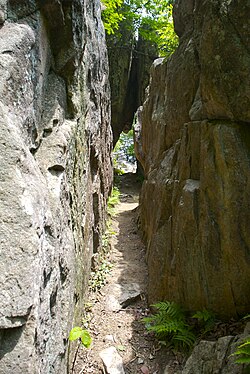
A tunnel is an underground or undersea passageway carved through soil, earth, or rock, or laid beneath a body of water. Typically, these structures are completely enclosed, featuring portals—the openings at each end—and occasionally access or ventilation shafts along their length. While they may resemble pipelines, tunnels are distinct in their purpose and construction, serving as vital arteries for modern civilization.

From the rapid transit networks that pulse beneath major cities to the massive utility tunnels that carry steam, electricity, and telecommunications, tunnels are essential infrastructure. They facilitate the movement of vehicles, trains, and pedestrians, while also serving specialized roles such as sewers, aqueducts, and even wildlife crossings designed to help animals bypass human-made barriers safely.
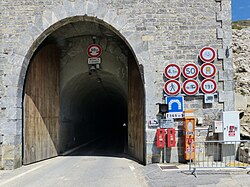
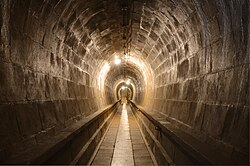
Tunnel in Col du Galibier, France

Key Facts

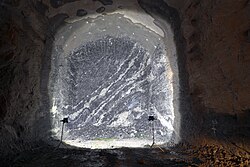
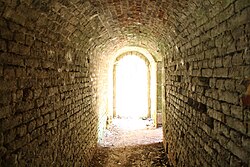
Tunnel in Fort de Mutzig, France
  • Earliest Known Tunnel: The Siloam Tunnel in Jerusalem, built around the 8th century BC.
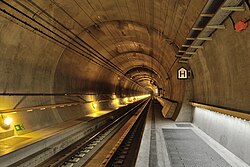
  • Longest Railway Tunnel: The Gotthard Base Tunnel in Switzerland (57.1 km).
  • Longest Water Tunnel: The Dahuofang Water Tunnel in China (85.3 km).
  • World's Deepest Subsea Road Tunnel: The Eiksund Tunnel in Norway.
  • Construction Methods: Includes cut-and-cover, drilling and blasting, and Tunnel Boring Machines (TBM).

The Evolution of Tunneling Technology
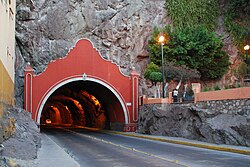
Decorated portal to a road tunnel in Guanajuato, Mexico

The history of tunneling stretches back to antiquity. One of the earliest examples of a tunnel excavated from both ends is the Siloam Tunnel in Jerusalem. Another remarkable feat is the Tunnel of Eupalinos in Greece, a 1,036-meter-long aqueduct built in the 6th century BC.

As engineering progressed, so did the methods used to pierce the earth. Early industrial-era tunnels often relied on manual labor and basic tools. However, the invention of the pneumatic rock-drilling machine by Germain Sommeiller revolutionized the field, allowing for the construction of massive Alpine tunnels.
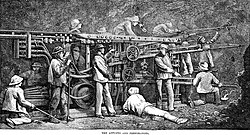
A late-19th-century pneumatic rock-drilling machine, invented by Germain Sommeiller and used to drill the first large tunnels through the Alps

Construction Techniques

Modern engineers employ several sophisticated methods to create these passageways:

  • Cut-and-cover: A method where a trench is excavated, the structure is built, and then it is covered over.
  • Boring Machines: Massive Tunnel Boring Machines (TBMs) that excavate soil and rock while simultaneously installing tunnel linings.
  • Drilling and Blasting: A traditional method using explosives to break through hard rock.
  • Immersed Tube Construction: Used primarily for underwater tunnels, where sections are prefabricated and sunk into a trench on the seabed.
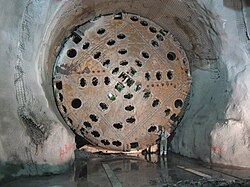
A workman is dwarfed by the cutting end of a tunnel boring machine used to excavate the Gotthard Base Tunnel (Switzerland), the world's longest railway tunnel.
Tunnel excavated with drilling and blasting method

Diverse Tunnel Types and Uses

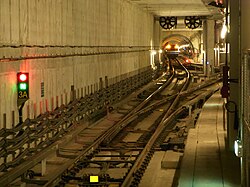
Tunnel on the Taipei Metro in Taiwan

Tunnels are not one-size-fits-all; they are highly specialized based on their intended function.

Transportation Tunnels

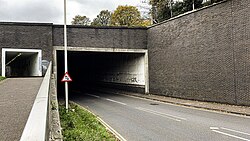
Road and rail tunnels are the most visible. Some are double-deck, such as the section through Yerba Buena Island on the San Francisco–Oakland Bay Bridge, which carries both vehicles and rail. In the Netherlands, the Maastricht road tunnel utilizes two levels to separate regional and motorway traffic.
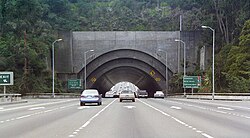
The upper-level traffic lanes through Yerba Buena Island, part of the San Francisco–Oakland Bay Bridge

Utility and Specialized Tunnels

Beyond transport, utility tunnels are critical for routing essential services like chilled water, electrical power, and telecommunication cables. In cities like Copenhagen, utility tunnels connect major buildings to facilitate the passage of heating pipes.
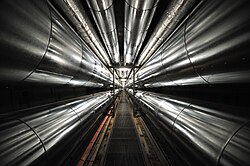
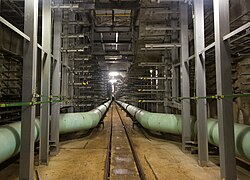
Utility tunnel for heating pipes between Rigshospitalet and Amagerværket in Copenhagen, Denmark
A utility tunnel in Prague

Specialized tunnels also include secret tunnels used for military purposes or smuggling, and wildlife crossings that allow animals to navigate safely through fragmented habitats.

Notable Tunnels Around the World
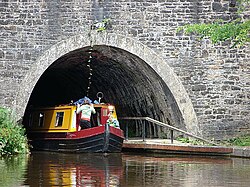
Southern portal of the 421 m-long (1,381 ft) Chirk canal tunnel, Wales

Throughout history, certain tunnels have stood out due to their extreme length, depth, or historical significance.

Comparison of Notable Global Tunnels
Tunnel Name Location Type Notable Feature
Gotthard Base Tunnel Switzerland Railway World's longest and deepest railway tunnel
Seikan Tunnel Japan Railway Connects Honshu and Hokkaido islands
Solbakktunnelen Norway Road World's longest underwater highway tunnel
Moffat Tunnel USA Railway Highest active railroad tunnel in the U.S.
Fenghuoshan Tunnel China Railway World's highest railway tunnel

Historical Milestones

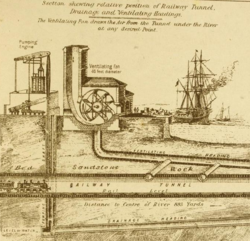
The 1843 Thames Tunnel, built by Marc and Isambard Kingdom Brunel, was a landmark achievement as the first tunnel to traverse under a water body using a tunneling shield. Similarly, the Mersey Railway tunnel (1886) was the world's first deep-level underground railway.
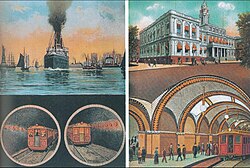
Joralemon Street Tunnel on 1913 postcard, part of the New York City Subway system
1886 illustration showing the ventilation and drainage system of the Mersey railway tunnel

In the realm of rail history, the Edge Hill to Lime Street tunnels in Liverpool hold the distinction of being the oldest rail tunnels in the world still in active use.
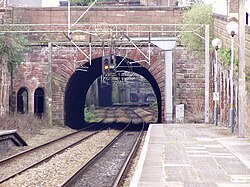
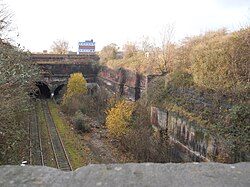
A short section remains of the 1832 Edge Hill to Lime Street tunnel in Liverpool. This and a short section of the original tunnel nearer to Lime Street are the oldest rail tunnels in the world still in active use.
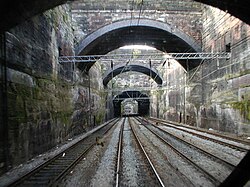
The three eastern portals of Liverpool Edge Hill tunnels, built into a hand-dug deep cutting. The left tunnel with tracks is the short 1846 second Crown Street Tunnel, still used for shunting. In the center, partially hidden by undergrowth, is the disused 2.03 km (1.26 mi) 1829 Wapping Tunnel. On the right, hidden by undergrowth, is the disused original short 1829 Crown Street Tunnel.

Frequently Asked Questions

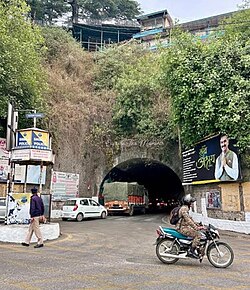
Victory Tunnel in Shimla, India was opened on 08 May 1945 after the Allied victory in World War II
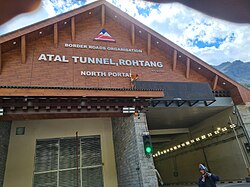
Atal Tunnel in Himachal Pradesh, India was opened on 4 October 2020 which connects Manali and Keylang, bypassing Rohtang Pass in high Himalayan terrain
abandoned railway tunnel,Taguchi Railroad [ja],Japan
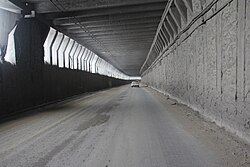
Salang Tunnel in Afghanistan
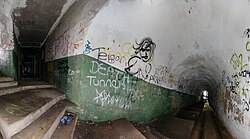
Claremont Way Tunnel in Chatham, Kent, England
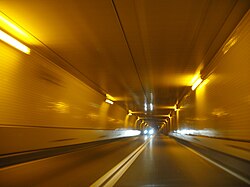
The Harbor Tunnel in Baltimore, USA, which carries I-895, serves as an example of a water-crossing tunnel built instead of a bridge.
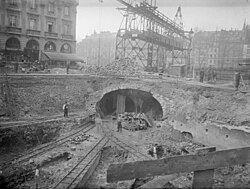
Cut-and-cover construction at Saint-Michel on Paris Metro Line 4 (c. 1910)
Illowra Battery utility tunnel, Port Kembla. One of many bunkers south of Sydney.
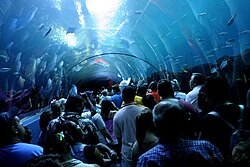
Shark tunnel at the Georgia Aquarium
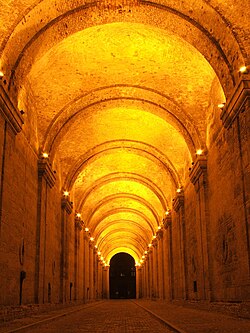
The 19th-century Dark Gate in Esztergom, Hungary
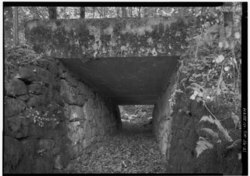
Underpass for cattle created in 1914 construction of what is now Historic Columbia River Highway
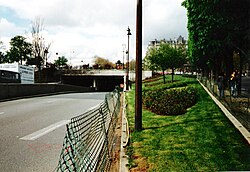
The entrance to the Pont de l'Alma tunnel, the site where the car carrying Diana, Princess of Wales, hit a Fiat and then the wall. There was no proper barrier and this contributed to her death.
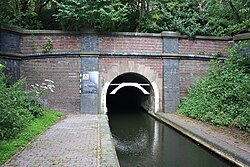
Southern portal of the 1791 Dudley Canal tunnel in England
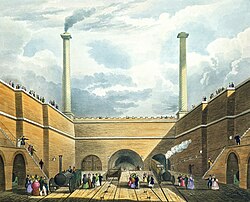
Thomas Talbot Bury's watercolour of the Liverpool Edge Hill tunnel portals
Liverpool Lime Street Approach. The original two-track tunnel was removed to create a deep cutting. Some of the road bridges seen across the cutting are solid rock and in effect are a series of short tunnels.
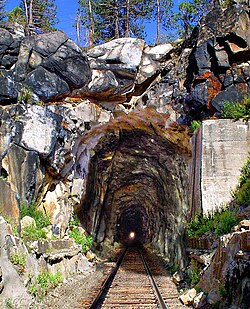
The 1,659-foot (506 m) Donner Pass Summit Tunnel (#6) was in service from 1868 to 1993.
Small operational brick tunnel in France
The Gotthard Base Tunnel is the first flat route through a major mountain range.
The Big Dig road vehicle tunnel in Boston, U.S.
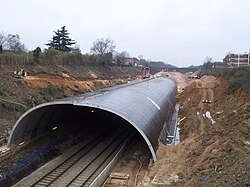
The Gerrards Cross tunnel in England, completed in 2010. Looking west towards the station in March 2005, showing the extent of construction three months before a small section collapsed.
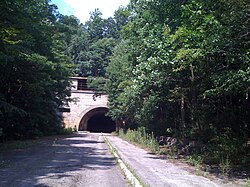
The eastern portal of the abandoned Sideling Hill Tunnel, Pennsylvania, U.S., in 2009
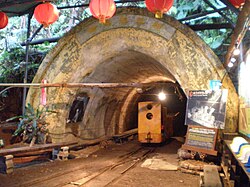
Tunnel formerly used for coal mining in New Taipei, Taiwan
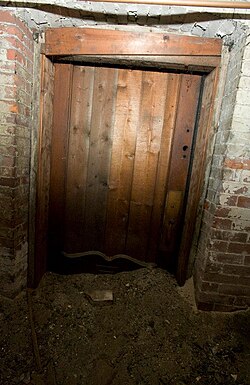
Door to a compartment where runaway slaves would sleep, on the Underground Railroad
View through a natural tunnel in South Korea

What is the difference between a tunnel and a pipeline?

While both are enclosed structures, a tunnel is a passageway designed for the movement of people, vehicles, or trains, or to house various utilities. A pipeline is specifically designed for the transport of fluids or gases.

How are underwater tunnels built?

Underwater tunnels can be constructed using boring machines or through immersed tube construction, where pre-made sections are lowered into a prepared trench on the seabed.

What is a double-deck tunnel?

A double-deck tunnel features two levels of traffic within a single structure, such as one level for cars and another for trains or different types of road traffic.

Why are utility tunnels important for cities?

Utility tunnels allow cities to route essential services like electricity, water, and telecommunications through a protected, accessible space, making maintenance easier and protecting infrastructure from the elements.

What is the purpose of a wildlife crossing tunnel?

Wildlife crossing tunnels are specifically engineered to allow animals to pass safely under or over roads and other human-made barriers, reducing habitat fragmentation and preventing animal-vehicle collisions.