Metro Rail Systems: The High-Capacity Backbone of Urban Transit
In the heart of the world's most bustling metropolises, a silent engine of movement drives the economy and daily life: rapid transit. Often referred to as the metro, subway, tube, or underground, these high-capacity public transport systems are designed to move massive numbers of people efficiently through dense urban environments. Unlike buses or trams, rapid transit typically operates on an exclusive right-of-way, meaning the tracks are separated from pedestrians and road vehicles, ensuring speed and reliability.
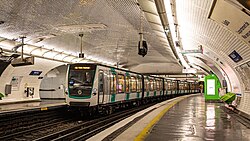
Whether traveling through deep underground tunnels or along elevated tracks—often called "L" trains or skytrains—these systems are essential for modern urban mobility. By utilizing electric power and dedicated infrastructure, metro rail provides a scalable solution to the challenges of city congestion.
Key Facts
- Global Leader: As of 2021, China hosts the largest number of rapid transit systems, with 40 networks spanning over 4,500 km.
- Longest System: The Shanghai Metro holds the record for the world's longest single-operator rapid transit system by route length.
- Largest Provider: The New York City Subway is the world's largest single provider by number of stations, totaling 472.
- High Capacity: Typical lines can move approximately 36,000 passengers per hour per direction, though East Asian systems like Hong Kong's MTR can reach up to 85,000.
- Automation: Modern systems are increasingly moving toward unattended, automated operations to increase efficiency.
Understanding Metro Infrastructure and Technology
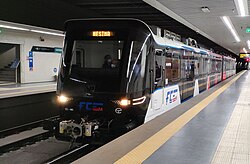
Modern rapid transit relies on sophisticated engineering to maintain high service frequencies. Most systems use electric multiple units (EMUs) running on standard railway tracks. However, specialized technologies also exist, including guided rubber tires, magnetic levitation (maglev), and monorails.
![Rapid transit systems in 2024.[37]](/images/c7/31/c731dd405ea490e6933370f3e55284f89df67782bf4f571e92bf75e785d17efc.webp)
Capacity and Frequency
The capacity of a transit line is a product of three main factors: the number of passengers per car, the length of the train, and the service frequency. While heavy rail trains may consist of six to twelve cars, lighter systems might use fewer. To maximize throughput, many systems employ communications-based train control, which allows for much shorter intervals between trains—sometimes as low as 90 seconds.
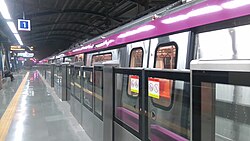
Station Design and Passenger Information
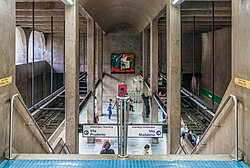
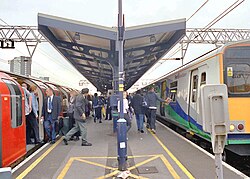
Stations are engineered to facilitate rapid boarding. This often involves high platforms designed to minimize the gap between the platform and the train, allowing for level boarding. To assist passengers, modern stations utilize advanced information systems.
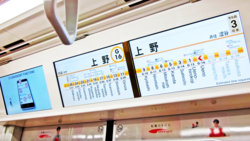
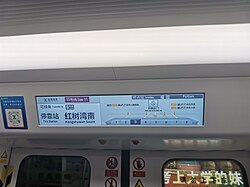
Some cities, like Seoul, use alphanumeric coding to help passengers navigate complex interchanges. For example, a station on Line 4 might be assigned a code starting with "4," making it easier to identify locations within a massive network.
Global Variations in Transit Layouts
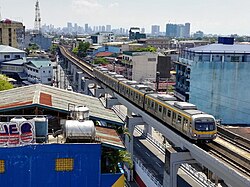
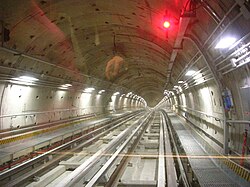
Metro systems are not one-size-fits-all; they adapt to the unique geography and economic needs of their cities. Some cities utilize elevated railways, which are generally more cost-effective to construct than underground tunnels.
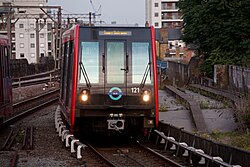
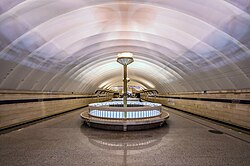
In other locations, multi-level stations allow different types of rail to coexist. For instance, in Hamburg, the U-Bahn may run on the surface while the S-Bahn operates on a lower level. In Saint Petersburg, the extreme depth of the soil requires many stations to be built deep underground, with some reaching depths of 100–120 meters.
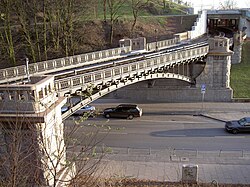


![Toledo station on Line 1 of the Naples Metro. On 30 November 2012, the Toledo station was elected by The Daily Telegraph as the most beautiful subway station in Europe and the world,[87][88][89][90] a recognition echoed by CNN's rankings.[91]](/images/99/16/99165baaf59de4abf58ce70d7732ad4e5a3eeeff13359222b8fc26ce53f46a24.jpg)
Summary of Global Metro Leaders
| Metric | Leading System/City | Key Detail |
|---|---|---|
| Most Systems | China | 40 systems over 4,500 km |
| Longest Route | Shanghai Metro | World's longest single-operator system |
| Most Stations | New York City Subway | 472 total stations |
| Highest Capacity | Hong Kong (MTR) | Up to 85,000 passengers per hour |
| Deepest Station | Chongqing Metro | Hongyancun station (116 m) |
Safety, Security, and Modern Connectivity
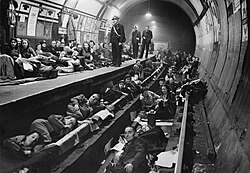
As critical infrastructure, safety is a paramount concern. Some networks, such as the Beijing Subway, implement airport-style security checkpoints. However, rapid transit systems have also faced challenges from terrorism, such as the 1995 Tokyo sarin gas attack and the 2005 London bombings.
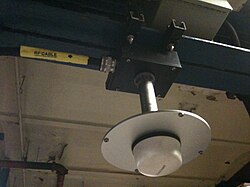
In the digital age, connectivity is another vital feature. Many modern stations now include cellular reception and data services through specialized antennas to ensure passengers remain connected while underground.
Frequently Asked Questions
What is the difference between a metro and a bus?
The primary difference is the exclusive right-of-way. Rapid transit systems like metros operate on dedicated tracks that are not shared with cars or pedestrians, allowing for much higher speeds and more reliable schedules than standard buses.
Why are some metro stations so deep underground?
Depth is often determined by local geology. In cities like Saint Petersburg, the presence of water-bearing sand near the surface requires tunnels to be built much deeper to reach stable soil. Other stations are built deep to navigate around hills or existing infrastructure.
How do automated trains work?
Automated systems, such as those on Singapore's North East MRT or Paris's Line 14, use advanced computer controls to manage train movements without a human driver on board, which can improve frequency and operational efficiency.
Are metro systems environmentally friendly?
Yes. A 2023 study indicated that rapid transit systems lead to a massive reduction in CO2 emissions by providing a high-capacity alternative to road transport, which reduces the overall environmental impact of urban travel.
What determines the capacity of a metro line?
Capacity is calculated by multiplying the number of passengers each car can hold, the number of cars in a train, and how frequently the trains run (service frequency).