World Year of Physics 2005: Celebrating Einstein's Legacy
Physics serves as the fundamental framework for our understanding of the natural world and the physical universe. From the smallest subatomic particles to the vastness of space, the principles of physics underpin nearly every piece of modern technology we use today. To honor this impact and raise global awareness of the field, the year 2005 was designated as the World Year of Physics, also widely known as Einstein Year.
This global commemoration marked the 100th anniversary of Albert Einstein's "Miracle Year," a period in which he published four landmark papers that fundamentally altered the course of science. The initiative was proposed by the World Congress of Physical Societies and resolved by the International Union of Pure and Applied Physics, receiving official endorsement from UNESCO.
Key Facts
- Purpose: To celebrate major advances in physics and increase worldwide awareness of the discipline.
- Core Inspiration: The centennial of Albert Einstein's "Miracle Year."
- Endorsing Bodies: The World Congress of Physical Societies, the International Union of Pure and Applied Physics, and UNESCO.
- Global Reach: Celebrations spanned multiple continents, including Europe, North America, Africa, and Asia.
Global Celebrations and Events
The World Year of Physics kicked off in mid-January with a high-profile conference in Paris titled Physics for Tomorrow. Following this launch, a diverse array of scientific and cultural events took place across the globe.
North American Initiatives
In the United States, the University of Maryland partnered with NASA's Goddard Space Flight Center and the Smithsonian Institution to host resident programs and various lecture series. In Canada, the Perimeter Institute for Theoretical Physics in Waterloo, Ontario, hosted "Einstein Fest" from September 30 to October 23.
European Commemorations
Berlin transformed a section of the Unter den Linden boulevard into the "Einstein Mile" from April to September 2005. This installation featured sixteen large, red "E"s that provided information on Einstein's life and theories. Other European events included the dedication of Kirwitzer Day 2005 to Einstein's theories in Kadaň, Czech Republic, and the issuance of a €2 commemorative coin by San Marino.
International Contributions
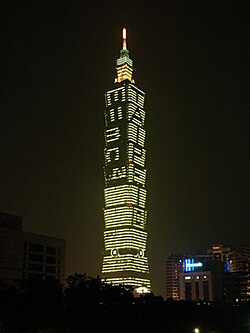
The celebration extended to Egypt, where the Library of Alexandria organized the Einstein Symposium. Additionally, CERN organized a global digital event on December 1, 2005, titled the "Beyond Einstein World Wide Webcast." In a unique blend of art and science, violinist Jack Liebeck and Oxford University physics professor Brian Foster created a joint presentation called Einstein's Universe, which continued to tour well into the 2010s.
Summary of World Year of Physics Highlights
| Location/Organization | Event/Activity | Key Detail |
|---|---|---|
| Paris, France | Physics for Tomorrow | Official opening conference |
| Berlin, Germany | Einstein Mile | 16 red "E"s on Unter den Linden |
| CERN | Beyond Einstein Webcast | Worldwide digital event |
| Waterloo, Canada | Einstein Fest | Hosted by Perimeter Institute |
| Alexandria, Egypt | Einstein Symposium | Organized by the Library of Alexandria |
| San Marino | Commemorative Coin | €2 coin issuance |
Frequently Asked Questions
What was the "Miracle Year"?
The "Miracle Year" refers to the year 1905, during which Albert Einstein published four groundbreaking papers that revolutionized the field of physics.
Who officially endorsed the World Year of Physics?
The initiative was proposed by the World Congress of Physical Societies, resolved by the International Union of Pure and Applied Physics, and endorsed by UNESCO.
What was the purpose of the "Einstein Mile" in Berlin?
The Einstein Mile consisted of sixteen large, red "E"s placed along the Unter den Linden boulevard to display information about Albert Einstein's life and his scientific theories.
How was the World Year of Physics celebrated digitally?
CERN organized a global event called the "Beyond Einstein World Wide Webcast" on December 1, 2005.
Which institutions in the US collaborated for the celebration?
The University of Maryland worked in cooperation with the Smithsonian Institution and NASA's Goddard Space Flight Center to provide lectures and resident programs.