World War I Aftermath: The Reshaping of Global Politics and Society
The conclusion of World War I on November 11, 1918, did not merely end a period of unprecedented combat; it triggered a seismic shift in the cultural, economic, and social fabric of Europe, Asia, and Africa. The conflict acted as a catalyst for the collapse of four major empires, the birth of new sovereign nations, and the rise of ideologies that would define the 20th century. From the redrawing of global boundaries to the expansion of universal suffrage—the right of all adult citizens to vote—the world entered a volatile transition known as the interwar period.
This era saw the transformation of principal combatants into electoral democracies. Significant shifts occurred in the United Kingdom (1918), Germany (1919), and the United States (1920), where political power became more accessible to the general population for the first time in history.
Key Facts
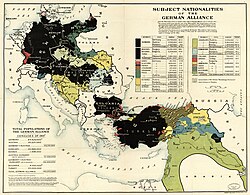
- Empire Collapse: Four major empires fell as a direct result of the war.
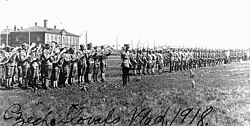
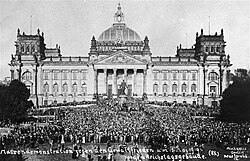
- Treaty of Versailles: Signed June 28, 1919, it forced Germany to accept full responsibility for the war and pay heavy reparations.
- Military Restrictions: The German army was capped at 100,000 troops and banned from possessing tanks, submarines, and warplanes.
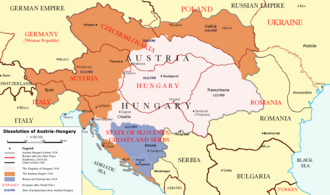
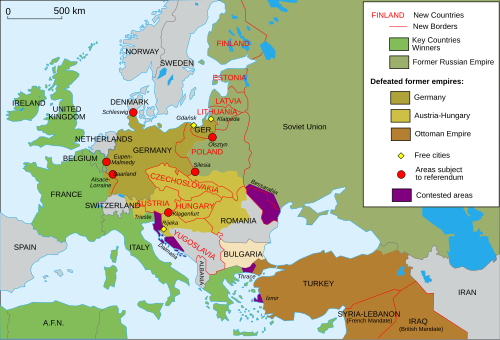
- Territorial Shifts: New nations like Estonia, Latvia, Lithuania, Finland, and Poland emerged from the ruins of the Russian and Austro-Hungarian Empires.
- Global Reach: The aftermath extended far beyond Europe, affecting mandates in Africa and the Middle East and territorial rights in China.
The Paris Peace Conference and the Treaty of Versailles
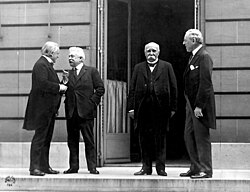
The 1919 Paris Peace Conference sought to establish a lasting peace, culminating in the Treaty of Versailles. This document consisted of 440 articles that fundamentally altered Germany's status. Beyond the economic reparations, the treaty imposed strict military limitations to prevent future aggression.
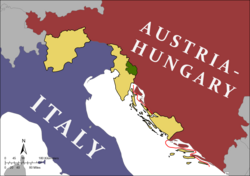
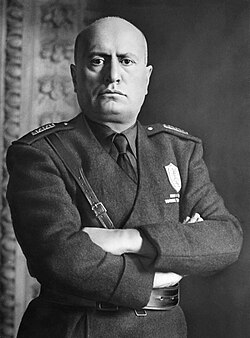
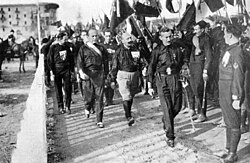
While the treaty aimed for stability, it created deep-seated resentment. In Italy, the peace negotiations led by figures like Vittorio Emanuele Orlando were seen by some as a failure to achieve all promised territorial gains, contributing to later political instability.
Political Upheavals and Revolutions
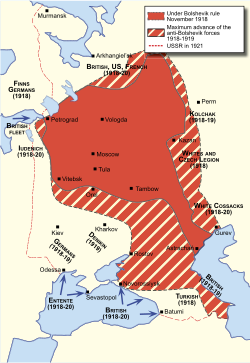
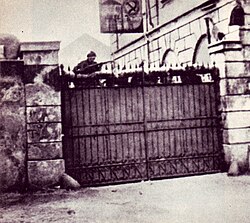
The privations of war fueled a wave of far-left and communist revolutions between 1917 and 1923. The most significant of these was the Russian Revolution of 1917, which fundamentally altered the geopolitical landscape of Eastern Europe and Asia.
In other regions, the struggle for national identity intensified. The British government's 1917 Balfour Declaration endorsed the creation of a Jewish homeland in Palestine, reflecting the complex intersection of wartime lobbying and geopolitical strategy. Meanwhile, in Ireland, the delay of Home Rule and the response to the 1916 Easter Rising led to the Irish War of Independence in 1919 and the eventual creation of the Irish Free State.
Economic Consequences and National Impacts
The United Kingdom
Britain transitioned from the world's leading overseas investor to one of its largest debtors. Interest payments consumed roughly 40% of government spending, and inflation peaked in 1920. While the loss of 40% of the British Merchant Navy to U-boats was significant, historians note that the economic damage was less crippling than the psychological impact of the war.
China and Japan
The Republic of China, an Allied power, felt betrayed at the Paris Peace Conference when its request for the restoration of Jiaozhou Bay was rejected. Instead, Germany's rights in China were transferred to Japan. Japan gained the South Seas Mandate and a permanent seat on the Council of the League of Nations, though it was denied a "racial equality" clause in the treaty.
Territorial Transformations
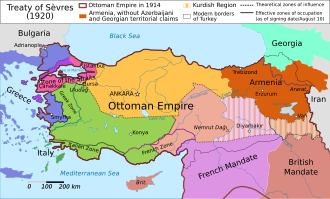
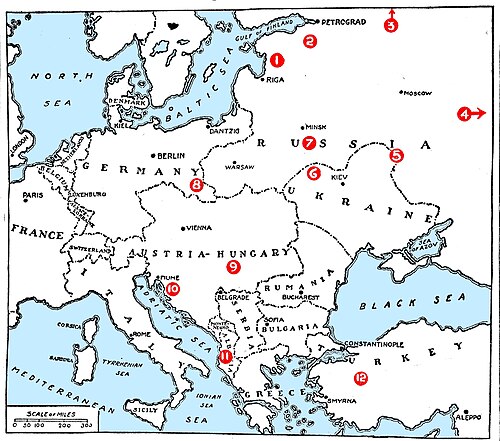
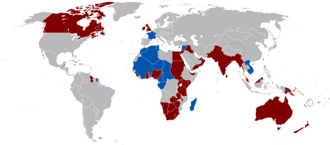
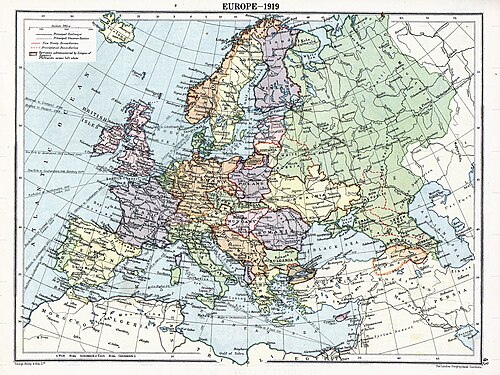
The post-war map was a patchwork of new independence and colonial expansion. The British and French empires reached their territorial peaks, managing various mandates in Africa and the Middle East.
| Nation/Region | Status Change | Key Detail |
|---|---|---|
| Armenia, Azerbaijan, Georgia | Gained Independence | Separated from Russian and Ottoman Empires |
| Finland, Estonia, Latvia, Lithuania | Gained Independence | Separated from the Russian Empire |
| Italy | Gained Territory | Acquired South Tyrol, Trieste, Istria, and Zadar |
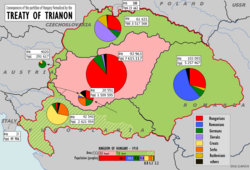
| Hungary | Lost Territory | Lost 72% of territory via the Treaty of Trianon |
| Turkey | Regained/Redefined | Treaty of Sèvres replaced by Treaty of Lausanne (1923) |
Legacy and Remembrance
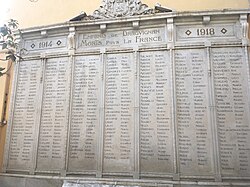
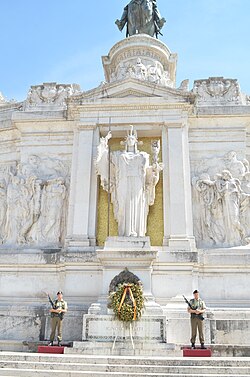
The physical and emotional scars of the war led to a global movement of commemoration. Thousands of towns erected war memorials, and many nations established Tombs of the Unknown Soldier to honor those whose remains were never identified.
![The Redipuglia War Memorial of Redipuglia, with the tomb of Prince Emanuele Filiberto, Duke of Aosta in the foreground, nicknamed the Undefeated Duke for having reported numerous victories in the First World War without ever being defeated on the battlefield.[93] This War Memorial is the resting place of 100,187 Italian soldiers killed between 1915 and 1917 in the eleven battles fought on the Karst and Isonzo front.[94]](/images/4e/a5/4ea5079dd3988a6eff4ec0411fcd92f0c3c456abe90fba112d100f86518a8c10.jpg)
Beyond monuments, the war left a literal legacy in the earth. The "iron harvest" refers to the unexploded ordnance that continues to be found and disposed of in former battlefields, such as those near Ypres in Belgium.

Frequently Asked Questions
What was the primary purpose of the Treaty of Versailles?
The treaty officially ended the state of war between Germany and the Allied Powers. It focused on preventing future German aggression by limiting its military size, stripping it of certain territories, and requiring it to pay financial reparations for war damages.
How did the war affect the map of Eastern Europe?
The collapse of the Russian and Austro-Hungarian Empires led to the creation of several new independent states, including Poland, Czechoslovakia, Finland, Estonia, Latvia, and Lithuania.
What was the "iron harvest"?
The iron harvest refers to the ongoing discovery and removal of unexploded shells, grenades, and other military ordnance left behind in the soil of World War I battlefields.
Why did China refuse to sign the Treaty of Versailles?
China was dissatisfied that the Western Allies granted Germany's pre-war rights in Shandong Province to Japan rather than returning the territory to Chinese control.
What was the significance of the Balfour Declaration?
Issued by the British government in 1917, it expressed support for the establishment of a national home for the Jewish people in Palestine.