International Committee on Intellectual Cooperation: The Precursor to UNESCO
In the wake of the First World War, the global community recognized a pressing need to foster peace through the exchange of ideas. This vision led to the creation of the International Committee on Intellectual Cooperation (ICIC) in 1922. Serving as an advisory body to the League of Nations, the ICIC was designed to promote international dialogue among the world's most brilliant minds, including scientists, researchers, artists, and teachers.
By bridging the gap between different nations and disciplines, the ICIC sought to create a framework for global intellectual synergy. Its legacy is most prominently seen today in the United Nations Educational, Scientific and Cultural Organization (UNESCO), which inherited much of its mission and archival history.
![ICIC Archives in Geneva[1]](/images/55/27/5527d082e4f8c4b02132f1a85db33ca5c7fbfdc9090f52ddc4fa957900a750d8.jpg)
Key Facts
- Established: August 1922 in Geneva.
- Purpose: To promote international exchange between intellectuals, scientists, and artists.
- Notable Members: Albert Einstein, Marie Curie, Henri Bergson, and Sarvepalli Radhakrishnan.
- Executive Branch: The International Institute of Intellectual Cooperation (IIIC), established in Paris in 1926.
- Successor: UNESCO, which absorbed its archives and mission after 1946.
The Formation and Evolution of the ICIC
The ICIC was formally established in August 1922, holding its first session on August 1 under the chairmanship of philosopher Henri Bergson. While it began with 12 members, the committee eventually grew to 19 individuals, the majority of whom hailed from Western Europe.
The committee was renowned for its prestigious membership. It attracted global luminaries such as Albert Einstein, Marie Curie, Jagadish Chandra Bose, and Nitobe Inazo. The membership was not without tension; for example, Albert Einstein resigned in 1923 to protest the committee's perceived inefficacy, though he rejoined in 1924 to prevent German chauvinists from exploiting his departure.
Leadership and Governance
The ICIC was led by three successive chairs who guided its strategic direction over nearly two decades:
- Henri Bergson (1922–1925)
- Hendrik Lorentz (1925–1928)
- Gilbert Murray (1928–1939)
To handle specific technical areas, the ICIC maintained several sub-committees focusing on Bibliography, Intellectual Rights, Arts and Letters, and Museums. These groups collaborated with influential figures like Thomas Mann, Béla Bartók, and Paul Valéry. Additionally, the ICIC maintained a close relationship with the International Educational Cinematographic Institute, founded in Rome in 1928.
The International Institute of Intellectual Cooperation (IIIC)
As the ICIC's workload grew, France offered to host an executive branch to support the Geneva-based commission. This resulted in the 1926 establishment of the International Institute of Intellectual Cooperation (IIIC) in Paris.
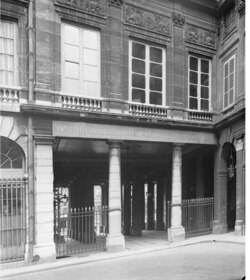
Although the IIIC was an international organization, it operated with a degree of autonomy and was funded almost exclusively by the French government. This financial arrangement created occasional tensions with the League of Nations. The institute served as a hub where member states appointed delegates and established national commissions to represent their intellectual interests.
IIIC Leadership and Closure
The IIIC was led by three French directors: Julien Luchaire (1926–1930), Henri Bonnet (1931–1940), and Jean-Jacques Mayoux (1945–1946). During the tenure of Luchaire, the British classicist Alfred Zimmern served as deputy director.
The outbreak of the Second World War forced the institute to close from 1940 to 1944. It reopened briefly after the war but closed permanently in 1946. Upon its dissolution, UNESCO inherited its mission and its extensive archives—comprising 115 linear metres of documents—which were added to the UNESCO Memory of the World register in 2017.
Summary of ICIC and IIIC
| Feature | ICIC | IIIC |
|---|---|---|
| Full Name | International Committee on Intellectual Cooperation | International Institute of Intellectual Cooperation |
| Location | Geneva, Switzerland | Paris, France |
| Role | Advisory body to the League of Nations | Executive branch |
| Established | 1922 | 1926 |
| Primary Focus | Policy and international exchange | Operational execution and national liaison |
Frequently Asked Questions
What was the primary goal of the ICIC?
The ICIC aimed to promote international exchange and cooperation among scientists, researchers, teachers, artists, and intellectuals to foster global understanding.
Which modern organization succeeded the ICIC and IIIC?
UNESCO (United Nations Educational, Scientific and Cultural Organization) is the successor, inheriting the archives and the core mission of these organizations.
What specific areas of study did the committee address?
The committee worked on a wide range of issues, including copyright and intellectual property, library information science (LIS), educational management, the protection of historical monuments, and cooperation between galleries, libraries, archives, and museums (GLAM).
Why was there tension between the IIIC and the League of Nations?
Tensions arose because the IIIC in Paris had autonomous status and was funded almost entirely by the French government, granting it an independence that clashed with the League's structure.
Who were some of the most famous members of the ICIC?
The committee included world-renowned figures such as Albert Einstein, Marie Curie, Henri Bergson, and Sarvepalli Radhakrishnan.