Understanding Woody Plants: Structure, Growth, and Survival
From the towering redwoods of California to the hardy shrubs in a backyard garden, woody plants are some of the most resilient and enduring organisms on Earth. Unlike herbaceous plants, which often die back to the ground during cold or dry seasons, woody plants possess a specialized structural tissue that allows them to maintain their height and survive above ground year after year.
What Defines a Woody Plant?
A woody plant is characterized by its ability to produce wood as its primary structural tissue, resulting in a hard, rigid stem. This group includes trees, shrubs, and lianas (woody climbing vines). Most of these plants are perennials, meaning they live for many years.
The strength of these plants comes from secondary xylem—the vascular tissue that forms wood—which reinforces the stems and larger roots. To protect this internal structure, the main stems, branches, and roots are typically encased in a protective layer of bark. This robust architecture is what enables some woody plants to become the tallest and largest terrestrial organisms on the planet.
The Composition and Structure of Wood
At a microscopic level, wood is primarily composed of xylem cells. These cells have walls reinforced with cellulose and lignin, organic polymers that provide immense structural strength and rigidity. The xylem serves as a vital transport system, moving water and essential nutrients from the roots up to the leaves.
In most woody plants, new layers of wood are deposited annually on the inner side of the vascular cambium, a layer of actively dividing cells located just beneath the bark. This process increases the stem's diameter over time. While this is the standard for most, some monocotyledons (a group of flowering plants), such as palms and dracaenas, develop wood in bundles scattered throughout the interior of the trunk rather than in concentric rings.
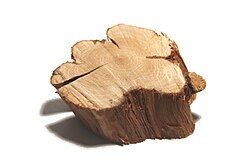
Growth Rings and Heartwood
In colder climates, woody plants often develop distinct growth rings. These rings are a record of the plant's annual production of new vascular tissue. The structure of a mature stem is divided into two main zones:
- Living Tissue: The outermost rings, consisting of the cambium, xylem, phloem, and sapwood, are responsible for transporting nutrients and growth.
- Heartwood: The inner layers consist of dead tissue. While no longer active in transport, heartwood provides the essential structural support needed to hold the plant upright.
Seasonal Cycles and Dormancy
To survive unfavorable conditions, woody plants enter a period of dormancy, where growth virtually halts. The trigger for this state depends on the climate:
- Temperate and Continental Climates: Dormancy is triggered by freezing temperatures and a reduction in daylight during winter.
- Subtropical and Tropical Climates: Dormancy is typically caused by the dry season, where low precipitation limits the water available for growth.
Deciduous vs. Evergreen Strategies
Plants handle dormancy in two primary ways. Deciduous plants undergo abscission, the process of shedding their leaves. In autumn, the plant cuts off the flow of water and nutrients to the leaves, causing chlorophyll to break down and colors to change. Special cells then sever the connection between the leaf and the stem, allowing the leaf to detach easily.
Evergreen plants, conversely, do not lose all their leaves at once; they shed them gradually throughout the growing season. During dormancy, they simply enter a state of low activity to acclimate to low rainfall or cold temperatures.
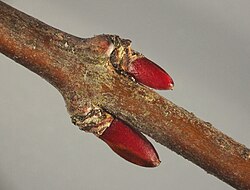
Mechanics of Growth and Development
Growth in woody plants is driven by buds. The terminal bud, located at the tip of the stem, is the primary site of length expansion. This bud often suppresses the growth of axillary buds (side buds). If the terminal bud is removed—either by nature or human pruning—the axillary buds are released from this suppression and begin to grow rapidly.
This dominance is particularly strong in conifers, which typically grow a single straight trunk. In contrast, broadleaf plants often have more branching. As the plant grows, it may "abort" lower branches or leaves that become shaded by the canopy and cannot produce enough energy, cutting off their nutrient supply until they die.
Root System Expansion
Below the surface, the root system mirrors the growth of the stems. Roots grow in length and produce smaller lateral roots each season. Like the stems, new root growth becomes woody and stops expanding in length at the end of the growing season, though it continues to increase in diameter. Interestingly, roots continue to grow slowly throughout the dormant season, provided temperatures remain above 2 °C (36 °F).
Key Facts
- Structural Tissue: Wood is made of xylem cells reinforced with cellulose and lignin.
- Growth Pattern: Stems grow in length from buds during the growing season and expand in diameter throughout their life.
- Dormancy Triggers: Cold and darkness in temperate zones; drought in tropical zones.
- Heartwood: The dead center of a trunk that provides structural support.
- Root Resilience: Roots can continue to grow during dormancy if temperatures stay above 2 °C (36 °F).
Comparison of Dormancy by Climate
The following table summarizes how different environments influence the dormant periods of woody plants.
| Climate Zone | Primary Trigger | Common Plant Response | Growth Limitation |
|---|---|---|---|
| Temperate/Continental | Freezing temperatures & low light | Deciduous leaf drop or evergreen low-activity | Winter months |
| Tropical/Subtropical | Low precipitation (Dry season) | Deciduous (in savanna/monsoon) or Evergreen | Dry season |
Frequently Asked Questions
What is the difference between a woody plant and a herbaceous plant?
Woody plants produce hard, structural wood (secondary xylem) that allows them to survive above ground during winter or dry seasons. Herbaceous plants lack this woody tissue and typically die back to the ground until the next growing season.
Why do some woody plants lose their leaves in the fall?
Deciduous plants shed their leaves to conserve water and energy during dormancy. They sever the connection between the leaf and stem through a process called abscission after the chlorophyll breaks down.
How do growth rings form in trees?
Growth rings are created by the annual production of new vascular tissue. In colder climates, the distinct difference between the growth that occurs in the spring and summer versus the dormant winter creates a visible ring.
What happens if the terminal bud of a stem is removed?
Removing the terminal bud eliminates the suppression of axillary buds. This allows the side buds to grow more rapidly, often resulting in a bushier plant with more lateral branches.
Do roots stop growing during the winter?
Not entirely. While above-ground growth halts, the root system continues to grow at a slower rate during the dormant season, as long as the soil temperature remains above 2 °C (36 °F).