Understanding Deciduous Plants: Nature's Seasonal Cycle
Every year, millions of trees and shrubs undergo a dramatic transformation, shedding their vibrant green canopies to stand bare against the elements. This natural phenomenon is the hallmark of deciduous plants. Derived from terms meaning "falling off at maturity," the deciduous cycle is a sophisticated survival strategy that allows plants to thrive in challenging environments, from the freezing winters of the north to the arid dry seasons of the tropics.
While we most often associate this process with autumn leaves, the term "deciduous" applies more broadly in botany and biology. It refers to any part of an organism that is shed after its purpose is served, such as petals falling after a flower blooms or the shedding of ripe fruit. Beyond plants, the concept extends to the animal kingdom, seen in the "baby teeth" (deciduous teeth) of mammals or the seasonal shedding of antlers in deer.
Key Facts
- Definition: Deciduous plants lose all their leaves for part of the year through a process called abscission.
- Triggers: Leaf drop is primarily triggered by changes in daylight hours and air temperature, or by seasonal rainfall patterns in tropical regions.
- Survival Strategy: Shedding leaves helps plants conserve water, reduce damage from ice storms, and limit insect predation.
- Nutrient Recycling: Many deciduous plants store nitrogen and carbon in their roots and inner bark before shedding leaves to fuel new growth in the spring.
- Diversity: While most are broad-leafed trees, some conifers (like larch and Metasequoia) are also deciduous.
The Science of Leaf Drop: Abscission and Color
The process of losing leaves is not random; it is a highly regulated physiological event known as abscission. This begins with the formation of an abscission layer—a specialized group of cells located between the leaf petiole (the stalk) and the stem. This layer is sensitive to auxin, a plant hormone produced by the leaf.
During the growing season, a steady flow of auxin keeps the cells of the abscission layer connected. However, as days shorten or drought stress increases, auxin production drops. This triggers the cells in the abscission layer to elongate, breaking the connection and allowing the leaf to fall. Crucially, the plant also forms a seal at the break point to prevent the loss of sap.
Why Leaves Change Color
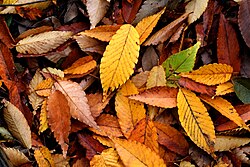
The stunning colors of autumn are the result of shifting pigments. Throughout the summer, leaves are dominated by chlorophyll, which is essential for photosynthesis and gives leaves their dark green hue. As temperatures drop and daylight decreases, chlorophyll breaks down, revealing other pigments that were present all along:
- Carotenoids: These produce the yellow, orange, and brown tones.
- Anthocyanins: These create red and purple colors. Unlike carotenoids, anthocyanins are often produced in late summer when sugars become trapped in the leaves as abscission begins.
The most intense colors occur where days are short and nights are cool but remain above freezing. This is why regions like New England and southeastern Canada are famous for their autumn foliage, while the humid maritime climate of Europe often produces more muted colors.
The Strategic Advantage of Losing Leaves
Being deciduous requires a significant investment of energy, as the plant must regrow its entire canopy every year. However, this cost is offset by several critical advantages:
- Water Conservation: By shedding leaves, plants reduce water loss through transpiration during periods when liquid water is scarce (such as frozen winters or tropical dry seasons).
- Physical Protection: Leafless trees are far less likely to suffer branch or trunk breakage during glaze ice storms.
- Xylem Efficiency: Removing leaves reduces cavitation (the formation of air bubbles that can block water transport) in the xylem vessels. This allows deciduous plants to evolve larger xylem diameters, enabling faster water and CO2 uptake during the peak summer growth period.
- Pest Control: Shedding leaves can reduce the population of insects that rely on foliage for food and shelter.
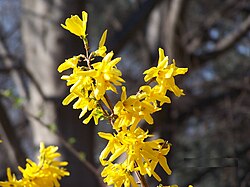
Interestingly, some plants use their leafless period to their advantage for reproduction. Many deciduous species flower before their leaves emerge, which increases the visibility of flowers to insects and improves the transmission of pollen by the wind.
Deciduous Plants Across the Globe
Deciduous behavior has evolved independently across various plant groups and regions, adapting to different environmental stressors.
Temperate Deciduous Forests
Found in North and South America, Asia, Europe, and parts of Oceania, these forests respond to extreme seasonal temperature swings. Growth occurs in warm summers, followed by leaf drop in autumn and a period of dormancy during cold winters.
Tropical and Subtropical Deciduous Forests
In these regions, leaf drop is a response to rainfall rather than temperature. To survive prolonged dry periods and prevent death from drought, plants shed their foliage. This process is not tied to a specific calendar month and can vary even within a small area depending on the local water table or proximity to rivers.
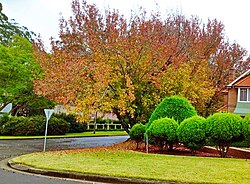
While most of the Southern Hemisphere lacks deciduous plants due to milder winters, distinct fall colors can still be found in southern South America, the South Island of New Zealand, and parts of southern Australia, including Victoria and Tasmania.
Common Deciduous Species
The deciduous trait is found in a wide array of woody plants, including:
- Trees: Maple, elm, beech, aspen, birch, and many species of oak and nothofagus.
- Conifers: Larch and Metasequoia.
- Shrubs: Honeysuckle, viburnum, and Hydrangea hirta.
- Vines: Grapes, wisteria, Virginia creeper, and poison ivy.
| Feature | Deciduous | Evergreen | Semi-Deciduous / Semi-Evergreen |
|---|---|---|---|
| Leaf Retention | Shed all leaves seasonally | Shed leaves gradually; appear green year-round | Lose old foliage as new growth begins or retain some during winter |
| Primary Trigger | Temperature or Rainfall | Continuous cycle | Mixed triggers |
| Resource Use | High energy cost to regrow canopy | Lower regrowth cost; higher winter water loss | Intermediate |
| Winter Risk | Frost damage to early flowers | Higher predation and ice load | Variable |
Frequently Asked Questions
What is marcescence?
Marcescence is a phenomenon where dead leaves are not shed in the autumn and remain attached to the tree until they are blown off by weather or pushed off by new growth. This is caused by an incomplete development of the abscission layer and is most common in seedlings and saplings of oak and beech trees.
Do all deciduous plants lose their leaves in the winter?
No. While temperate plants lose leaves in winter, tropical and subtropical deciduous plants shed their foliage during the dry season to conserve water, regardless of the temperature.
Why are some autumn colors more vivid than others?
Vivid colors depend on a specific combination of short days, cool (but not freezing) nights, and strong sunlight. This is why the continental United States and southern Canada often have more intense colors than Europe, which has a more humid maritime climate.
What is the difference between deciduous and evergreen?
Deciduous plants shed all their leaves at once during a specific season. Evergreen plants shed their leaves individually over time, meaning they always maintain a green canopy.
How do deciduous plants survive without leaves in winter?
They enter a state of dormancy and rely on nutrients (nitrogen and carbon) stored as proteins in the vacuoles of parenchyma cells within their roots and inner bark to fuel new growth in the spring.